
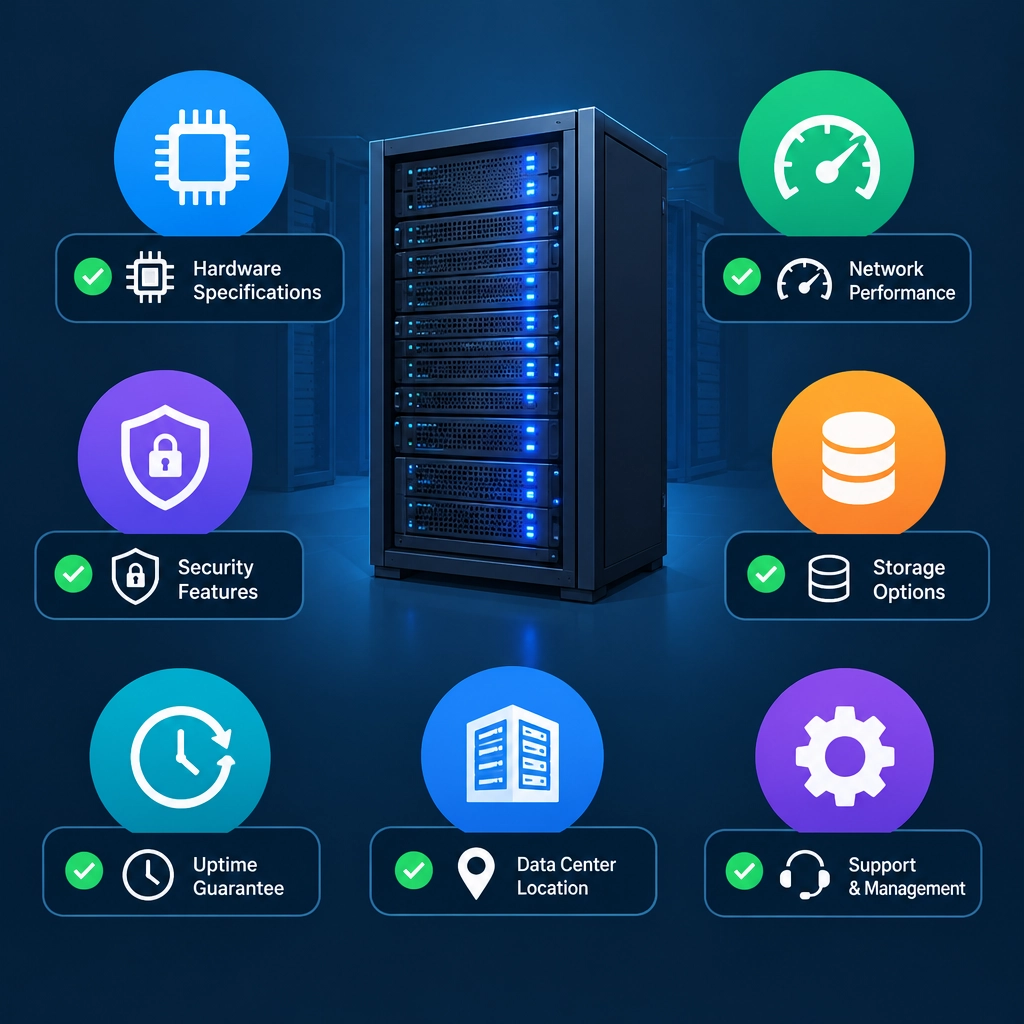
What to Check Before Renting a Dedicated Server
A dedicated server gives your website, app, or business exclusive access to a physical machine. That can mean more control, predictable performance, and room to grow—but it also comes with more choices than renting a basic hosting plan. Before you commit, look beyond the headline price and make sure the server fits your needs today and can support you tomorrow.
Start with your actual workload
First, consider what you’ll run on the server. A high-traffic online store, a game server, and a development environment put very different demands on hardware. Estimate how much processing power, memory, storage, and network capacity you’ll need.
If you’re moving an existing application, use current monitoring data rather than guessing. Check CPU and RAM usage, storage consumption, traffic peaks, and growth trends. If you’re launching something new, ask the provider whether you can upgrade components or move to a larger plan later. Overbuying can waste money, while an undersized server can create slowdowns at the worst possible time.
Compare the hardware details
“Dedicated server” doesn’t tell you much on its own. Read the specifications carefully:
- CPU: Check the processor model, core count, and clock speed. More cores can help with workloads that run many tasks at once, but not every application benefits equally.
- RAM: Make sure there’s enough memory for your operating system, software, and expected traffic. Ask whether the memory can be expanded.
- Storage: Compare capacity, drive type, and redundancy. SSDs or NVMe drives can improve performance, while separate backup storage may help protect important data.
- Network port: Confirm the connection speed and whether bandwidth is capped, metered, or subject to fair-use limits.
Also check whether the listed configuration is guaranteed. Some providers advertise broad hardware options but assign equipment based on availability.
Understand bandwidth and network quality
A fast server is only useful if users can reach it reliably. Find out how much monthly data transfer is included, what happens if you exceed it, and whether extra bandwidth costs are predictable. For media-heavy sites or applications with large downloads, this can have a major impact on your bill.
Location matters, too. Choose a data center close to your main audience when low latency is important. If your users are spread across regions, ask about network routes, peering, or options for using a content delivery network. A provider’s uptime claim is useful, but independent monitoring and clear service-level terms offer a fuller picture.
Decide how much management you need
With an unmanaged server, you’re typically responsible for installing software, applying updates, configuring security, and troubleshooting. This can offer flexibility and a lower monthly cost, but it requires time and technical knowledge.
A managed server may include operating-system maintenance, monitoring, security updates, and support with common issues. Services vary widely, so don’t assume “managed” includes everything. Ask exactly what the provider handles, what’s considered billable work, and whether support is available around the clock.
Check security and backup options
A dedicated server doesn’t automatically protect you from data loss or attacks. Ask about network-level DDoS protection, firewall options, access controls, and security monitoring. You should also understand how you’ll keep the operating system and applications patched.
Backups deserve special attention. Confirm whether they’re included, how often they run, where they’re stored, and how quickly you can restore data. A backup that lives on the same server may not help if the machine or its storage fails. For critical data, consider maintaining an additional off-site copy under your control.
Read the terms—and calculate the real cost
Review setup fees, contract length, cancellation rules, upgrade charges, and any costs for remote hands or hardware replacement. Check whether the advertised price includes essentials such as IP addresses, backup space, control-panel licenses, or management.
Finally, look at the provider’s support reputation and response times. When a server is down, a low monthly price matters less than getting useful help quickly. Ask how support requests are handled and whether you can speak to a technician when needed.
The right dedicated server isn’t simply the most powerful one or the cheapest one. It’s the machine, network, and support arrangement that match your workload—and give you a clear path to respond when your needs change.
Welcome to DediRock, your trusted partner in high-performance hosting solutions. At DediRock, we specialize in providing dedicated servers, VPS hosting, and cloud services tailored to meet the unique needs of businesses and individuals alike. Our mission is to deliver reliable, scalable, and secure hosting solutions that empower our clients to achieve their digital goals. With a commitment to exceptional customer support, cutting-edge technology, and robust infrastructure, DediRock stands out as a leader in the hosting industry. Join us and experience the difference that dedicated service and unwavering reliability can make for your online presence. Launch our website.