
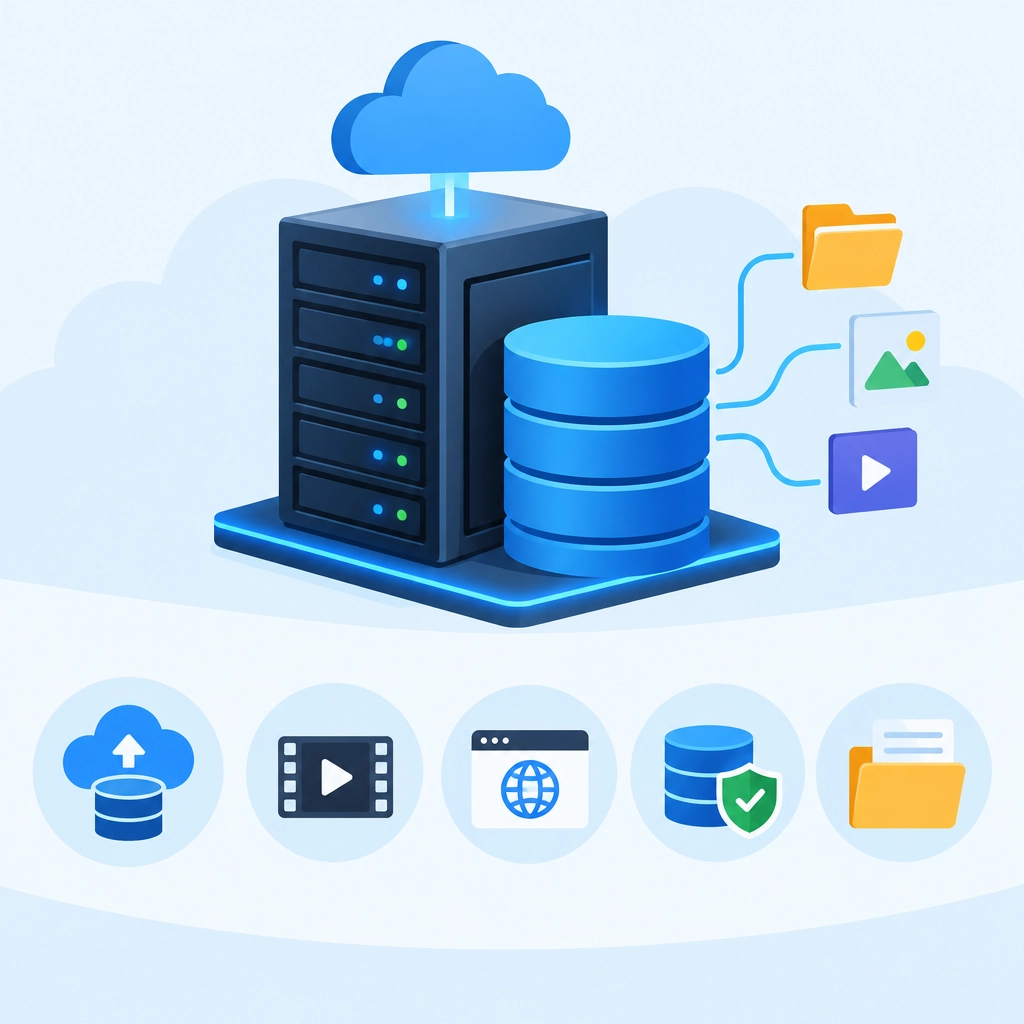
What Is a Storage VPS—and Who Needs One?
When you hear “VPS,” you might picture a virtual server for hosting websites or running apps. A storage VPS is a more specialized version: a virtual private server designed to hold and serve large amounts of data.
Think of it as a remotely hosted storage drive that you can configure and access over the internet. Unlike a basic cloud folder, a storage VPS gives you more control over the software, access rules, and storage setup. It can be a practical middle ground between using a consumer cloud service and managing your own physical server.
How does a storage VPS work?
A VPS runs on a physical server that’s divided into separate virtual machines. Each one gets its own allocated resources, such as processing power, memory, and disk space.
A storage VPS is typically configured with more disk capacity than a general-purpose VPS. It may use traditional hard drives, solid-state drives, or a combination of both. You can install software that turns it into a file server, backup destination, private cloud, or media library.
You usually connect to it remotely using protocols and tools such as SFTP, rsync, or a self-hosted file platform. Because it’s a VPS, you can often choose your operating system and manage the server yourself. That flexibility comes with a responsibility: you may need to handle updates, security, backups, and troubleshooting.
What can you use one for?
A storage VPS can support a variety of projects:
- Backups: Store copies of website files, databases, documents, or server snapshots in a separate location.
- File sharing: Give a team or community access to shared files without relying on a consumer account.
- Media storage: Keep photos, videos, or audio files in one place and access them remotely.
- Personal cloud storage: Run your own file-syncing service and control how your data is organized and shared.
- Archiving: Hold files that need to remain accessible but don’t require the speed of premium, high-performance storage.
- Application data: Store uploads, logs, or other files generated by websites and applications.
The best use depends on the provider’s storage type, network limits, and server resources. A large disk doesn’t automatically mean fast performance, unlimited transfers, or guaranteed data protection.
Who benefits most from a storage VPS?
A storage VPS is a good fit for developers and small businesses that need a predictable place to keep files or backups. It can also suit people who want to host a private cloud, manage a growing media collection, or learn server administration.
It’s especially appealing if you want more control than a standard cloud-storage subscription offers. You may be able to choose your software, set up custom access permissions, and decide how your data is arranged.
However, a storage VPS isn’t automatically the best choice for everyone. If you simply need to back up a phone or share family photos, a managed cloud service is usually easier. If you’re hosting a business-critical application or storing sensitive customer information, you may need stronger guarantees, expert administration, or a more specialized hosting environment.
What should you check before choosing one?
Start with the storage details. Find out how much space is included, what kind of drives are used, and whether the storage is local to the server or provided over a network. These factors can affect speed and reliability.
Next, review bandwidth and transfer limits. A server with plenty of disk space may still be a poor match for frequent downloads or large media files if network usage is restricted.
Also consider backups and redundancy. A VPS is not necessarily backed up just because it is hosted in a data center. RAID, snapshots, and backups are different things, and none should be assumed unless the provider clearly includes them. For important files, keep another copy somewhere separate.
Finally, think about security and administration. You’ll need to use strong passwords or SSH keys, keep software updated, and limit access to trusted users. If you don’t want to manage those tasks, look for a managed option or a simpler storage service.
Is a storage VPS right for you?
A storage VPS offers a useful balance: more control than a basic cloud drive, without the cost and maintenance of owning physical hardware. It works best for people who have a clear storage need and are comfortable handling—or paying someone else to handle—the server side.
Before signing up, estimate how much space you need, how often you’ll access the data, and what would happen if the server failed. Those answers will help you decide whether a storage VPS is the right home for your files—or whether a simpler service would serve you better.
Welcome to DediRock, your trusted partner in high-performance hosting solutions. At DediRock, we specialize in providing dedicated servers, VPS hosting, and cloud services tailored to meet the unique needs of businesses and individuals alike. Our mission is to deliver reliable, scalable, and secure hosting solutions that empower our clients to achieve their digital goals. With a commitment to exceptional customer support, cutting-edge technology, and robust infrastructure, DediRock stands out as a leader in the hosting industry. Join us and experience the difference that dedicated service and unwavering reliability can make for your online presence. Launch our website.