
VPS Hosting Explained: A Beginner’s Guide to Virtual Private Servers
If you’re choosing a home for your website, you’ve probably come across the term VPS hosting. It sounds technical, but the basic idea is simple: a Virtual Private Server gives your website a more defined portion of a physical server, with more control and resources than typical shared hosting.
For some sites, shared hosting is perfectly adequate. But as a website grows—or needs specific software, settings, or security controls—a VPS can offer a useful middle ground between a basic hosting plan and renting an entire server.
What is a VPS?
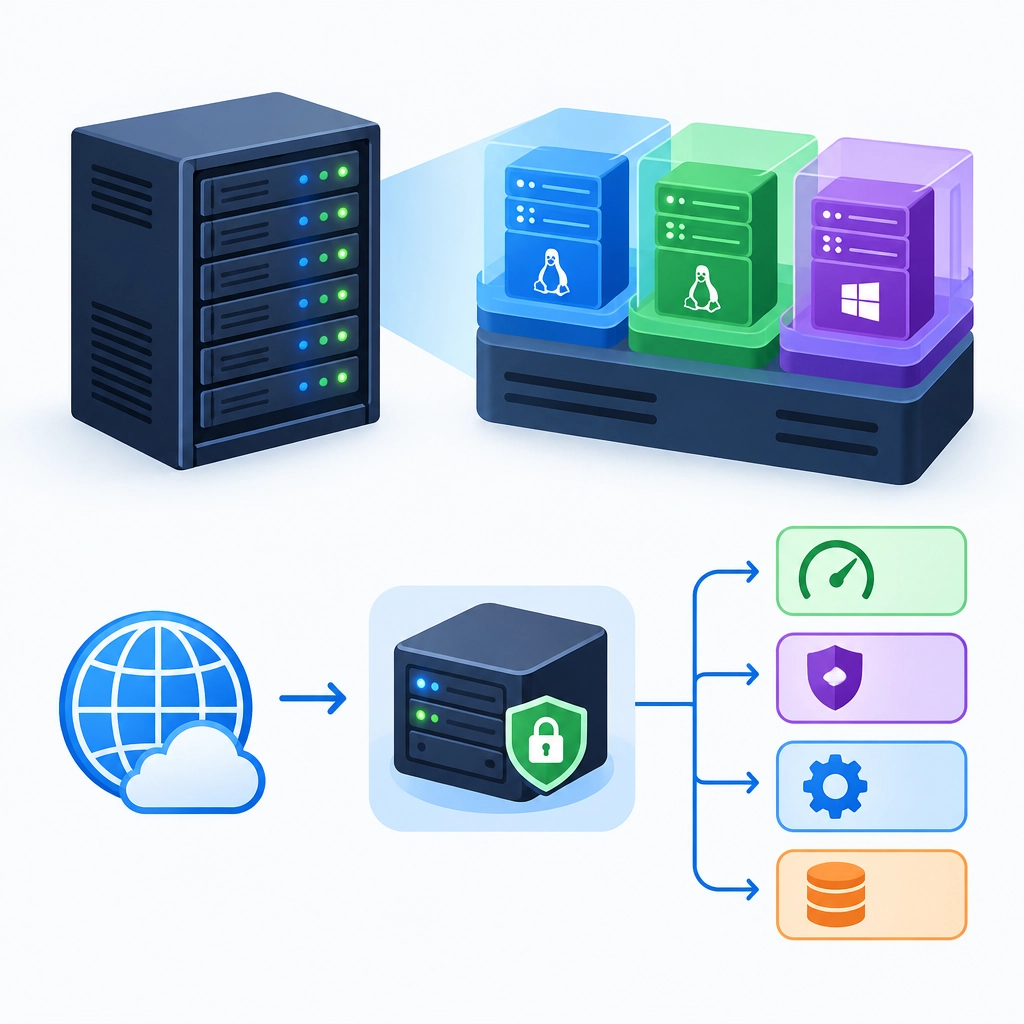
A Virtual Private Server (VPS) is a virtual server created by dividing one physical server into multiple isolated environments. Each VPS has its own allocated resources, such as memory, processing power, and storage.
Think of a physical server as an apartment building. Shared hosting is like sharing a busy common space with many other tenants. A VPS is more like having your own apartment: the building is still shared, but your space and many of its resources are set aside for you.
A VPS isn’t a separate physical machine, but virtualization software makes it function like one. You can usually install software and adjust server settings without affecting other VPS customers on the same hardware.
How is VPS hosting different from shared hosting?
With shared hosting, multiple websites use resources from the same server environment. The provider handles most technical details, which makes it convenient and often inexpensive. But if a website on the server uses a lot of resources, performance may be affected, depending on the provider’s setup and limits.
A VPS gives you a more predictable allocation of resources and greater administrative control. This can help with performance, customization, and managing applications that need particular software or configurations.
That doesn’t mean every VPS is automatically faster or safer than every shared plan. The actual experience depends on the hosting company, the server configuration, and how well the website is managed.
Managed or unmanaged: what’s the difference?
VPS plans generally fall into two categories:
- Managed VPS: The hosting provider handles many server tasks, such as updates, monitoring, security, or technical support. What’s included varies, so check the plan details.
- Unmanaged VPS: You’re responsible for configuring and maintaining the server. This can offer more flexibility, but it also requires technical knowledge—or a willingness to learn.
If you’re new to server administration, a managed VPS may be a more comfortable starting point. An unmanaged plan can suit developers and experienced users who want detailed control.
When might a VPS make sense?
A VPS may be worth considering if your website has outgrown its current plan, experiences slowdowns during busy periods, or needs custom software and settings. It’s also commonly used for online stores, business sites, development projects, and applications that benefit from a dedicated environment.
On the other hand, a small personal website or new blog may not need VPS hosting yet. If your current plan is affordable, reliable, and meets your needs, there may be no reason to upgrade simply because a VPS sounds more advanced.
What should beginners look for?
When comparing VPS plans, start with the basics: how much CPU, memory, and storage you get, and whether storage uses SSD or NVMe technology. Also check the bandwidth limits, backup options, customer support, and whether the plan is managed.
It’s wise to look beyond the advertised price. Find out whether backups, control panels, migrations, or extra support cost more. And while it can be tempting to choose the smallest plan to save money, leave some room for growth so that a brief traffic increase doesn’t immediately cause trouble.
Security also requires attention. A VPS gives you more control, but that can come with more responsibility—particularly on unmanaged plans. Keep software updated, use strong passwords, restrict access, and make regular backups.
Is a VPS right for you?
The simplest way to think about VPS hosting is as a step up in control and resources, with a matching increase in cost and, sometimes, responsibility. It can be a great fit when a site needs more room to grow or a more customizable setup. But it’s not automatically the best choice for every website.
Start with what your site needs today, then consider what you expect it to need next. Choosing a host should make your website easier to run—not add complexity you don’t yet need.
Welcome to DediRock, your trusted partner in high-performance hosting solutions. At DediRock, we specialize in providing dedicated servers, VPS hosting, and cloud services tailored to meet the unique needs of businesses and individuals alike. Our mission is to deliver reliable, scalable, and secure hosting solutions that empower our clients to achieve their digital goals. With a commitment to exceptional customer support, cutting-edge technology, and robust infrastructure, DediRock stands out as a leader in the hosting industry. Join us and experience the difference that dedicated service and unwavering reliability can make for your online presence. Launch our website.