
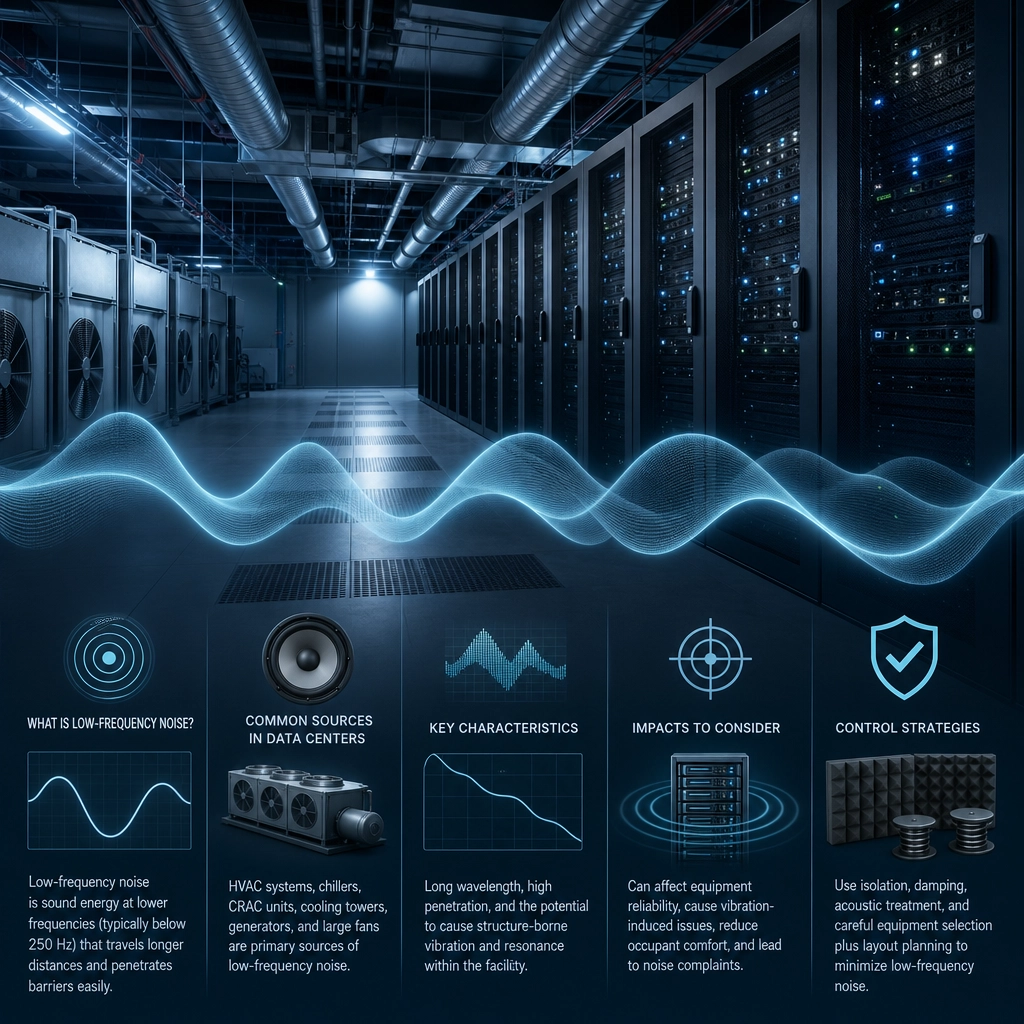
In recent years, the noise produced by data centers, particularly low-frequency noise, has come under increasing scrutiny from surrounding communities. Effective mitigation and clear communication strategies have become essential for operators to address these concerns.
Understanding Infrasound
Infrasound refers to acoustic energy below 20 Hz, a frequency range that humans typically cannot hear. However, individuals may still perceive its effects through sensations like pressure changes or vibrations, potentially leading to noticeable discomfort, particularly in nearby structures.
Sources of Infrasound in Data Centers
Data centers can generate low-frequency sound from several sources, including:
- Cooling Towers and Fans: These systems emit low-frequency sound waves that can travel beyond the facility, particularly under specific weather conditions.
- Standby Generators: The operation of engines and exhaust systems during outages or tests contributes significantly to low-frequency noise.
- Server Fans: While primarily producing mid- to high-frequency sound, the aggregate operation can also create low-frequency noise due to airflow and resonance effects.
The Importance of Addressing Low-Frequency Noise
Despite being inaudible, infrasound has been part of recent discussions concerning the impact of data centers on local communities. Residents have reported issues such as headaches, anxiety, and nausea allegedly linked to low-frequency noise, emphasizing the need for operators to understand and manage these concerns.
Currently, proving a direct relationship between infrasound from data centers and health issues is difficult. Accurate measurement of infrasound necessitates specialized equipment, and few communities possess the resources to investigate the claims adequately.
Reducing Infrasound Emissions
To maintain good relations with the community, data center operators should implement effective strategies to reduce infrasound emissions:
- Regular Maintenance: Keeping fans and mechanical components clean can help reduce infrasound and enhance operational efficiency.
- Using Larger Fans: Larger fans that operate at lower speeds tend to produce less low-frequency noise compared to smaller fans operating at higher speeds.
- Implementing Isolation Techniques: Utilizing anti-vibration pads can significantly lessen the transmission of low-frequency sound through structural components.
- Optimizing Equipment Enclosures: Properly sealed enclosures can help contain noise emissions from generators and fans.
- Minimizing Generator Operation: Rely more on the grid during normal operations and schedule tests during the day to limit community exposure.
- Exploring Alternative Cooling Methods: Advanced cooling solutions, such as liquid cooling, can reduce the dependency on high airflow and its associated noise levels.
Community Engagement and Transparency
Beyond technical adjustments, engaging with the community about low-frequency noise and infrasound is vital. Open communication regarding measurements and actions taken can foster goodwill and alleviate concerns among residents. By addressing these issues proactively, data center operators can mitigate complaints and enhance community relations.
Welcome to DediRock, your trusted partner in high-performance hosting solutions. At DediRock, we specialize in providing dedicated servers, VPS hosting, and cloud services tailored to meet the unique needs of businesses and individuals alike. Our mission is to deliver reliable, scalable, and secure hosting solutions that empower our clients to achieve their digital goals. With a commitment to exceptional customer support, cutting-edge technology, and robust infrastructure, DediRock stands out as a leader in the hosting industry. Join us and experience the difference that dedicated service and unwavering reliability can make for your online presence. Launch our website.