
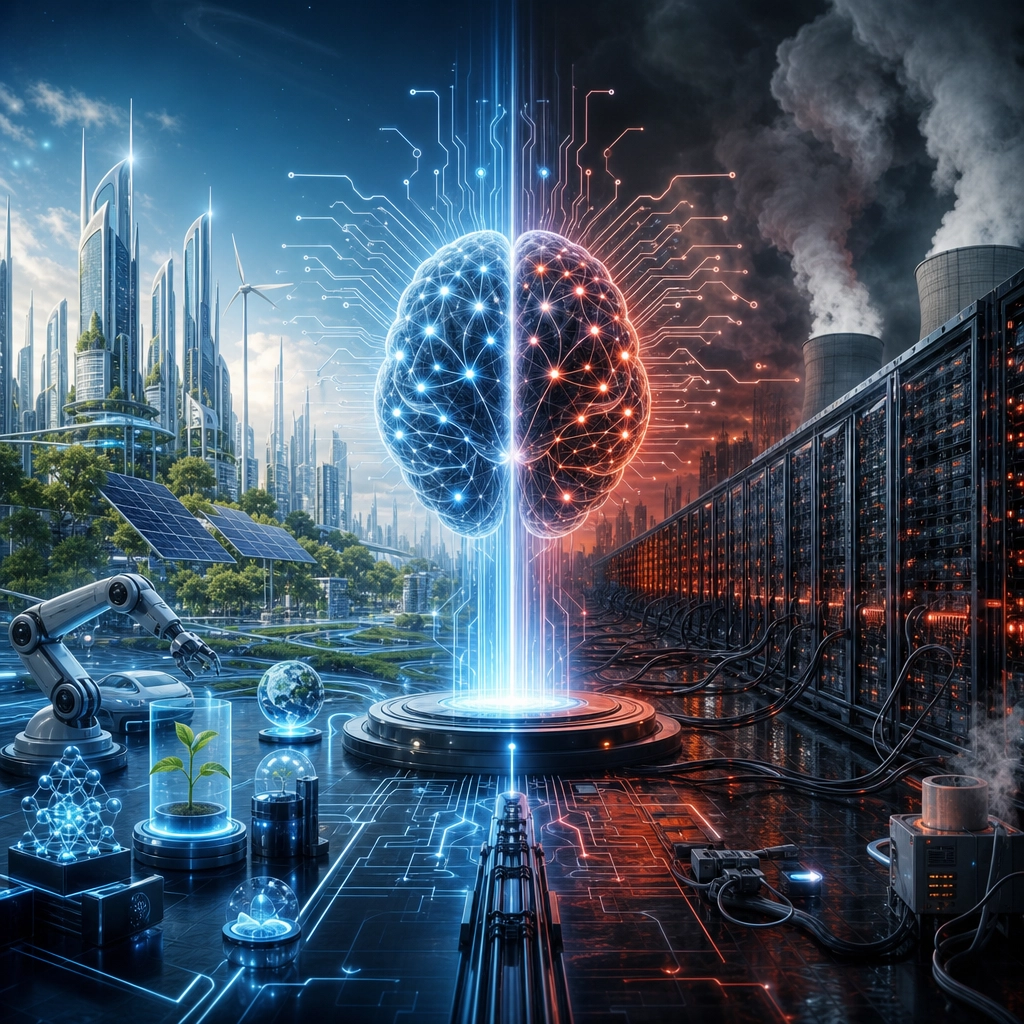
Recursive self-improvement (RSI) is emerging as a significant milestone in AI technology, with the potential to impact the data center industry profoundly. This concept involves AI systems that can autonomously design, code, and deploy their successors with minimal human intervention. If realized, the ramifications could lead to rapid improvements in AI capabilities, possibly surpassing human comprehension and oversight. This evolution poses critical challenges for data center operators regarding power consumption, cooling, orchestration, governance, and certification.
What Is RSI and Its Future Prospects
RSI is not a strictly defined term, akin to artificial general intelligence (AGI), but it appears to be moving closer to reality. Key advancements in AI-assisted coding are paving the way for RSI. For instance, the AI model Claude from Anthropic has significantly increased its contribution to its codebase, now accounting for over 80% of new merges. This progression demonstrates how AI could begin writing its code, inching closer to true self-improvement.
Breakthroughs in hardware, particularly in quantum computing, are also likely to support the advancement of RSI. Experts highlight that quantum algorithms could help optimize AI operations, leading to systems capable of efficient self-improvement.
Should AI models successfully construct superior iterations of themselves, immediate implications for physical infrastructure would arise, influencing IT hardware life cycles, energy utilization, workload orchestration, and data center operations.
The Practical View of RSI in Current Systems
In distinguishing true self-improvement systems from those that merely optimize without rewriting code, it is clear that some level of self-optimization is already occurring in current data centers. Many applications utilize reinforcement learning (RL) to continuously refine their operations based on real-time feedback.
Several startups are already demonstrating the effectiveness of self-improving systems. Firms like Emerald AI and Phaidra are leading the way with technologies that provide dynamic management of facilities, integrating AI into existing cooling and power management systems to function autonomously.
Operational Changes for Data Centers
Self-optimization can enhance several operational aspects, including maintenance strategies. AI systems that learn from experiences can quickly identify potential failures, consequently improving uptime and performance without the need for extensive historical data.
However, this creates challenges for regulatory bodies. How to certify software that constantly evolves is a significant question in the industry. The dynamic nature of self-improving AI could necessitate ongoing validation and the implementation of systems that ensure human oversight, which could undermine efficiency gains.
Furthermore, the inherent power fluctuations caused by such systems raise new concerns. Training AI models requires significantly varied power levels, challenging the stability and efficiency of data centers, as synchronous training can lead to extreme demands on energy supplies.
Broader Industry Implications
In addition to immediate design implications, RSI could shift industry dynamics considerably. Autonomous systems capable of developing their successors might lead to workforce reductions, presenting ethical and economic questions for the data center sector.
While RSI is still in its formative stages, its potential realization may reshape the AI landscape and its infrastructure, potentially enabling AI to design and pre-fabricate the very data centers it will operate in. The acceleration of AI capabilities could lead to heightened regulatory scrutiny and challenges in public acceptance as communities wrestle with the pace of technological advancement.
In summary, the move toward recursive self-improvement in AI is not just a technical issue but a fundamental transformation that will influence how data centers operate and manage their resources.
Welcome to DediRock, your trusted partner in high-performance hosting solutions. At DediRock, we specialize in providing dedicated servers, VPS hosting, and cloud services tailored to meet the unique needs of businesses and individuals alike. Our mission is to deliver reliable, scalable, and secure hosting solutions that empower our clients to achieve their digital goals. With a commitment to exceptional customer support, cutting-edge technology, and robust infrastructure, DediRock stands out as a leader in the hosting industry. Join us and experience the difference that dedicated service and unwavering reliability can make for your online presence. Launch our website.