
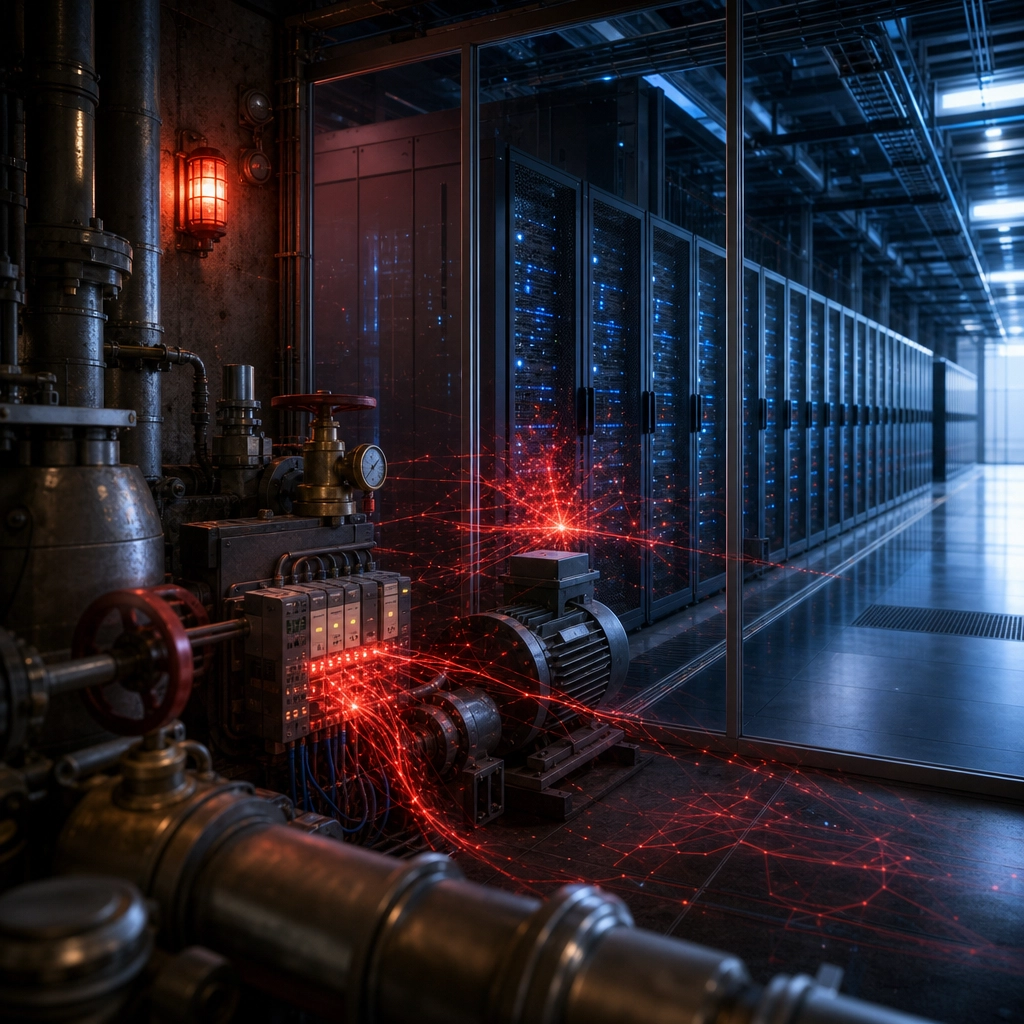
Data centers are increasingly recognized as critical infrastructure, serving as the backbone for various sectors that rely on their constant operation for economic growth and security. As the demand for AI-driven services grows, the operational technology (OT) within these facilities, such as uninterrupted power supplies, power distribution units, cooling systems, and building management platforms, forms an often-overlooked attack surface that needs robust security measures.
These OT systems are uniquely vulnerable as they are typically not governed under the same frameworks as IT systems. When compromised, they may cause outages rather than traditional security breaches, which complicates recovery efforts. As businesses integrate AI into their operations, the implications of these vulnerabilities become more severe, making data center uptime a matter of economic and public safety.
One critical challenge is that the rapid growth of data centers means governance has not kept pace with newly established sites and technologies. The interplay of physical and digital environments necessitates new security frameworks that can bridge the traditional gaps between facilities management and cybersecurity.
Moreover, the designs and deployments of these data centers are occurring at an unprecedented speed, which brings about risks related to supply chain management, operational quality, and security validation. These challenges manifest as misconfigurations, weakened security postures, and operational blind spots that can lead to catastrophic outages.
Research highlights the severity of the risks associated with vulnerabilities in core systems, such as UPS and HVAC controllers. Recent findings unveil critical flaws that, if exploited, could disrupt power and cooling systems essential for maintaining uptime in high-density environments. Therefore, cybersecurity for these systems must be treated as a priority equivalent to traditional IT security.
To address these risks, data centers must implement a comprehensive approach which includes asset visibility, proper segmentation of networks, strong authentication practices, and established governance over remote access. Detection and response strategies should be designed to account for both cybersecurity events and operational anomalies to prevent an incident from escalating into an outage.
Ultimately, ensuring the resilience of operational technologies in data centers is not only a technical issue but also a strategic business imperative. As stakeholders increasingly expect accountability for the cyber-physical controls that maintain service reliability, it’s essential for organizations to prioritize OT security just as they do for perimeter defenses. An incident in this space might not be labeled a breach; instead, it is more likely to be reported as a service outage, underlining the critical need for vigilance in all layers of data center operations.
Welcome to DediRock, your trusted partner in high-performance hosting solutions. At DediRock, we specialize in providing dedicated servers, VPS hosting, and cloud services tailored to meet the unique needs of businesses and individuals alike. Our mission is to deliver reliable, scalable, and secure hosting solutions that empower our clients to achieve their digital goals. With a commitment to exceptional customer support, cutting-edge technology, and robust infrastructure, DediRock stands out as a leader in the hosting industry. Join us and experience the difference that dedicated service and unwavering reliability can make for your online presence. Launch our website.