
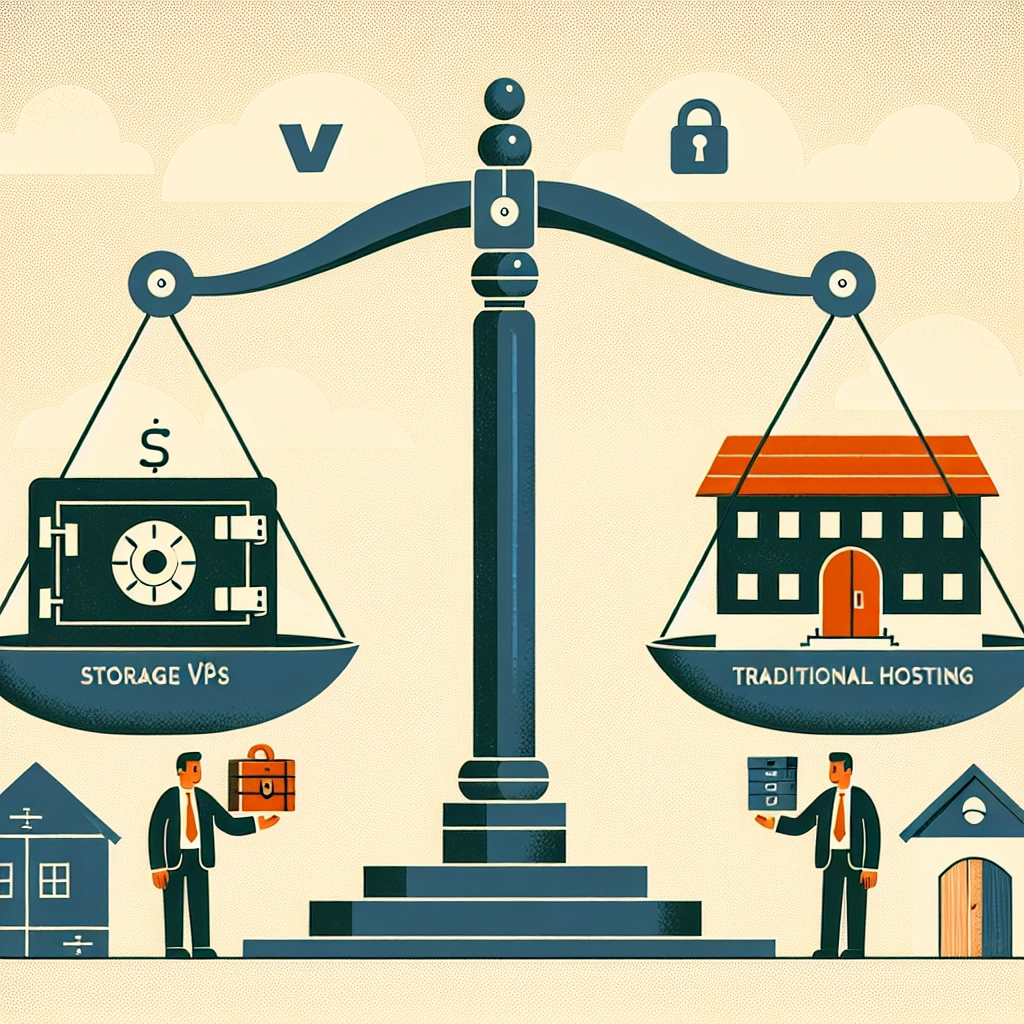
Storage VPS vs Traditional Hosting: Which is Better?
When it comes to hosting your website, blog, or online business, the options can be downright overwhelming. With terms like "storage VPS" and "traditional hosting" floating around, it’s crucial to understand what each means and how they might fit your needs. So, grab a cup of coffee, and let’s break it down in a way that makes sense!
What is Traditional Hosting?
Traditional hosting typically refers to shared or dedicated hosting services. In shared hosting, your website resides on a server with many other websites, sharing resources like CPU, memory, and bandwidth. This option is perfect for beginners or small sites because it’s cost-effective and requires minimal technical know-how. Hosting providers take care of server management, so you can focus on creating your content.
On the flip side, dedicated hosting means you get an entire server for yourself. This setup provides greater control and allows for higher levels of customization and performance. However, it also requires more technical expertise, and it usually comes with a higher price tag.
What is Storage VPS?
Now, let’s talk about Storage VPS (Virtual Private Server). Essentially, a VPS hosting solution provides you with your own virtual server, which resides on a physical server. But unlike traditional shared hosting, a VPS isolates your resources from other users, which means better performance, security, and control.
A Storage VPS is particularly focused on storing large amounts of data. If your website involves media-heavy content like videos, images, or downloadable files, a Storage VPS is designed to handle that efficiently. You get a designated amount of storage space that you can use without competing for resources with other websites. A storage VPS can be a game-changer for businesses that have large databases or require extensive online storage solutions.
The Great Debate: Which is Better?
Now that we’re clear on what each option entails, let’s dig into the pros and cons to help you decide which might be a better fit for your needs.
Performance
Regarding performance, Storage VPS is generally superior. Because you are not sharing resources with other websites, a VPS can handle higher traffic volumes and offer faster load times. Traditional hosting, especially shared hosting, can lead to slowdowns during traffic surges since all websites fight for the same server resources.
Scalability
Scalability is another essential factor. Many businesses evolve and grow over time. Storage VPS can easily scale with you. You can adjust your resources—such as CPU, RAM, and storage—without transferring your entire website to a new server. On the other hand, traditional hosting can be limiting; upgrades may involve switching plans or migrating your site, which can be a hassle.
Cost
Let’s talk dollars and cents. Traditional hosting, especially shared hosting, is usually cheaper upfront. You might find plans that cost as little as a few dollars a month. However, as your needs grow, you could face rising costs with upgrades or increased resource usage.
With Storage VPS, you’ll pay more initially, but you’re also investing in reliability, performance, and customization. It’s essential to weigh your initial budget against your long-term needs. If you anticipate significant growth or have high storage requirements, a VPS could save you money in the long run.
Technical Knowledge
For those who are just starting, traditional hosting can be a dream come true. Most providers offer user-friendly control panels and round-the-clock customer support. Conversely, while VPS environments can have user-friendly interfaces, they often require a bit more technical know-how, especially if you plan to customize your server.
Security
Security is a growing concern in our digital age. VPS hosting provides better security features than traditional shared hosting. Since your resources are isolated, it limits the risk of being affected by another site’s security issues.
Ideal Use Cases
So, what’s the bottom line? If you run a blog or a small personal website that doesn’t require extensive resources, traditional hosting can be your best friend. However, if your site involves large files, high traffic, or if you’re gearing up for growth, a Storage VPS is likely the smarter choice.
Choosing the right hosting depends heavily on your specific needs. Consider the size and nature of your website, your budgetary constraints, and your technical skills. Whichever path you choose, ensure that it aligns with your long-term vision—because your online presence deserves the best home possible!
Welcome to DediRock, your trusted partner in high-performance hosting solutions. At DediRock, we specialize in providing dedicated servers, VPS hosting, and cloud services tailored to meet the unique needs of businesses and individuals alike. Our mission is to deliver reliable, scalable, and secure hosting solutions that empower our clients to achieve their digital goals. With a commitment to exceptional customer support, cutting-edge technology, and robust infrastructure, DediRock stands out as a leader in the hosting industry. Join us and experience the difference that dedicated service and unwavering reliability can make for your online presence. Launch our website.