
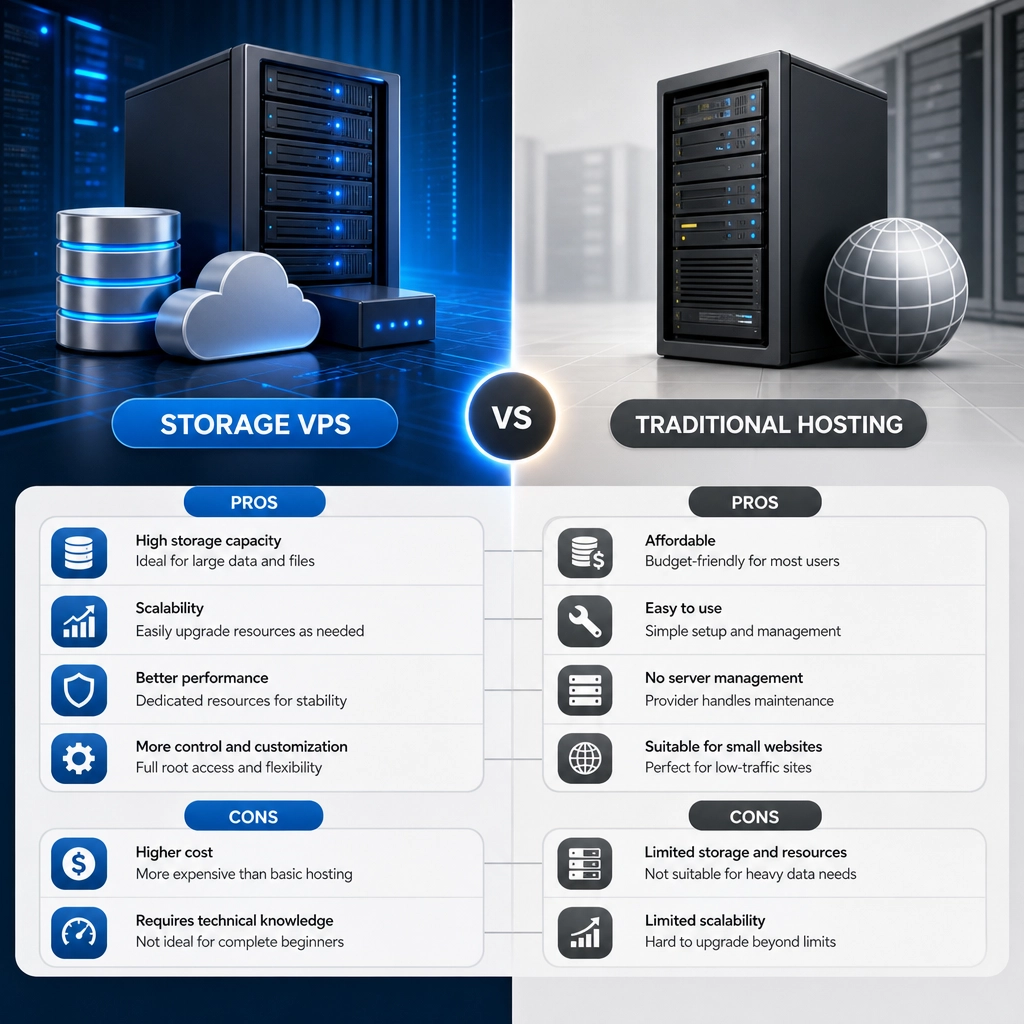
Storage VPS vs. Traditional Hosting: Pros and Cons
In the ever-evolving world of web hosting, it can often feel like a daunting task to decide on the best solution for your needs. With several options available, including Storage VPS (Virtual Private Server) and traditional hosting methods like shared hosting or dedicated servers, it’s essential to weigh the pros and cons of each to determine which best suits your specific requirements.
What is Storage VPS?
A Storage VPS is a type of hosting that combines the features of a virtual private server with substantial storage capabilities. Unlike traditional VPS, which focuses on processing power and memory, a Storage VPS is optimized for high storage capacity, making it ideal for big data, backups, and content-heavy applications.
What is Traditional Hosting?
Traditional web hosting generally involves shared hosting or dedicated servers. In shared hosting, multiple websites share the same server resources, while dedicated servers provide an entire server dedicated to one user. This distinction means users have varying levels of performance, control, and scalability, depending on which type they choose.
Pros of Storage VPS
-
Flexibility and Control: With a Storage VPS, you often have root access, which allows you to customize your server environment to suit your needs. You can install applications and adjust configurations without restrictions imposed by a hosting provider.
-
Enhanced Performance: Storage VPS often offers better performance than traditional shared hosting. With dedicated resources, including CPU and RAM, your site won’t struggle under traffic spikes or heavy load, which is common with shared plans.
-
Scalability: Storage VPS provides an easy pathway for growth. As your site or application demands more resources, you can usually upgrade your storage and computing power without significant hassles.
-
Improved Security: Since you’re working in a virtual environment that is isolated from other users, Storage VPS generally offers a higher level of security compared to shared hosting. You have more control over security measures and can implement firewall settings and other protective features.
-
Cost-Effective for Large Storage Needs: If you require a lot of storage without the need for extensive computing power, a Storage VPS can be a very cost-effective solution compared to dedicated servers.
Cons of Storage VPS
-
Higher Costs: While Storage VPS can be economical for large storage needs, it often comes with a higher price tag compared to traditional shared hosting plans. If you don’t need the extra features, you might be spending more than necessary.
-
Management Complexity: Although having root access offers excellent flexibility, it also requires a certain level of technical expertise. Businesses without an IT staff may find managing a Storage VPS more complex than they want.
-
Resource Allocation Risks: In a VPS environment, resources are technically shared among users, so if your provider doesn’t manage resource allocation efficiently, you might experience performance degradation.
Pros of Traditional Hosting
-
Affordability: Traditional shared hosting options are often very budget-friendly, making them accessible for individuals and small businesses. You can find plans for as little as a few dollars a month.
-
Simplicity and Ease of Use: Shared hosting is user-friendly and straightforward, making it an excellent choice for beginners. Most providers offer one-click installs for popular applications like WordPress, making it easy to get started.
-
Maintenance and Support: With traditional hosting, you typically get better customer support from your hosting provider. Maintenance and server management are usually taken care of on your behalf.
Cons of Traditional Hosting
-
Limited Resources: With shared hosting, your website shares resources with many other users, which can lead to slow load times and downtimes during peak usage.
-
Less Control and Customization: You’re often limited to what your hosting provider allows. If your needs change and require specific software or configurations, shared hosting may not be the best fit.
-
Security Concerns: Sharing a server with numerous other websites raises security risks. A vulnerability in a single site could potentially compromise the security of others on the same server.
When it comes to choosing between a Storage VPS and traditional hosting, it really boils down to your specific needs. If you require ample storage, greater control, and scalability without the need for constant management, a Storage VPS might be the right fit. However, if you’re starting a blog or a small website that doesn’t anticipate significant traffic, traditional hosting could be all you need—and much easier on your budget. At the end of the day, take the time to evaluate what’s most important for your online presence, and don’t hesitate to reach out to hosting providers for guidance tailored to your unique situation!
Welcome to DediRock, your trusted partner in high-performance hosting solutions. At DediRock, we specialize in providing dedicated servers, VPS hosting, and cloud services tailored to meet the unique needs of businesses and individuals alike. Our mission is to deliver reliable, scalable, and secure hosting solutions that empower our clients to achieve their digital goals. With a commitment to exceptional customer support, cutting-edge technology, and robust infrastructure, DediRock stands out as a leader in the hosting industry. Join us and experience the difference that dedicated service and unwavering reliability can make for your online presence. Launch our website.