
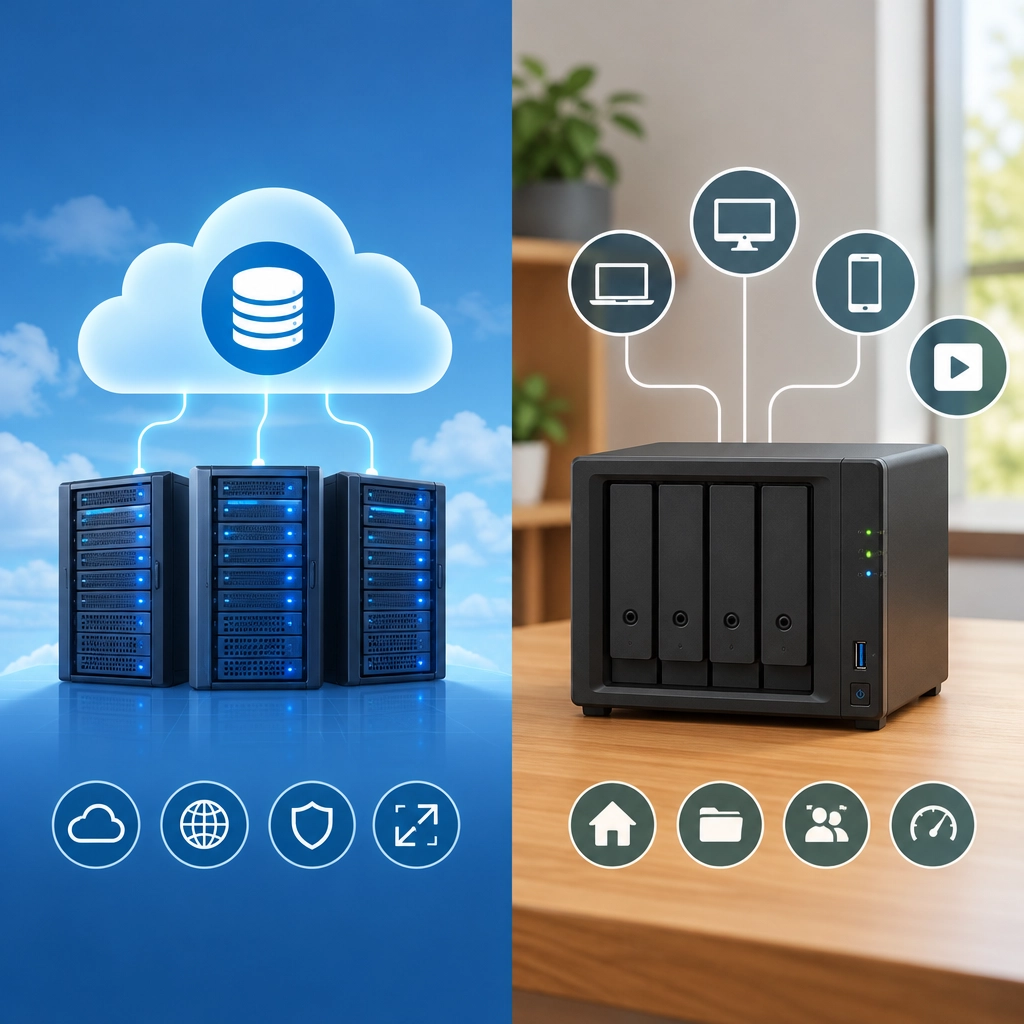
Storage VPS vs. NAS: Which Storage Solution Fits Best?
Running out of space on your laptop is easy to solve: buy a bigger drive. But what if you need a central place to store files, share them across devices, or access them while you’re away from home? That’s when two options often come up: a storage VPS and a NAS.
Both can store and serve your files, but they work in very different ways. The right choice depends on where you want your data to live, how you plan to access it, and how much maintenance you’re comfortable handling.
What is a NAS?
A network-attached storage device, or NAS, is a small computer with one or more drives that connects to your home or office network. It’s essentially a private file server you can reach from computers, phones, smart TVs, and other devices.
Popular uses include:
- Backing up computers and phones
- Sharing files among family members or coworkers
- Streaming media around the home
- Running services such as a photo library or private cloud
Because a NAS sits on your premises, you control the hardware and the physical location of your data. Many models support multiple drives, so you can configure redundancy to keep files accessible if a drive fails. That can be reassuring—but redundancy is not the same as a backup. A fire, theft, or power surge can still affect the whole device.
What is a storage VPS?
A storage VPS is a virtual private server hosted in a data center, often with extra disk space for storing files, backups, archives, or application data. You access it over the internet and manage it through a control panel or command line.
A storage VPS may be a good fit if you want to:
- Store backups away from your home or office
- Share files with people in different locations
- Keep data available without maintaining local hardware
- Host applications or services that need persistent storage
The provider handles the physical servers, power, cooling, and network connection. You’re still responsible for managing your operating system, software, access controls, and backups—unless your provider offers managed services.
The main difference: where your files live
A NAS gives you direct control over an on-site device. That usually means fast access on your local network, but availability depends on your internet connection and power at the location. To access a NAS remotely, you’ll need to configure secure remote access, often through a VPN or a trusted vendor’s service.
A storage VPS lives in a data center, so it’s generally reachable from anywhere with an internet connection. This can make it more convenient for remote access and off-site backups. In return, you’re trusting a hosting provider with the physical infrastructure, and moving large amounts of data may be limited by your upload speed, plan, or network rules.
Cost, capacity, and upkeep
A NAS often has a higher upfront cost. You’ll pay for the device and drives, and you may eventually need to replace aging hardware. Over time, it can be cost-effective for households or businesses with large amounts of data and frequent local access.
A VPS usually has a lower starting cost and predictable monthly billing. It can be easier to scale by upgrading a plan, though long-term fees can add up—especially for large storage needs or extra bandwidth. Plans also vary widely, so check what’s included: storage type, traffic limits, backup options, and support.
Maintenance is another difference. With a NAS, you handle drive health, updates, and physical security. With a VPS, the provider maintains the underlying hardware, but you may still need to secure and update the server software.
Which one should you choose?
Choose a NAS if you want fast local access, centralized storage at home or work, and hands-on control of your hardware. It’s especially useful when several nearby devices regularly use large files, such as video or photo libraries.
Choose a storage VPS if remote availability matters most, you want an off-site place for backups, or you’d rather avoid buying and maintaining physical storage equipment. It’s also practical for people who are comfortable managing a server or want to host other online services alongside their files.
For many people, the best answer isn’t “one or the other.” A NAS can handle everyday local storage, while a VPS stores a separate copy somewhere else. That combination keeps files convenient to reach and helps protect them if something happens to the device—or the building—they’re stored in.
Welcome to DediRock, your trusted partner in high-performance hosting solutions. At DediRock, we specialize in providing dedicated servers, VPS hosting, and cloud services tailored to meet the unique needs of businesses and individuals alike. Our mission is to deliver reliable, scalable, and secure hosting solutions that empower our clients to achieve their digital goals. With a commitment to exceptional customer support, cutting-edge technology, and robust infrastructure, DediRock stands out as a leader in the hosting industry. Join us and experience the difference that dedicated service and unwavering reliability can make for your online presence. Launch our website.