
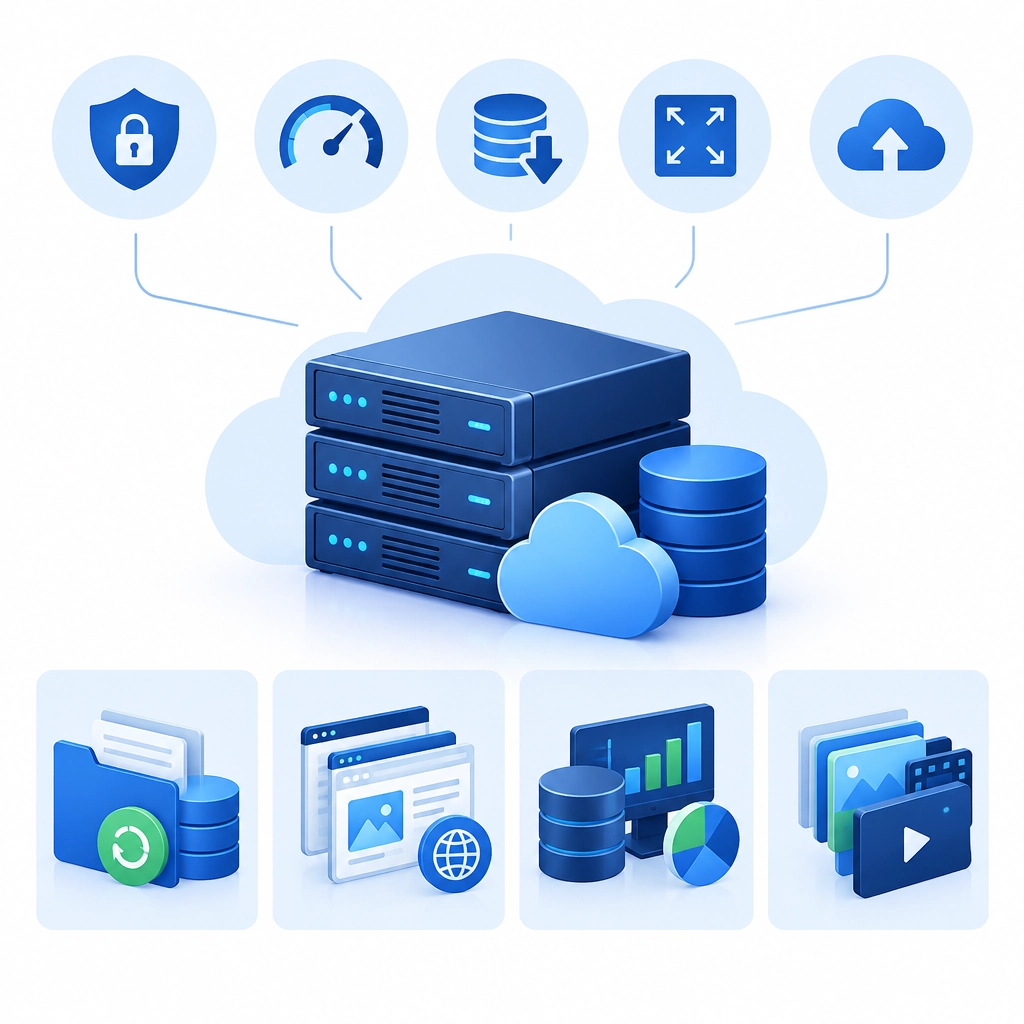
Storage VPS for Business: Benefits and Use Cases
Business data has a way of growing quietly—until shared folders are full, backups take hours, or teams can’t find the files they need. A storage VPS can offer a practical middle ground between a basic cloud drive and the cost or complexity of running your own storage hardware.
A storage VPS is a virtual private server configured with a generous amount of disk space. It gives a business a dedicated environment for storing and managing files, usually with more control than a consumer file-sharing service. Depending on the provider and plan, it may use traditional hard drives for lower-cost capacity or solid-state drives for faster access.
Why businesses use a storage VPS
More control over data
With a storage VPS, businesses can choose how files are organized, who can access them, and which software runs on the server. This can be useful when standard cloud storage doesn’t offer the flexibility, integrations, or administrative control a team needs.
That control also means more responsibility. The business—or its IT provider—may need to handle updates, permissions, monitoring, and security settings. A managed plan can reduce some of this workload, but it’s worth checking exactly what the provider takes care of.
Room to grow
Storage needs often rise as businesses add customers, employees, and digital services. A VPS can make it easier to increase capacity without purchasing and installing physical equipment. Rather than replacing an office server, a business may be able to upgrade its storage plan or move to a larger server.
Growth isn’t always seamless, so check how upgrades work. Some providers require a migration or restart, while others allow changes with little interruption.
Predictable costs
Owning storage hardware involves more than the initial purchase: there may be maintenance, electricity, replacement drives, and staff time. A storage VPS usually comes with a recurring fee, making costs easier to budget.
The advertised price isn’t the whole picture, though. Consider bandwidth limits, backup fees, data transfer charges, and the cost of additional storage. A low-cost plan may not be the best value if it lacks the performance or support your business depends on.
Remote access and collaboration
A server hosted in a data center can be accessed by authorized staff from different locations. With suitable software, teams can use it for shared folders, project files, or internal services without relying on one employee’s computer or an office network.
Secure remote access matters. Strong passwords, multi-factor authentication, encrypted connections, and carefully managed user permissions help reduce the risk of unauthorized access.
Common business use cases
Backups and archives: A storage VPS can hold scheduled backups of websites, databases, workstations, or business applications. It can also store older files that need to be kept but aren’t accessed every day. For important data, keep a separate backup copy—ideally in a different location or account—so one server problem doesn’t affect both the live files and the backup.
Media and large project files: Design studios, video teams, architects, and marketing departments often work with files too large for email or standard shared folders. A storage VPS can serve as a central place to store and exchange these assets, though transfer speeds depend on the server’s network connection and the users’ internet connections.
Business applications: Some companies use a VPS to host file-sharing tools, document-management software, or private repositories. This can help bring workflows together, particularly when an organization wants a customized setup or needs to connect storage with other services.
Website and application data: Developers may use storage VPS capacity for uploaded content, logs, or non-critical datasets. For fast-changing production data, however, a database service or dedicated storage system may be a better fit than simply adding disk space to a general-purpose VPS.
Choosing the right setup
Start by estimating how much data you have now and how quickly it’s growing. Then consider performance, uptime, backup options, security features, and support. If staff need to access files regularly, look closely at network capacity and disk type. If the server will hold sensitive or regulated information, check the provider’s security practices, data-center locations, and any compliance requirements that apply to your business.
A storage VPS can be a flexible, cost-conscious way to give business data a reliable home—especially when paired with a clear backup plan and sensible access controls. The best setup isn’t necessarily the one with the biggest disk. It’s the one that fits how your team works and keeps important files available when they’re needed.
Welcome to DediRock, your trusted partner in high-performance hosting solutions. At DediRock, we specialize in providing dedicated servers, VPS hosting, and cloud services tailored to meet the unique needs of businesses and individuals alike. Our mission is to deliver reliable, scalable, and secure hosting solutions that empower our clients to achieve their digital goals. With a commitment to exceptional customer support, cutting-edge technology, and robust infrastructure, DediRock stands out as a leader in the hosting industry. Join us and experience the difference that dedicated service and unwavering reliability can make for your online presence. Launch our website.