
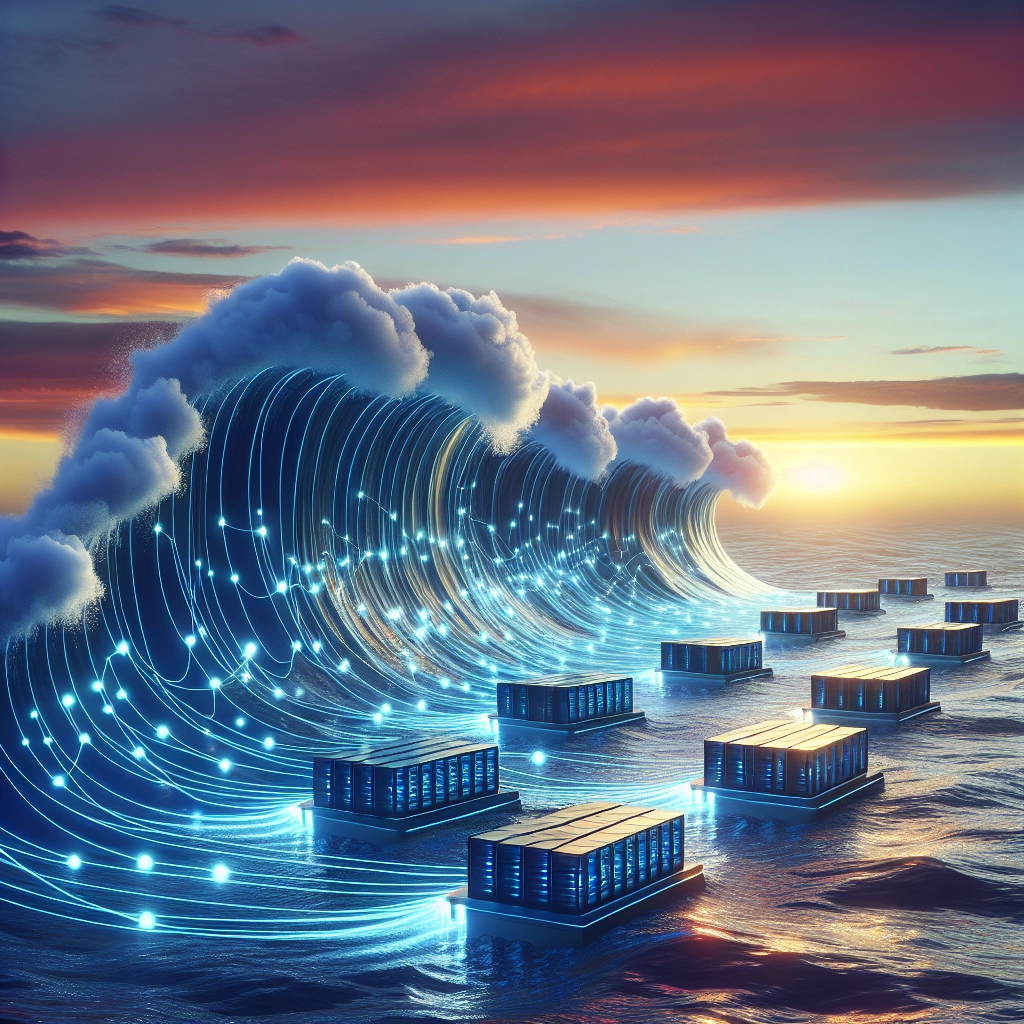
Floating data centers are emerging as innovative solutions to overcome challenges related to land scarcity, power constraints, and increased cooling demands, particularly in densely populated coastal areas. By relocating data center capabilities onto the water, these facilities can benefit from close proximity to energy sources and utilize water for cooling, which is more efficient for high-density AI workloads.
As AI workloads escalate, traditional air-cooled systems struggle to meet energy and cooling needs. Floating data centers provide an opportunity for new constructions to avoid the bottlenecks typically encountered in urban environments—especially in cities like Singapore, where finding land for expansion has become increasingly difficult.
In 2023, Singapore’s Infocomm Media Development Authority and Economic Development Board allowed the addition of 80 megawatts (MW) of new capacity via a pilot program, highlighting the urgent need for innovative growth strategies to enhance the data center infrastructure. Projections indicate that global data center electricity consumption will rise significantly, especially with AI being a primary driver of this increase.
These floating solutions address multiple issues simultaneously; they can be strategically built near existing coastal infrastructure to tap into abundant resources for power and cooling. Recent projects, like Nautilus Data Technologies’ floating data center in Stockton, California, showcase the advancements in reducing power usage effectiveness, offering a compelling model for future development.
Beyond the benefits of resource availability, floating data centers appeal to regulatory frameworks that often pose challenges for land-based facilities. These water-based systems can shift the discussion towards using port or nearshore industrial zones that can leverage existing water and connectivity, alleviating some of the pressures faced by traditional data center sites.
However, transitioning to floating infrastructures presents unique engineering and operational complexities. Factors such as marine resilience, continuous power supply, and maintenance logistics become critical. The behavior of IT equipment in low-frequency sea motions remains a concern. Experts argue that floating facilities must ensure robust shore connections and reliable energy transmission as the design and operational standards adapt to their unique environments.
Though some industry professionals express skepticism regarding the practicality of floating data centers, the acknowledgment of pressing land and energy constraints suggests that such methods are not only worthwhile but could become essential. As traditional land-based options face mounting limitations, floating data centers represent a credible solution that might gain increasing relevance as technological demands continue to escalate.
Welcome to DediRock, your trusted partner in high-performance hosting solutions. At DediRock, we specialize in providing dedicated servers, VPS hosting, and cloud services tailored to meet the unique needs of businesses and individuals alike. Our mission is to deliver reliable, scalable, and secure hosting solutions that empower our clients to achieve their digital goals. With a commitment to exceptional customer support, cutting-edge technology, and robust infrastructure, DediRock stands out as a leader in the hosting industry. Join us and experience the difference that dedicated service and unwavering reliability can make for your online presence. Launch our website.