
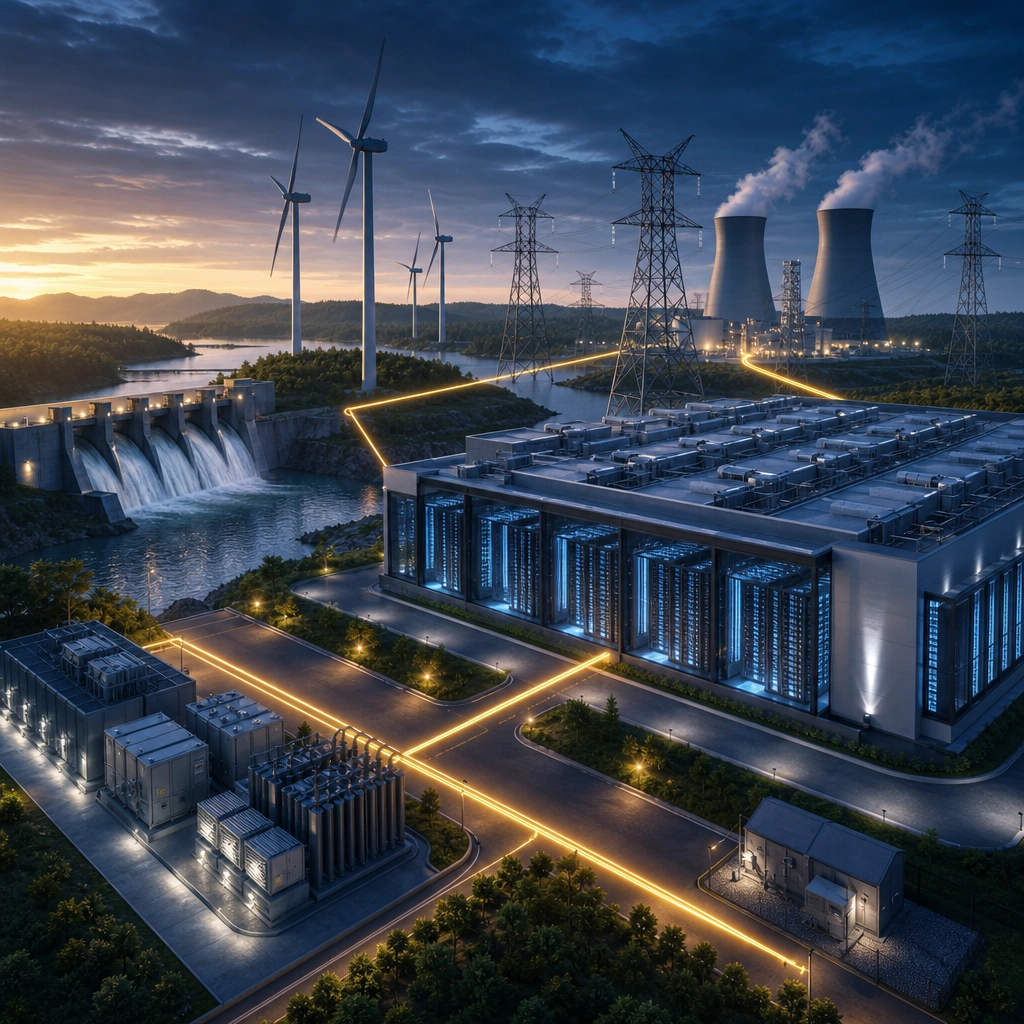
US data centers are experiencing a significant surge in electricity consumption, estimated at 312.6 terawatt hours (TWh) for 2025. This marks a 25.5% increase from the previous year, nearly eight times the broader U.S. electricity generation growth rate. The overall generation rose by 3.2% to 4,772 TWh, indicating a major shift toward increased demand within the data center sector. Notably, the U.S. alone accounted for 39.7% of the world’s total data center energy use, with global demand rising by 19.7% from 410.8 TWh in 2020.
As this trend continues, the availability of power is becoming the primary factor in data center site selection. Developers must now assess if they can secure the necessary electrical infrastructure before proceeding with construction. The typical process of initiating a site search is evolving, emphasizing the importance of reliable access to large power blocks rather than just proximity to existing electrical infrastructure.
In densely populated data center hubs like Northern Virginia, Dallas, and Phoenix, having access to generation is no longer sufficient. There’s a pressing need for adequate transmission capacity and timely utility upgrades to support load demands. Emerging markets, often lacking robust infrastructure, are experiencing additional challenges in this regard.
Operators are urged to collaborate closely with utility companies and network providers at the outset to verify available capacity and avoid costly delays. Planning must account for the entire life cycle of the deployment, from construction to potential growth, necessitating detailed forecasting that includes expansion capabilities.
As data centers require continuous power, many developers are adopting "bring-your-own-power" strategies, incorporating on-site generation methods, such as natural gas turbines and battery storage, to bridge the gap until utilities can provide necessary upgrades. Behind-the-meter solutions are gaining acceptance, providing a reliable backup that can serve as a vital asset for large-scale developments.
Lenders and investors demand demonstrable proof of power availability, not just promises from utilities. Before committing to a site, operators need clear insights into current and future power capacities, substations, transmission projects, and renewable energy inputs.
Ultimately, integrating power availability into the site selection process is essential for meeting construction timelines, supporting future growth, and ensuring operational efficiency. As Siddharth Muzumdar from DC Byte puts it, the question has shifted from "Where do we want to build?" to "Where can we actually secure and deliver the power?" Power considerations are paramount from the onset, shaping the planning, economic feasibility, and long-term success of data center projects.
Welcome to DediRock, your trusted partner in high-performance hosting solutions. At DediRock, we specialize in providing dedicated servers, VPS hosting, and cloud services tailored to meet the unique needs of businesses and individuals alike. Our mission is to deliver reliable, scalable, and secure hosting solutions that empower our clients to achieve their digital goals. With a commitment to exceptional customer support, cutting-edge technology, and robust infrastructure, DediRock stands out as a leader in the hosting industry. Join us and experience the difference that dedicated service and unwavering reliability can make for your online presence. Launch our website.