
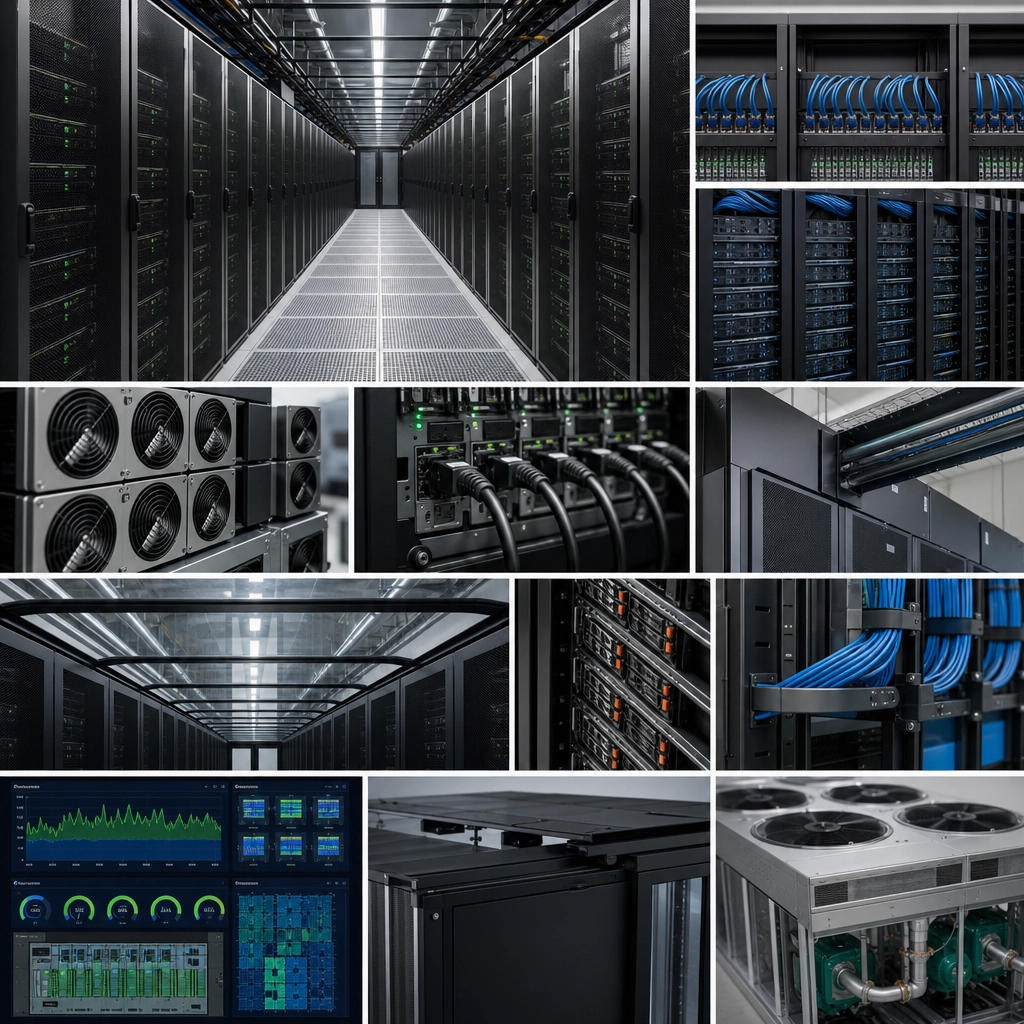
Building new data centers is increasingly challenging due to issues such as site selection difficulties, lengthy approval processes, and grid limitations. For many operators, the quicker and more cost-effective solution is to densify their existing facilities.
Understanding Data Center Density
"Data center density" refers to the computing workload a facility can support in a given space, typically expressed in two ways:
- kW per square foot (kW/sf): This is calculated as IT load divided by net usable space. For instance, a facility with a 10 MW IT load spread across 100,000 square feet represents a density of 0.1 kW/sf, while an AI pod delivering 5 MW in 5,000 square feet shows a density of 1 kW/sf.
- kW per rack: This metric indicates how much power one cabinet can reliably support and is crucial for planning power distribution and cooling strategies.
The Rationale for Densification in the AI Era
Densifying data centers can be more swift and less capital-intensive than constructing new buildings since it operates within existing real estate and utilizes current infrastructure. This approach minimizes risks associated with site selection and permits, as well as community opposition.
The growing demand for computational power, particularly for modern systems like GPU-accelerated units used in AI and simulation workloads, further promotes the need for densification. By upgrading existing racks and enhancing power and cooling systems, operators can optimize space and resources rather than merely increasing the number of low-power racks.
Strategies to Enhance Rack and Floor Density
Operators can consider several tactics to raise their data center capacity:
- Upgrade servers: Replacing or adding higher-capacity servers can boost overall IT load without expanding the physical footprint. This may require upgrading the rack-level power supply and cooling systems to support the increased demand.
- Optimize cabinet usage: Using taller or deeper cabinets and standardizing the layout can enhance packing density while maintaining necessary service clearances.
- Reconfigure floor plans: Adjusting row layouts and aisle spacing can safely increase the number of racks per square foot, provided proper power and cooling distribution align with this plan.
- Maximize space utilization: Many data centers operate with underutilized space. Consolidating unused capacity or repurposing adjacent areas can significantly increase operational density.
Challenges to Consider
While the strategies for increasing density can lead to improved resource utilization, they also come with challenges:
- Power supply: Higher densities necessitate increased power, which may require on-site generators or energy storage solutions, especially in regions with grid constraints. These methods can be expensive and extend project timelines.
- Cooling: Elevated IT loads generate more heat. Closer rack placement can reduce airflow efficiency, creating significant cooling challenges. Solutions such as liquid cooling might be needed but demand careful design and substantial investments.
- Access and serviceability: Increased density can hamper maintenance access. Facilities need to incorporate systems like overhead lifts to ensure safe equipment handling while adhering to local codes and standards.
- Regulatory considerations: Attempts to increase density may face scrutiny from local authorities, especially where resources are limited. Engaging with regulators early on and presenting clear impact assessments can ease approval processes.
Capacity and Cost Implications
Enhancing data center density is a strategic, often more cost-effective approach to addressing rising computational demands, particularly in the AI space, without necessitating the construction of new facilities. Though it presents real challenges in power, cooling, access, and compliance, careful planning and targeted investments can successfully navigate these hurdles, making densification a viable path to maximizing the value of existing assets.
Welcome to DediRock, your trusted partner in high-performance hosting solutions. At DediRock, we specialize in providing dedicated servers, VPS hosting, and cloud services tailored to meet the unique needs of businesses and individuals alike. Our mission is to deliver reliable, scalable, and secure hosting solutions that empower our clients to achieve their digital goals. With a commitment to exceptional customer support, cutting-edge technology, and robust infrastructure, DediRock stands out as a leader in the hosting industry. Join us and experience the difference that dedicated service and unwavering reliability can make for your online presence. Launch our website.