
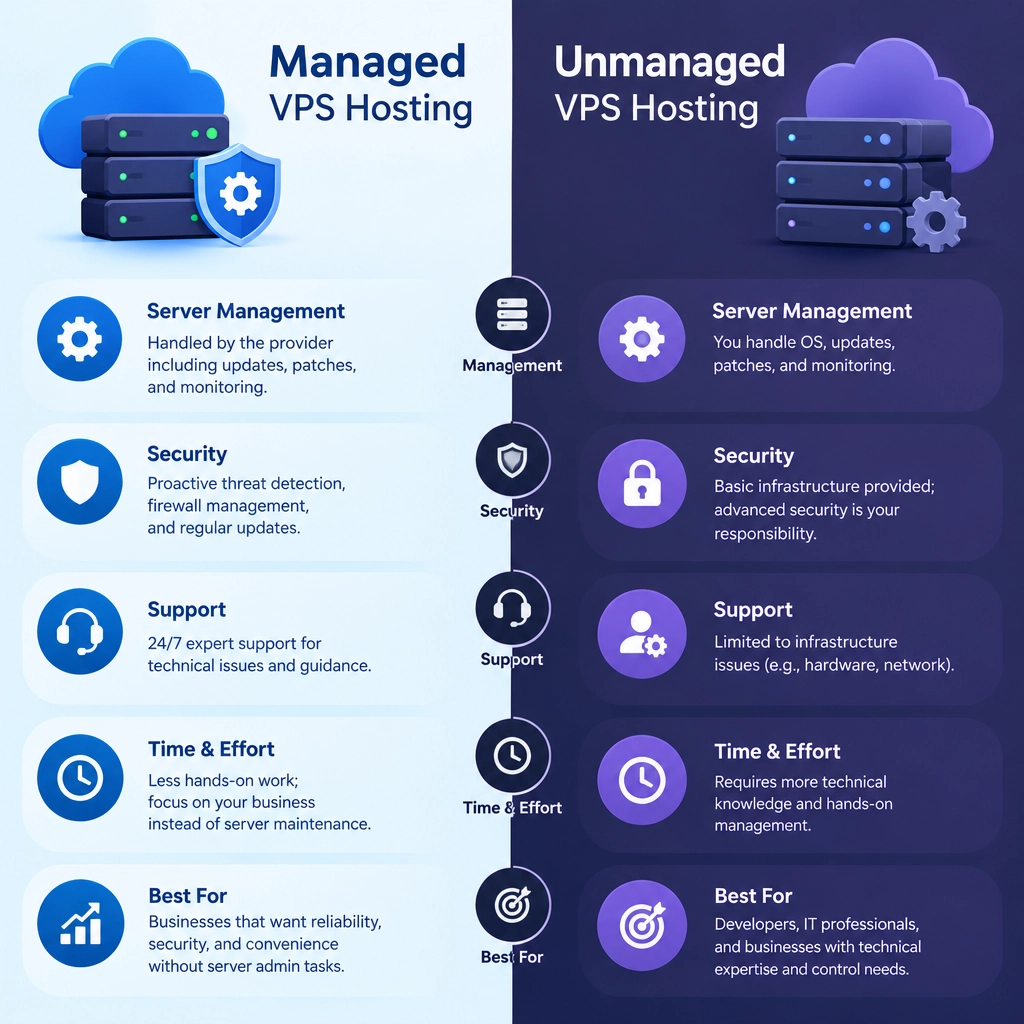
Managed vs. Unmanaged VPS Hosting: Key Differences
A virtual private server (VPS) gives you a dedicated slice of server resources without the cost of a physical machine. It can offer more control and flexibility than shared hosting, but there’s an important choice to make before signing up: managed or unmanaged?
The difference comes down to who takes care of the server. With managed hosting, your provider handles many technical tasks. With unmanaged hosting, you’re largely in charge. Neither option is automatically better—the right fit depends on your skills, time, budget, and website needs.
What is managed VPS hosting?
A managed VPS includes ongoing support for server operations. Depending on the provider and plan, that may include initial setup, operating system updates, security patches, monitoring, backups, performance tuning, and help troubleshooting server issues.
Think of it as renting a private workspace where someone else looks after much of the building’s infrastructure. You can focus more on your website or application, while the hosting team handles routine maintenance behind the scenes.
“Managed” doesn’t mean the provider will take care of everything, though. Plans vary widely. One may include automated backups but charge extra for restoring them; another may offer support only for the server itself, not for your website software. Check exactly what’s included before you buy.
What is unmanaged VPS hosting?
With an unmanaged VPS, the provider generally supplies the virtual server and its network connection, but you’re responsible for configuring and maintaining it. That can mean installing software, setting up security, applying updates, managing backups, and diagnosing problems.
Unmanaged hosting offers more freedom. You can choose your software stack and customize the server to suit your project. But that freedom comes with responsibility: if an update breaks a service or a security setting is overlooked, you may be the one who needs to fix it.
This option is often a good fit for developers, system administrators, and technically confident users who want control and are comfortable working with server tools.
The key differences
Hands-on work
Managed VPS hosting reduces the amount of server administration you need to do. It can be especially helpful if you don’t have an IT team or would rather spend your time building a business than maintaining infrastructure.
Unmanaged hosting requires more involvement. Even routine tasks, such as checking logs or applying security updates, fall to you. If you enjoy that work—or already know how to do it—it may not feel like a burden.
Cost
Managed plans usually cost more because they include technical labor and support. That higher price may be worthwhile if it saves you hours of work or prevents costly downtime.
Unmanaged VPS plans are often cheaper upfront. However, the total cost isn’t always lower. You may need to pay a developer or system administrator when something goes wrong, or invest your own time in learning and maintenance.
Control and flexibility
Unmanaged servers typically give you greater control over configuration and software choices. This can matter when you have specific technical requirements or need to experiment with your setup.
Managed servers may limit certain changes to keep the environment stable and supportable. Providers differ, so ask about restrictions before committing if you need a particular operating system, control panel, or server configuration.
Security and responsibility
A managed host can help with patches, monitoring, and server-level security, but it doesn’t automatically make your entire website secure. You’ll still need to use strong passwords, keep site software updated, and manage user access.
With an unmanaged VPS, you’re responsible for both server maintenance and security decisions. That can be perfectly workable if you have the expertise and a consistent process—but it’s easy for important tasks to slip when you’re busy.
Support and troubleshooting
Managed plans generally offer more help with server-related problems, though the scope of support varies. Providers may not troubleshoot custom code, third-party applications, or issues outside their systems.
With unmanaged hosting, support may be limited to hardware, network, or account problems. You may need to solve software issues yourself or find outside help.
Which one should you choose?
Choose managed VPS hosting if you’re new to server administration, have limited time, or rely on your website for business and want help with routine upkeep. It’s also a sensible option when the cost of downtime outweighs the added hosting fee.
Choose unmanaged VPS hosting if you have the technical experience to configure and maintain a server, want full control, and are comfortable handling problems as they arise. It can be a practical choice for developers and teams with in-house IT expertise.
Before deciding, compare more than the monthly price. Ask what “managed” includes, how backups and restores work, what support covers, and whether you can make the changes your project needs. The best VPS is not simply the one with the most features or the lowest price—it’s the one that gives you the right balance of control, support, and responsibility.
Welcome to DediRock, your trusted partner in high-performance hosting solutions. At DediRock, we specialize in providing dedicated servers, VPS hosting, and cloud services tailored to meet the unique needs of businesses and individuals alike. Our mission is to deliver reliable, scalable, and secure hosting solutions that empower our clients to achieve their digital goals. With a commitment to exceptional customer support, cutting-edge technology, and robust infrastructure, DediRock stands out as a leader in the hosting industry. Join us and experience the difference that dedicated service and unwavering reliability can make for your online presence. Launch our website.