
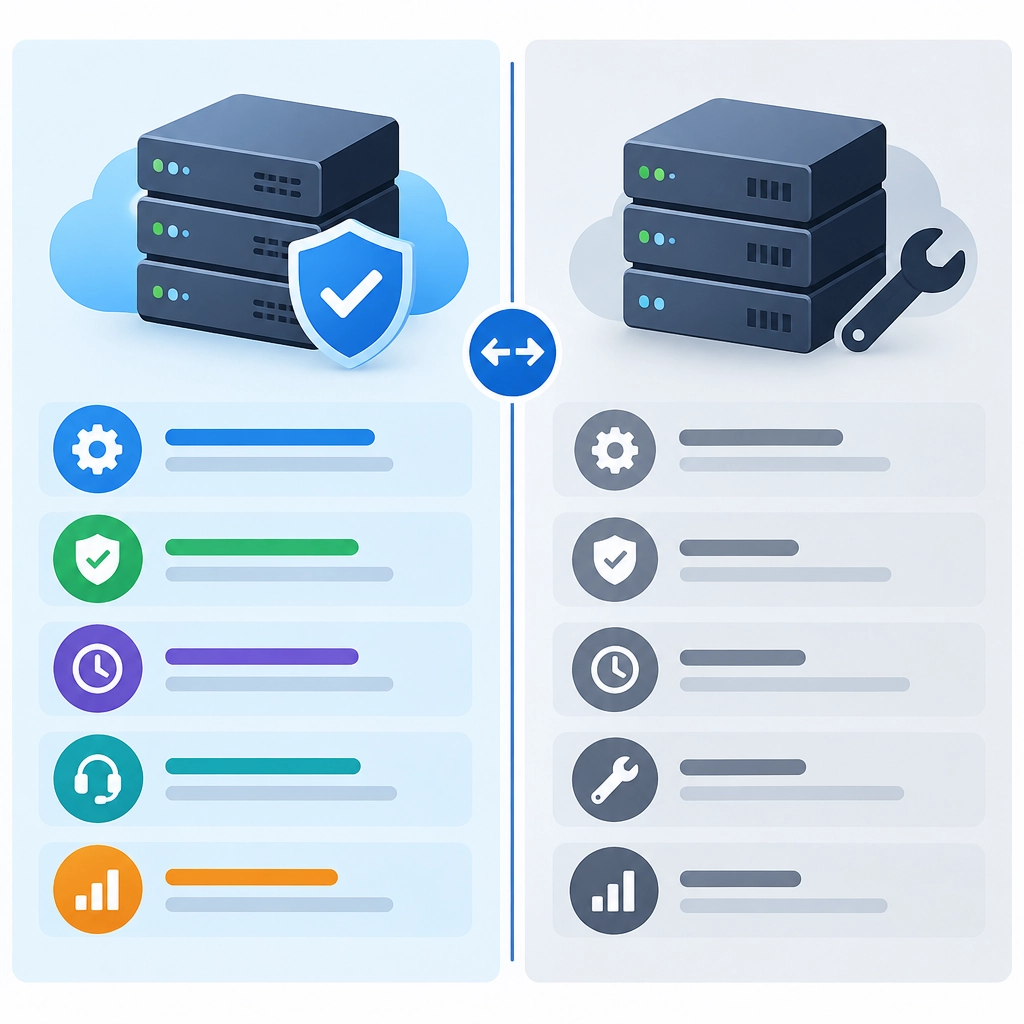
Managed vs. Unmanaged VPS Hosting: Key Differences to Know
A virtual private server (VPS) gives your website a dedicated slice of server resources without the cost of a whole physical machine. But before choosing a VPS plan, there’s an important question to answer: Do you want your hosting provider to manage the server, or do you want to manage it yourself?
That choice affects more than your monthly bill. It determines how much technical work you’ll handle, how quickly you can get help, and how much control you have over your hosting environment.
What is a VPS?
A VPS uses virtualization to divide a physical server into several isolated virtual servers. Each one has its own operating system, allocated resources, and configuration. Compared with shared hosting, a VPS typically offers more control and predictable performance. Compared with a dedicated server, it’s usually more affordable.
The “managed” or “unmanaged” label describes who takes care of the server’s technical upkeep.
Managed VPS hosting: support behind the scenes
With managed VPS hosting, the provider handles many routine server responsibilities. Depending on the plan, this can include software installation, security updates, monitoring, backups, troubleshooting, and performance optimization.
The exact level of support varies, so it’s worth checking what “managed” means before signing up. One provider may include proactive security monitoring and help with server issues, while another may only handle basic maintenance.
The main advantage is convenience. You don’t have to be a server expert to keep the underlying system in good shape. If something goes wrong, you can contact the provider’s support team rather than diagnosing every issue yourself.
Managed hosting is often a good fit for small businesses, busy site owners, and teams without an in-house systems administrator. It can also be a sensible choice if your website is important to your business and you’d rather spend time on content, customers, or product development than server maintenance.
The trade-off is cost. Managed plans generally cost more because they include technical labor and support. You may also have fewer options for customizing the server, depending on the provider’s policies.
Unmanaged VPS hosting: more control, more responsibility
With unmanaged VPS hosting, the provider usually supplies the virtual server and network infrastructure, but you take care of most of what runs on it. That may mean installing the operating system and applications, configuring security, applying updates, setting up backups, and responding to server problems.
For experienced developers and system administrators, this flexibility can be a major benefit. You can choose your software stack, adjust configurations, and build a setup tailored to your project. Unmanaged plans are also often less expensive than comparable managed options.
But lower prices don’t necessarily mean lower overall costs. You’ll need to invest time and technical knowledge, and mistakes can lead to downtime, security vulnerabilities, or lost data. If you’re new to server administration, even basic tasks—such as securing remote access or configuring a firewall—can take careful research.
Unmanaged hosting tends to suit developers, technically confident site owners, and businesses with someone on staff who can maintain the server.
The key differences at a glance
| Feature | Managed VPS | Unmanaged VPS |
|---|---|---|
| Server maintenance | Mostly handled by the provider | Mostly handled by you |
| Technical support | Often broader, depending on the plan | Usually limited to infrastructure issues |
| Customization | May have some restrictions | Typically more flexible |
| Monthly price | Usually higher | Usually lower |
| Technical expertise needed | Less | More |
| Time commitment | Lower | Higher |
Remember that providers define support differently. Some unmanaged hosts will still help if the physical server or network fails; that doesn’t necessarily mean they’ll troubleshoot your website or software.
How to choose
Start by thinking about your skills and schedule. If you’re comfortable working in a command line, understand server security, and want direct control, an unmanaged VPS could be a practical option. If server administration feels like a distraction—or a risk—managed hosting may be worth the added cost.
Next, consider how critical the site is. A personal project may tolerate occasional experimentation. An online store, client portal, or business website may need consistent maintenance and a clear path to expert help.
Finally, compare the details, not just the labels. Look at what support covers, whether backups are included, how security updates are handled, and what happens if the server goes offline. A plan that seems inexpensive may require paid add-ons or substantial hands-on work.
The right VPS is the one that fits both your technical comfort level and your priorities. If you want freedom and are ready to take responsibility, unmanaged hosting offers room to build. If you’d rather leave server upkeep to specialists, managed hosting can help you focus on the work your website is meant to support.
Welcome to DediRock, your trusted partner in high-performance hosting solutions. At DediRock, we specialize in providing dedicated servers, VPS hosting, and cloud services tailored to meet the unique needs of businesses and individuals alike. Our mission is to deliver reliable, scalable, and secure hosting solutions that empower our clients to achieve their digital goals. With a commitment to exceptional customer support, cutting-edge technology, and robust infrastructure, DediRock stands out as a leader in the hosting industry. Join us and experience the difference that dedicated service and unwavering reliability can make for your online presence. Launch our website.