
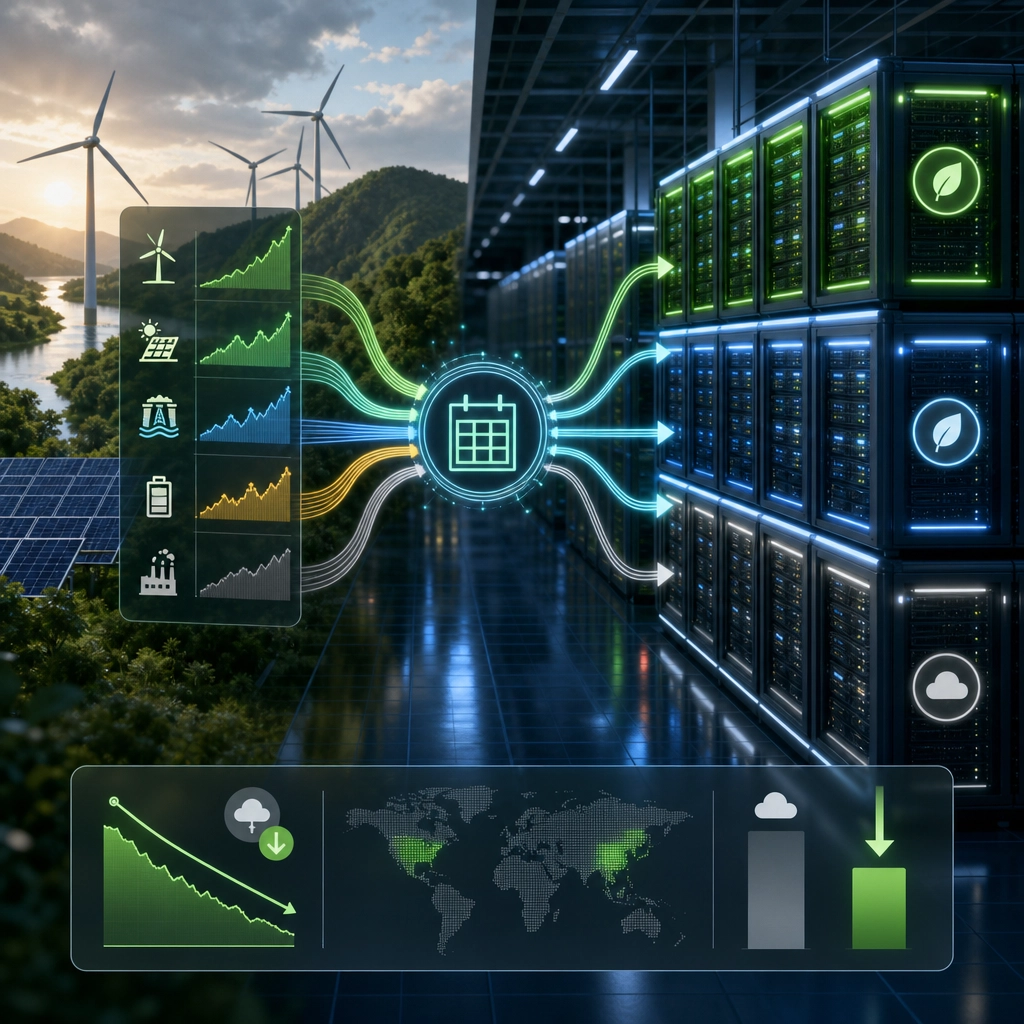
Data centers are often perceived as having fixed carbon footprints linked directly to their size and the energy mix from the grid. However, operators can significantly reduce emissions by scheduling flexible workloads during times when cleaner electricity is available. This approach, known as "carbon-aware computing," can effectively complement ongoing renewable energy procurement and efficiency programs, providing a viable method to decrease Scope 2 emissions and meet demands for 24/7 carbon-free energy.
Understanding Carbon-Aware Computing
Carbon-aware computing involves scheduling tasks that are compute-intensive but flexible, like data backups, AI model training, and report generation, for times when grid carbon intensity is lower or when renewable energy sources are available. The objective is to compare the emissions associated with executing a workload at various times or locations, ultimately choosing options that mitigate emissions while adhering to operational constraints.
Mechanisms of Carbon-Aware Scheduling
Electricity grids are dynamic, with solar and wind energy output fluctuating based on various factors such as weather conditions and demand. This variability allows operators to align workloads with cleaner energy availability. They identify which tasks can be rescheduled without breaching service-level agreements or other operational requirements. By doing this, data centers can optimize their energy usage and minimize emissions.
Challenges in Implementation
While the concept of carbon-aware computing is straightforward, implementing it in data centers presents challenges. These include:
- Limited visibility into tenant workloads, especially in colocation facilities.
- Difficulty in predicting workload power usage due to varying CPU/GPU demands.
- Uncertainties around renewable energy forecasts.
This leads to the need for effective categorization of workloads based on their flexibility, power usage, and compliance needs.
Practical Steps for Operators
To implement effective carbon-aware strategies, data center operators can take several actions:
- Monitoring and Data Collection: Enhance power telemetry to identify which workloads can be rescheduled and gauge the emissions impact of these shifts.
- Utilizing On-Site Renewable Energy: By integrating local renewable energy resources, operators can ensure that the additional energy used for flexible workloads is low in carbon. Coupling this with battery storage allows them to manage energy during high-demand times without relying on higher-emission energy sources.
Achieving Reliable Emissions Reductions
While perfect optimization may not be achievable in every data center, adopting carbon-aware computing practices can lead to meaningful emission reductions by taking advantage of existing "clean hours." This strategy not only supports sustainability goals but also aligns with operational realities that ensure data centers run effectively.
Welcome to DediRock, your trusted partner in high-performance hosting solutions. At DediRock, we specialize in providing dedicated servers, VPS hosting, and cloud services tailored to meet the unique needs of businesses and individuals alike. Our mission is to deliver reliable, scalable, and secure hosting solutions that empower our clients to achieve their digital goals. With a commitment to exceptional customer support, cutting-edge technology, and robust infrastructure, DediRock stands out as a leader in the hosting industry. Join us and experience the difference that dedicated service and unwavering reliability can make for your online presence. Launch our website.