
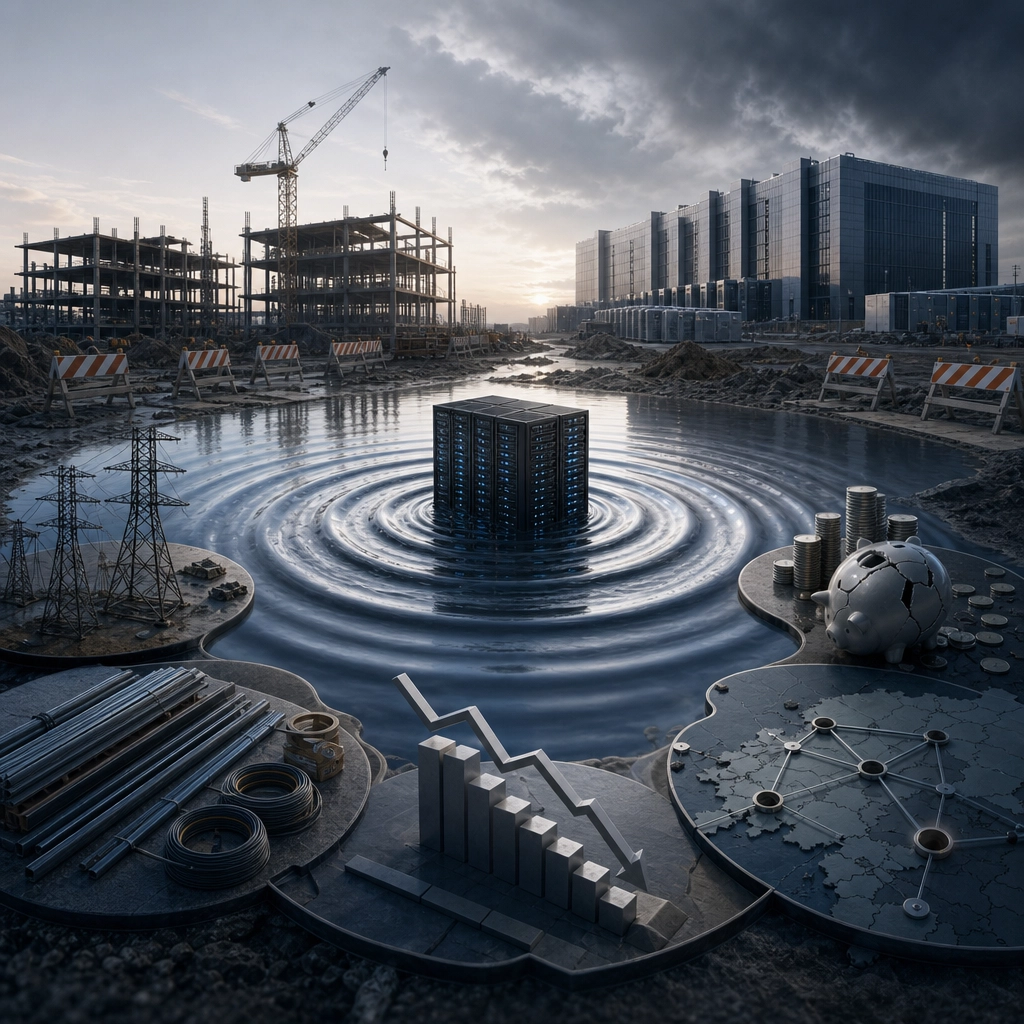
When a significant data center project gets halted or canceled, it has repercussions that extend well beyond the immediate project site. Usually, the process of linking a facility to the power grid involves securing a spot in a utility’s interconnection queue, making a deposit, and navigating the construction of substations or transmission lines specifically designed to accommodate the anticipated needs of the project. However, if the project is delayed or abandoned, these commitments don’t simply disappear; instead, they become problematic, causing cost implications that often go unnoticed.
According to a 2026 report by the Capgemini Research Institute, about 20% of data center interconnection requests do not convert into actual load. This survey of over 600 electricity executives found that approximately 67% of these requests are classified as “phantom” loads, which means 19% never materialize at all. This situation indicates a fundamental issue in how utilities are being asked to plan and invest amidst fluctuating demands.
Who Covers the Costs of Stranded Capacity?
While it may seem straightforward to assume that when a project collapses, the developer bears the loss, the reality is more nuanced. Developers certainly incur significant sunk costs in engineering, permitting, and preliminary construction that cannot be recouped, but utilities also face similar exposures. Often, utilities might begin constructing essential infrastructure before a project’s cancellation, and these investments stay in place, included in their rate base—whether the anticipated load arrives or not.
According to Sam Tabar, CEO of WhiteFiber, this complexity of cost distribution is rarely discussed publicly. Timing plays a critical role in determining who ultimately bears the expense; if a project is canceled prior to any utility construction and before customers start paying for it, the developer absorbs the cost. However, if the construction is underway or completed and the expected load disappears, the financial burden shifts to other customers who may have to cover these expenses.
The Reality of the Interconnection Queue
There is a widespread belief that when one project is canceled, the next in line can seamlessly take its place. Unfortunately, this is often not the case. The specifics of interconnection studies are tied to individual project locations and expected loads, meaning that introducing a different project can necessitate a revitalized study, which also requires time and leads to updated economic conditions influenced by changes in grid dynamics.
Case Studies Illustrating the Cascade of Cancellations
Examining three recent instances reveals how project cancellations influence timelines and costs differently:
-
Georgia: T5 Data Centers proposed a project near Augusta in 2022 but withdrew by year-end. Another company, Eagle South LLC, then filed plans for the “Project Eisenhower” on the same site, attracted by the existing power substation. However, this successor project is currently delayed compared to its initial schedule.
-
Virginia: QTS and Compass Datacenters retracted their plans for a large investment corridor after court rulings invalidated previous approvals. Compass reportedly invested $40 million before withdrawing, while QTS later ceased its appeals. This corridor was positioned atop Dominion Energy’s transmission infrastructure, which had been heavily marketed.
-
Cloud Leases: Microsoft shed approximately 2 GW of data center projects across the US and Europe in early 2025, with parts reassigned to competitors like Google and Meta without the need for a site or substation.
The Underestimated Ripple Effect
These case studies underscore the varying outcomes of similar situations. In Georgia, a new project reused the decommissioned site, while in Virginia, capacities obtained are still waiting for a successor. In cloud leasing, a competitor merely took over without significant infrastructure implications.
According to Sam Tabar, the extent of the ripple effect is surprising for many, as the assumption is that capacity freed by cancellations seamlessly adjusts back to market availability. However, he argues that there is an excessive focus on the hype surrounding proposed data center developments, while the fallout from cancellations and committed costs often goes unnoticed.
Welcome to DediRock, your trusted partner in high-performance hosting solutions. At DediRock, we specialize in providing dedicated servers, VPS hosting, and cloud services tailored to meet the unique needs of businesses and individuals alike. Our mission is to deliver reliable, scalable, and secure hosting solutions that empower our clients to achieve their digital goals. With a commitment to exceptional customer support, cutting-edge technology, and robust infrastructure, DediRock stands out as a leader in the hosting industry. Join us and experience the difference that dedicated service and unwavering reliability can make for your online presence. Launch our website.