
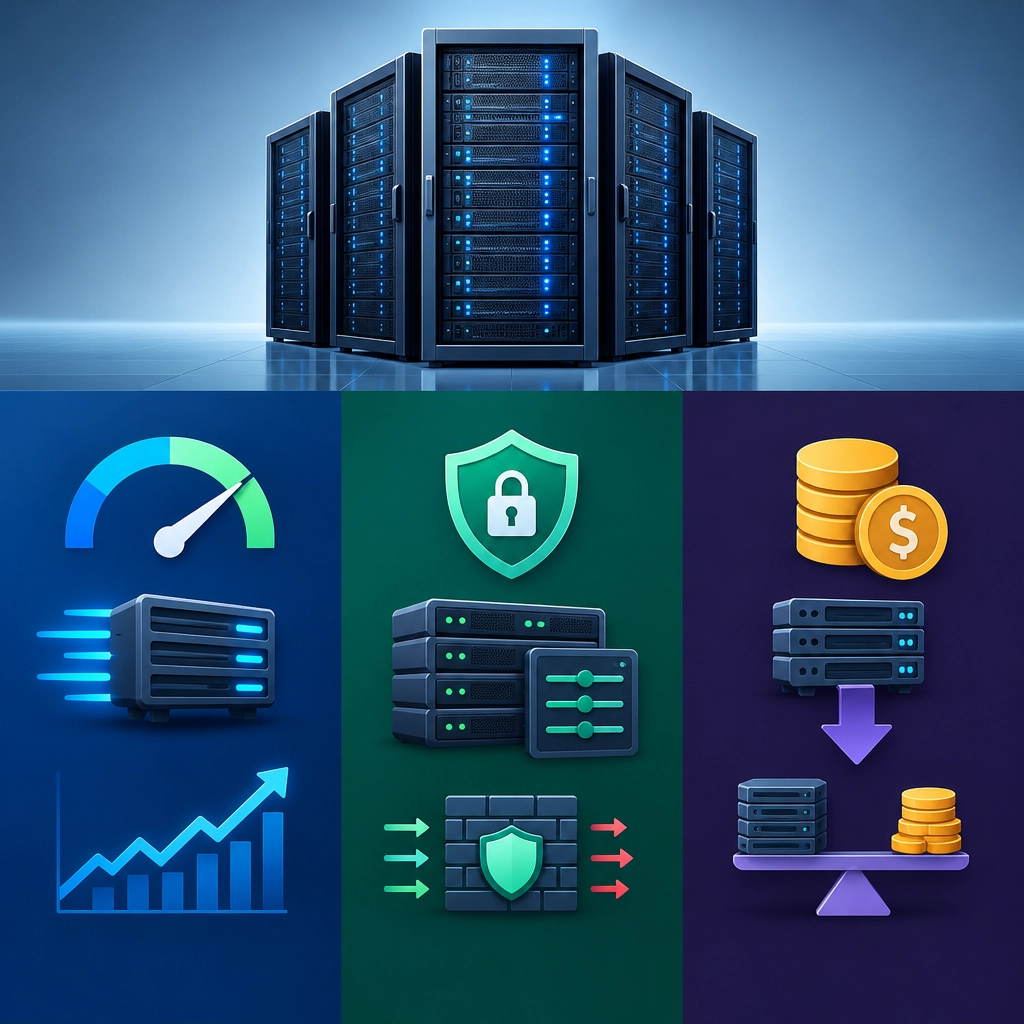
Dedicated Servers Explained: Performance, Control, and Cost
When a website or app starts outgrowing shared hosting, a dedicated server can sound like the obvious next step. You get a whole physical machine to yourself, with no neighboring customers competing for its resources. But dedicated hosting isn’t automatically the best choice for every project. It offers real advantages—and real costs—that are worth understanding before you commit.
What is a dedicated server?
A dedicated server is a physical computer in a data center reserved for one customer. Unlike shared hosting, where many customers use the same server, a dedicated server’s processing power, memory, and storage are assigned to your workloads.
You can often choose the operating system, configure software, and decide how the server is managed. Depending on the provider, you might handle setup and maintenance yourself, or pay for managed support.
Dedicated servers can host busy websites, online stores, databases, game servers, business applications, and other services that need consistent resources or specialized configuration.
Performance without the neighbors
The clearest benefit is predictable access to server resources. On shared hosting, a sudden traffic spike—or a resource-heavy site on the same machine—can sometimes affect performance. With a dedicated server, your workloads don’t have to compete with other customers for the same CPU and memory.
That can make a difference for applications with high traffic, complex processing, or strict performance requirements. You may also be able to choose faster storage, more memory, and network options suited to your needs.
Still, a dedicated server isn’t a magic speed button. A poorly optimized application can remain slow on powerful hardware, and network quality, software configuration, and database design all matter. The server gives you more room to improve performance; it doesn’t do the improvement for you.
More control—and more responsibility
A dedicated machine gives you greater control over how your hosting environment is set up. You can install specific software, adjust system settings, and tailor security rules to your application. For organizations with unusual technical requirements, that flexibility can be essential.
It can also help with compliance or data-handling needs, though having a dedicated server alone does not guarantee compliance. You’ll still need appropriate security practices, access controls, backups, and processes.
That control comes with responsibility. Someone must keep the operating system and applications updated, monitor the server, manage backups, respond to outages, and protect against security threats. A managed plan can shift some of that work to the provider, but it usually costs more and may still leave certain tasks in your hands.
Before choosing a plan, ask what “managed” actually includes. Does the provider handle updates, monitoring, security patches, and recovery assistance? Clear answers can prevent unpleasant surprises later.
The cost of a whole machine
Dedicated hosting generally costs more than shared hosting or many entry-level cloud options. You’re paying for an entire physical server, and potentially for management, support, backups, and additional network capacity.
The full price may be higher than the advertised monthly fee. Consider setup charges, licenses, backup storage, bandwidth limits, support options, and the staff time needed to maintain the system. If your team has to spend hours troubleshooting server issues, that effort is part of the cost too.
On the other hand, a dedicated server can be good value when a business needs steady performance or has workloads that use its resources efficiently. The right comparison isn’t just “Which plan is cheapest?” It’s “What will this service cost, and what will it reliably do for us?”
When does a dedicated server make sense?
It may be a strong fit when your site has sustained, substantial traffic; your application needs specific system settings; or you need consistent access to hardware resources. It can also suit teams that already have the expertise to administer a server—or the budget to pay for managed help.
For smaller sites, early-stage projects, and workloads that change frequently, a virtual private server or cloud hosting may be more practical. These options can offer room to grow without requiring you to commit to an entire physical machine. They may also make it easier to scale resources up or down.
The best choice depends on your workload, technical capacity, and budget. Look at actual performance data, estimate the people-hours involved, and ask providers what happens when something goes wrong. A dedicated server is most valuable when its extra performance and control solve a real problem—not simply because it sounds like the most powerful option.
Welcome to DediRock, your trusted partner in high-performance hosting solutions. At DediRock, we specialize in providing dedicated servers, VPS hosting, and cloud services tailored to meet the unique needs of businesses and individuals alike. Our mission is to deliver reliable, scalable, and secure hosting solutions that empower our clients to achieve their digital goals. With a commitment to exceptional customer support, cutting-edge technology, and robust infrastructure, DediRock stands out as a leader in the hosting industry. Join us and experience the difference that dedicated service and unwavering reliability can make for your online presence. Launch our website.