
Dedicated Server vs. VPS: Which One Should You Choose?
Choosing a hosting plan can feel like picking between a roomy house and a well-designed apartment. Both can be comfortable, capable places to run a website or application—but they differ in cost, control, and how much space you can count on.
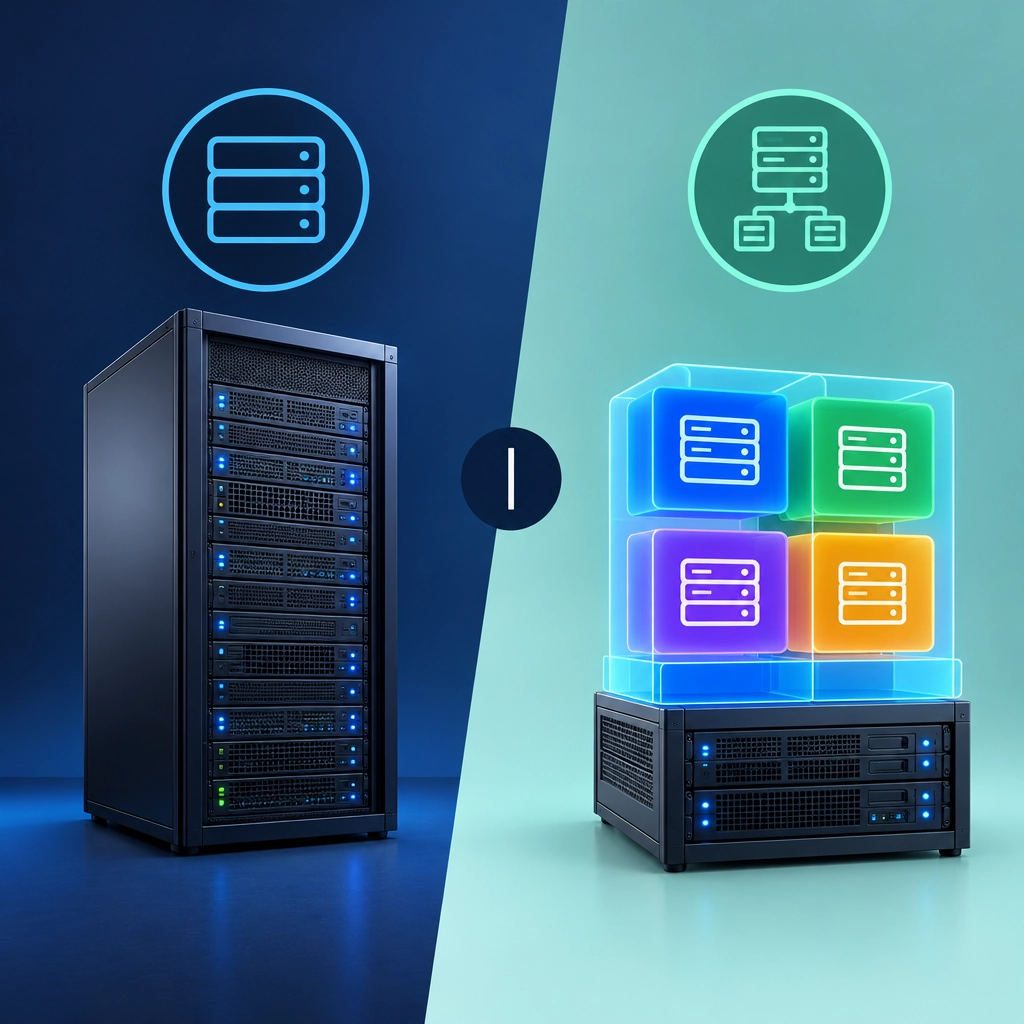
A dedicated server gives you a physical machine reserved for your use. A virtual private server (VPS) gives you a virtual slice of a physical machine, with resources allocated to your account. The right choice depends less on which option sounds more powerful and more on what your project actually needs.
What’s the difference?
With a dedicated server, the processor, memory, and storage belong to your workloads alone. You generally get extensive control over the server’s setup, though the hosting provider may manage some hardware or maintenance tasks depending on the plan.
A VPS runs on a physical server shared with other customers, but virtualization separates each customer’s environment. Your VPS has its own operating system and a defined allocation of resources. It often feels like a standalone server, even though the underlying hardware is shared.
That distinction matters: dedicated resources can offer more predictable performance, while virtualization can make hosting more affordable and easier to scale.
When a VPS makes sense
For many small and medium-sized projects, a VPS is a practical place to start. It can host business websites, online stores, development environments, and apps that have outgrown basic shared hosting.
The biggest draw is value. You get more control than you typically would with shared hosting without paying for an entire physical machine. VPS plans also come in a range of sizes, so you may be able to increase resources as your site grows.
A VPS is a good fit if:
- Your traffic is steady or growing, but not consistently massive.
- You want a separate environment and administrative access.
- You need a more affordable option than a dedicated server.
- Your application can run comfortably within a set resource allocation.
Just remember that VPS plans vary. Providers may advertise “guaranteed” resources, but performance can still depend on the host’s hardware, virtualization technology, and management practices. Compare plans carefully, and check whether backups, security updates, and technical support are included.
When a dedicated server is worth it
A dedicated server is often the better choice when performance, control, or isolation is a top priority. Because you don’t share the machine’s hardware with other customers, you can avoid some of the resource competition possible in shared environments.
This can be useful for high-traffic websites, large databases, demanding applications, or specialized software that needs a particular configuration. Dedicated servers may also suit organizations with strict security or compliance requirements—but a dedicated machine alone doesn’t guarantee compliance. Configuration, access controls, and operational procedures still matter.
Consider a dedicated server if:
- Your workloads regularly push the limits of a VPS.
- You need substantial or highly predictable computing resources.
- Your application requires unusual hardware or low-level configuration.
- You have the technical expertise—or managed support—to maintain it.
The trade-off is cost and responsibility. Dedicated hosting is usually more expensive, and server administration may require skills in operating systems, networking, security, and backups. A managed plan can reduce that workload, but typically costs more than an unmanaged one.
Cost, scaling, and management
A VPS is generally easier to enter and may be simpler to scale in small steps. It’s a flexible choice for testing ideas or expanding a growing project without committing to a full physical machine. However, upgrading can involve downtime or plan limits, so check how the provider handles changes.
Dedicated servers tend to involve a larger commitment. They can be cost-effective when you genuinely need their capacity, but paying for unused resources doesn’t make a project faster or more successful. The server also needs ongoing care: monitoring, patching, backups, and recovery planning.
Neither option is automatically “hands-off.” The key question is how much server management you want to take on yourself, and whether your provider includes help when something goes wrong.
How to choose
Start with your workload, not the product label. Estimate your traffic, memory and storage needs, and how demanding your software is. Then consider what downtime would mean, whether resource fluctuations are acceptable, and who will handle updates and security.
If you’re unsure, a VPS is often a sensible starting point. Monitor performance as real usage develops, and upgrade when you can point to a clear need—such as persistent resource pressure or a growing database. If your application needs more consistent capacity or a level of hardware control that a VPS can’t provide, a dedicated server may be the better investment.
The best server is not necessarily the biggest one. It’s the one that gives your project enough reliable capacity, fits your budget, and leaves you with a manageable amount of technical work.
Welcome to DediRock, your trusted partner in high-performance hosting solutions. At DediRock, we specialize in providing dedicated servers, VPS hosting, and cloud services tailored to meet the unique needs of businesses and individuals alike. Our mission is to deliver reliable, scalable, and secure hosting solutions that empower our clients to achieve their digital goals. With a commitment to exceptional customer support, cutting-edge technology, and robust infrastructure, DediRock stands out as a leader in the hosting industry. Join us and experience the difference that dedicated service and unwavering reliability can make for your online presence. Launch our website.