
Cloud VPS vs. Traditional VPS Hosting: What’s the Difference?
A virtual private server (VPS) offers a middle ground between shared hosting and a dedicated server. You get a slice of server resources for your own use, usually with more control and predictable performance than shared hosting.
But not all VPS hosting works the same way. Cloud VPS and traditional VPS plans both provide a virtual server, yet they differ in how that server is built, how resources are managed, and what happens when your needs change. Here’s how to choose between them.
What is a traditional VPS?
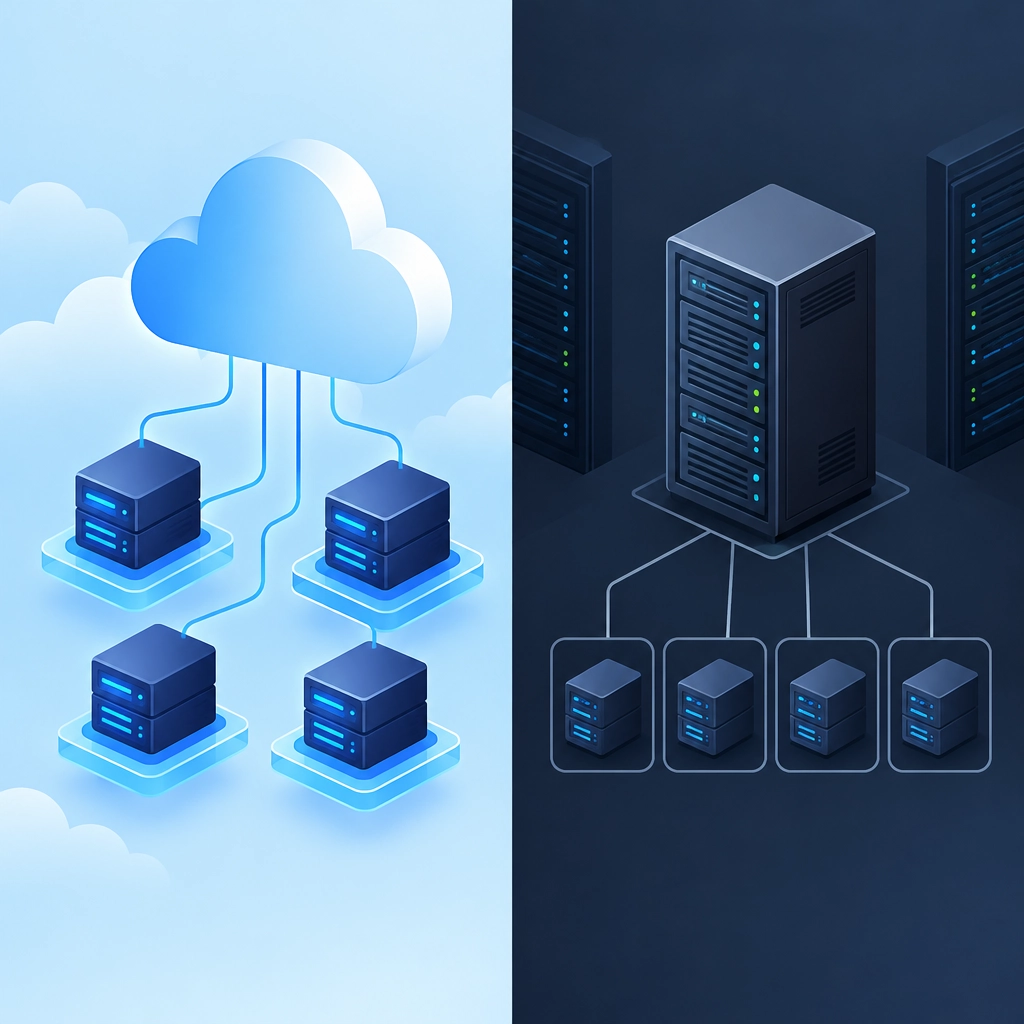
A traditional VPS runs on a physical server that has been divided into multiple virtual servers. Each VPS gets an assigned share of that machine’s resources, such as CPU, memory, and storage.
This setup can be a good fit for websites and applications with steady, predictable demands. It’s often straightforward to understand: you choose a plan, receive a set amount of resources, and pay a fixed monthly price.
The main limitation is that your VPS is tied more closely to its host machine. If that physical server has a hardware problem, your service may be disrupted until the provider can fix the issue or move your VPS. Upgrading can also involve changing plans or migrating to another server.
What is a Cloud VPS?
A Cloud VPS also gives you a virtual server, but it runs within a cloud infrastructure made up of multiple connected physical servers. Depending on the provider’s design, resources and workloads may be distributed across that infrastructure rather than being tied to one machine.
This can make Cloud VPS plans easier to scale. You may be able to increase memory, storage, or CPU resources as your workload grows. Some providers also offer faster recovery options if a physical server fails, though the exact protections vary by service.
“Cloud” doesn’t automatically mean unlimited capacity or zero downtime. Cloud VPS plans still have defined limits, and reliability depends on the provider’s infrastructure, backup policies, and support.
The key differences
Scalability
Cloud VPS often has the edge when demand changes. If traffic spikes or your application grows, adding resources may be simpler than moving to a larger traditional VPS plan.
Traditional VPS hosting can still scale, but upgrades may be less flexible. For a stable site with consistent traffic, that may not matter.
Reliability and availability
Because cloud infrastructure may draw on multiple servers, a Cloud VPS can offer more options for recovery from hardware issues. However, this depends on how the provider has built its platform. Check the service’s uptime commitments and backup or failover features rather than relying on the word “cloud.”
A traditional VPS may be more exposed to problems affecting its host machine. Some providers mitigate this with monitoring, backups, and migration procedures, so ask what happens if the server fails.
Performance
Neither option is automatically faster. Performance depends on the hardware, storage type, network, virtualization technology, and how the provider manages resource sharing.
A traditional VPS with well-provisioned resources can perform very well. A Cloud VPS can offer flexibility, but performance may vary between providers and configurations. Look for clear resource specifications and consider testing the service before moving an important application.
Pricing
Traditional VPS plans often use simple monthly pricing, making costs easier to predict. Cloud VPS pricing can be equally straightforward, but some providers charge based on usage or bill separately for storage, backups, bandwidth, or other services.
Compare the full monthly cost—not just the entry-level price. A flexible plan is useful only if its billing structure suits your budget.
Management and setup
Both types can be managed or unmanaged. With managed hosting, the provider typically handles more server maintenance and support. With unmanaged hosting, you’re responsible for tasks such as updates, security configuration, and troubleshooting.
This distinction may matter more than whether the VPS is cloud-based. Choose a management level that matches your technical experience and the time you can dedicate to server upkeep.
Which one should you choose?
A traditional VPS may be the better choice if your workload is steady, you want a clear fixed price, and you don’t expect to change your resources often.
A Cloud VPS may suit you if your application needs to scale, your traffic fluctuates, or you value infrastructure designed for flexible recovery and growth. Just confirm what those features actually include.
Before signing up, compare resource limits, backup policies, support quality, uptime terms, upgrade options, and total cost. The best VPS is not simply the one with the more modern label—it’s the one that reliably supports your workload without adding unnecessary complexity or expense.
Welcome to DediRock, your trusted partner in high-performance hosting solutions. At DediRock, we specialize in providing dedicated servers, VPS hosting, and cloud services tailored to meet the unique needs of businesses and individuals alike. Our mission is to deliver reliable, scalable, and secure hosting solutions that empower our clients to achieve their digital goals. With a commitment to exceptional customer support, cutting-edge technology, and robust infrastructure, DediRock stands out as a leader in the hosting industry. Join us and experience the difference that dedicated service and unwavering reliability can make for your online presence. Launch our website.