
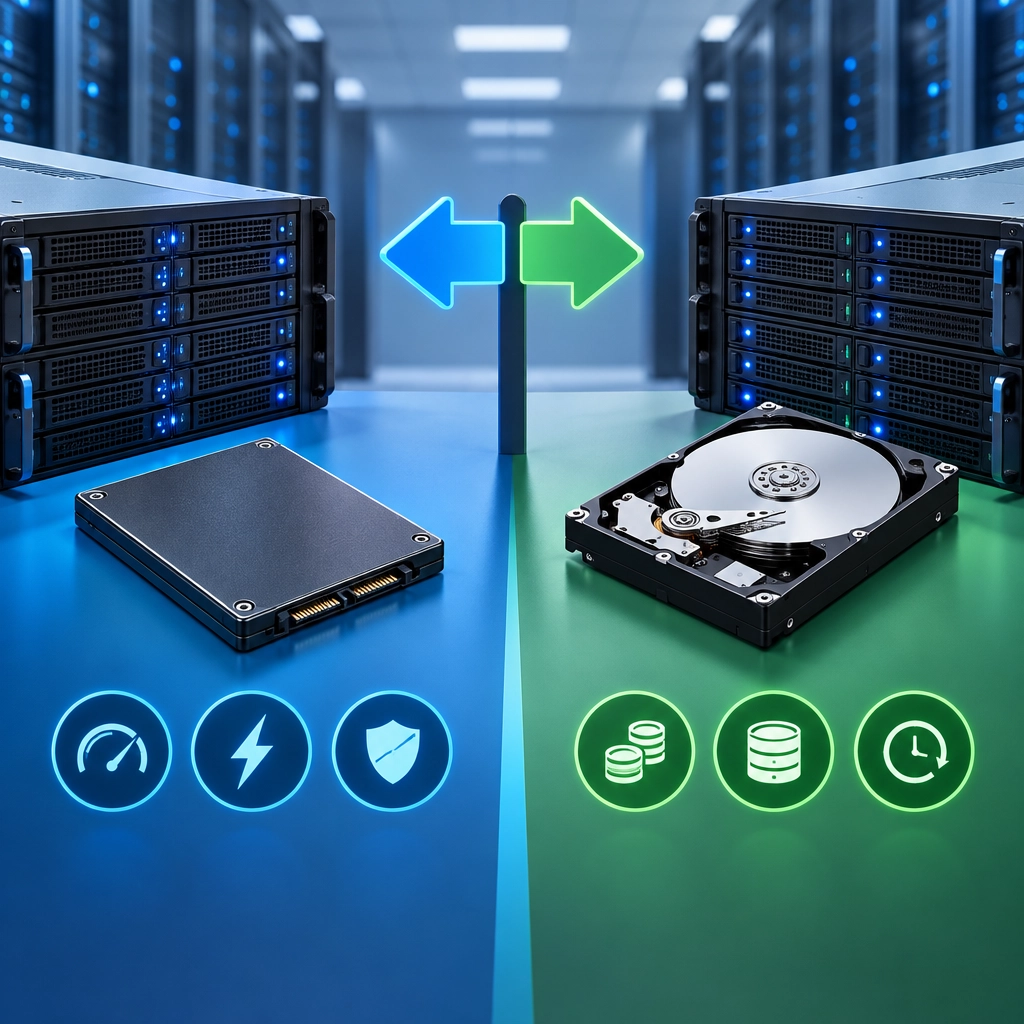
Choosing Between SSD and HDD Dedicated Servers
When you’re selecting a dedicated server, storage is one of those decisions that can quietly shape your day-to-day experience. SSDs are known for speed, while HDDs are often associated with affordability and larger capacities. But which one is right for your server? The answer depends less on which technology is “better” and more on what your workload needs.
What’s the difference?
A hard disk drive (HDD) stores data on spinning magnetic platters, with a moving read/write head accessing the information. This design has been around for decades and remains a practical way to store large volumes of data at a relatively low cost.
A solid-state drive (SSD) stores data on flash memory chips. It has no moving parts, which allows it to access information much faster and makes it more resistant to mechanical wear. Some servers use NVMe SSDs, which can deliver even higher speeds than traditional SATA SSDs.
Where SSDs shine
For workloads that make frequent requests for data, an SSD can make a noticeable difference. Databases, busy websites, ecommerce platforms, virtual machines, and applications with lots of small file operations often benefit from faster storage access.
That speed can mean quicker page loads, faster database queries, and shorter application response times. SSDs also handle many simultaneous read-and-write requests more effectively than HDDs, making them a strong choice for servers that need to serve multiple users at once.
Because SSDs have no spinning components, they’re also quieter and less vulnerable to physical shock. In a professionally managed data center, physical shock may not be a major concern—but fewer moving parts can still be a welcome reliability advantage.
Why HDDs still make sense
HDDs remain useful when capacity matters more than speed. They can provide a lot of storage at a lower price per terabyte, which makes them a good fit for backups, archives, media libraries, and other workloads where data is stored frequently but accessed less often.
For example, a server holding years of backup snapshots may not need SSD-level performance. If files are only retrieved occasionally, spending more for faster storage might not deliver enough practical value to justify the cost.
HDDs can also be a sensible option for large sequential workloads, such as storing and streaming sizable media files. The right setup depends on how many users are accessing those files and how quickly they need to be delivered.
Think about workload, not just drive type
A useful way to choose is to consider how your server handles data:
- Choose SSDs for databases, high-traffic websites, application servers, and latency-sensitive workloads.
- Consider HDDs for backups, archives, and large collections of infrequently accessed files.
- Use both when you need fast working storage as well as economical capacity.
A hybrid arrangement can keep frequently used data—such as an operating system, application files, or active database—on SSDs, while less frequently accessed data sits on HDDs. Some hosting providers offer this setup directly; in other cases, you may need to configure storage tiers yourself.
Look beyond the price tag
Storage capacity and monthly cost are only part of the equation. Check the drive interface and performance details, such as whether an SSD is SATA or NVMe. Also look at the server’s memory, processor, network connection, and backup options. A fast drive can’t compensate for a bottleneck elsewhere in the system.
It’s also worth checking whether the quoted storage is included in a managed backup plan. A dedicated server’s drives store your data, but that doesn’t automatically mean you have a separate, recoverable backup. Important data should have a backup strategy regardless of the storage type.
Finally, consider how your needs may change. If your database is growing quickly or your traffic is climbing, paying more for SSDs today may help avoid a storage upgrade later. If your server mainly holds cold data, HDD capacity may be the more sensible investment.
The best choice comes down to what your users and applications need most: quick access, plenty of space, or a balance of both. Match the storage to the workload, and your server budget is more likely to support performance where it actually matters.
Welcome to DediRock, your trusted partner in high-performance hosting solutions. At DediRock, we specialize in providing dedicated servers, VPS hosting, and cloud services tailored to meet the unique needs of businesses and individuals alike. Our mission is to deliver reliable, scalable, and secure hosting solutions that empower our clients to achieve their digital goals. With a commitment to exceptional customer support, cutting-edge technology, and robust infrastructure, DediRock stands out as a leader in the hosting industry. Join us and experience the difference that dedicated service and unwavering reliability can make for your online presence. Launch our website.