
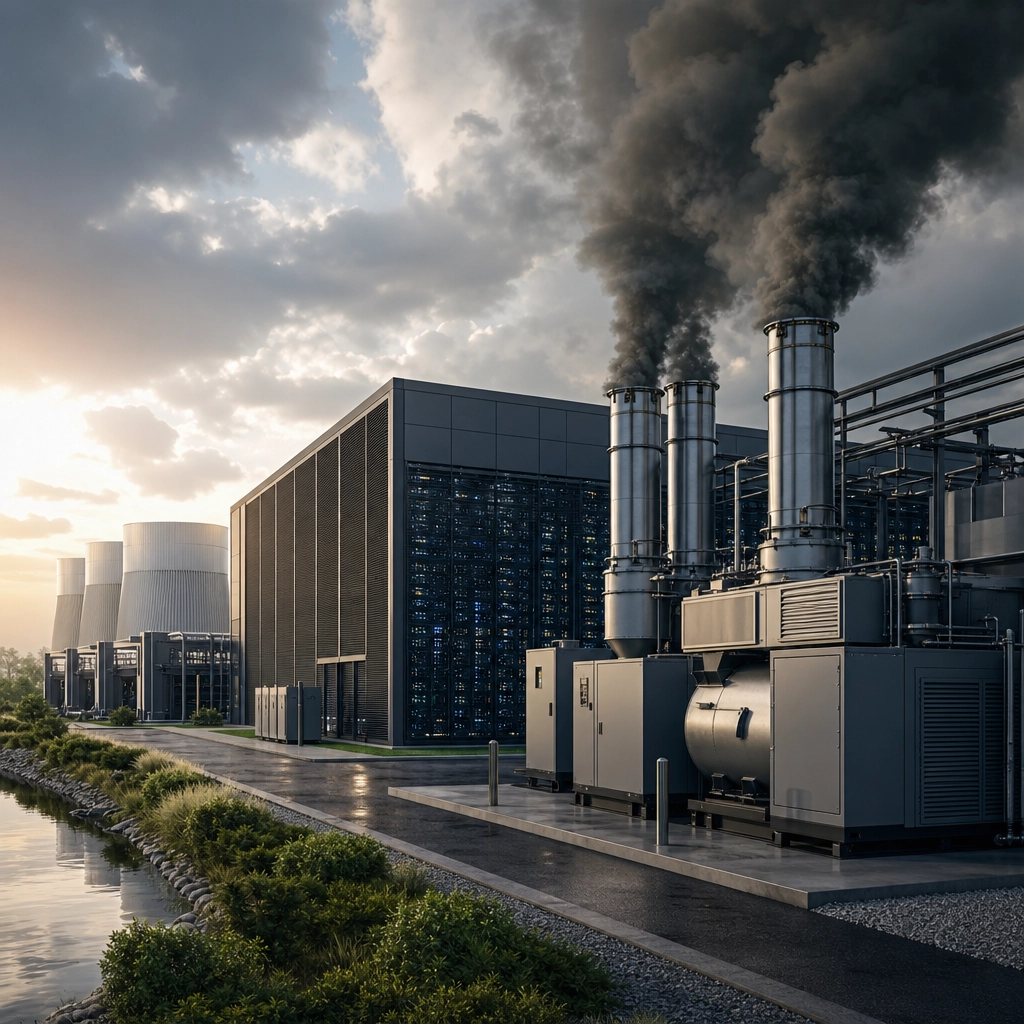
As the data center industry adapts to increasing electricity grid constraints, there is a growing reliance on on-site power generation. This transition, particularly among AI data centers, has raised significant environmental compliance challenges.
A recent incident involving a New Jersey AI data center operator, which faced a substantial penalty for unpermitted natural gas generators, highlights this issue. The New Jersey Department of Environmental Protection (NJDEP) imposed a $1.07 million fine on DataOne for operating 62 generators without the necessary permits. The operator has disputed the findings but is taking steps to comply with regulatory requirements.
The rapid acceleration of AI infrastructure development means that on-site power generation is becoming intertwined with environmental impacts. According to industry analyst Abhijit Sunil, AI data centers are increasingly functioning as both power generation plants and computing facilities. The need for expedited deployment often overshadows traditional permitting processes, complicating the environmental landscape.
While behind-the-meter power generation is a common approach to mitigate demands on constrained power grids, it does not negate the environmental costs associated with such practices. Sunil emphasizes that reducing pressure on the grid does not equate to eliminating emissions or other pollutants. Local residents may still face challenges from air pollutants and noise generated by on-site power sources.
Given the complexities involved, Sunil advocates for comprehensive assessments of all relevant factors, including electricity consumption, water usage, land requirements, emissions, and associated noise. Such holistic evaluations help clarify the distinct environmental issues at play and ensure that the socioeconomic benefits of data centers are considered.
Investment strategies for data centers tend to focus heavily on power availability and operational reliability, often to the detriment of environmental priorities. A recent IDC survey showed that while energy efficiency is a top priority, concerns about environmental sustainability were less popular among operators.
To address these challenges, there is a call for greater transparency regarding site-specific impacts. Facilities should disclose information about their operational equipment, energy sources, emissions, and compliance status. This proactive approach aims to keep communities informed and minimize surprises as operational conditions change.
Furthermore, operators must be diligent in securing necessary permits for on-site generation, as failing to do so can lead to significant operational disruptions. Legal expert Pat Fanning emphasizes the importance of adhering to regulatory requirements, as non-compliance can result in severe penalties and injunctions that threaten a facility’s ability to continue operations.
Overall, as the data center landscape evolves, balancing the need for efficient power solutions with environmental responsibility remains a critical challenge for the industry and its stakeholders.
Welcome to DediRock, your trusted partner in high-performance hosting solutions. At DediRock, we specialize in providing dedicated servers, VPS hosting, and cloud services tailored to meet the unique needs of businesses and individuals alike. Our mission is to deliver reliable, scalable, and secure hosting solutions that empower our clients to achieve their digital goals. With a commitment to exceptional customer support, cutting-edge technology, and robust infrastructure, DediRock stands out as a leader in the hosting industry. Join us and experience the difference that dedicated service and unwavering reliability can make for your online presence. Launch our website.