
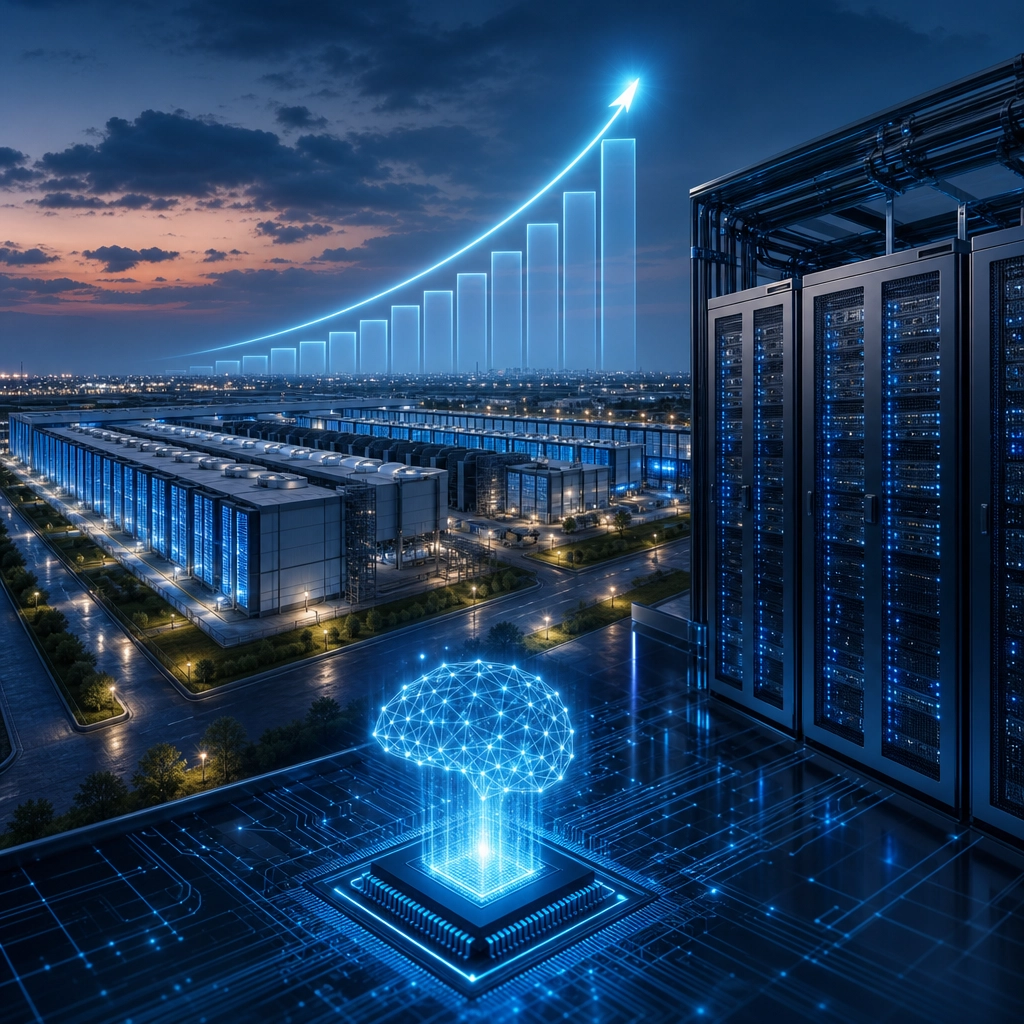
Worldwide data center capital expenditure (capex) is expected to surpass $3 trillion by the year 2030, largely fueled by the expansion of hyperscalers, sovereign AI programs, and specialized cloud providers to accommodate increasing AI workloads. This projection comes from a recent report by Dell’Oro Group, which reveals that their 2030 capex outlook has almost doubled since their earlier forecast in January 2026, influenced by heightened spending from hyperscalers, a rise in global data center power capacity estimates, and escalating commodity prices.
Baron Fung, a vice president at Dell’Oro Group, indicated that AI accelerators will comprise roughly a third of the anticipated $3 trillion in capex, highlighting AI infrastructure as a crucial factor driving this growth. However, the total expenditure for AI infrastructure extends beyond just the cost of these accelerators. Essential elements also include servers to house the chips, specialized networking to form AI clusters, and storage solutions for both training and inference.
Fung added that the forecast assumes the global power available to data centers will exceed 200 gigawatts (GW), with the four largest US cloud providers predicted to represent around half of the total global data center capex. The AI-specialized cloud segment—which encompasses model developers and neocloud providers—is anticipated to experience nearly a 60% compound annual growth rate (CAGR), in tandem with a rise in demand for general-purpose servers as workloads involving inference, agentic AI, and storage expand.
Supply Chain and Pricing Constraints
The major cloud players are leveraging their buying power to secure favorable pricing and long-term capacity commitments from suppliers, potentially impacting component availability for other buyers by prolonging lead times and driving up costs. The heightened adoption of custom chips and architectures by these providers helps mitigate costs at scale while exerting pressure on server manufacturers’ pricing. Initially, many enterprises are likely to opt for rented GPU capacity to avoid significant upfront investments, particularly as utilization remains uncertain.
Fung suggested that the significant scale and economics achievable by these large providers may encourage more businesses to transition their workloads to the cloud. He predicts a hybrid model for many enterprises, where stable and heavily utilized AI workloads transition to on-premises when it becomes a more economical choice, while variable demands continue to be served via the cloud.
Infrastructure and Cooling Needs
As AI workloads typically demand greater electrical power per rack relative to traditional computing, operators must make comprehensive changes throughout their data centers, including not just the installation of more accelerators but also enhancements in power distribution, cooling systems, and supporting architecture. Gordon Johnson from Subzero Engineering advised that operators should expand capacity incrementally, identify areas for high-density computing, and incorporate new cooling strategies with existing systems. He cautioned that building capacity too rapidly represents a significant risk.
Power Availability and Economic Factors
Power availability stands out as the primary constraint on AI infrastructure growth. Modern data centers often require hundreds of megawatts of power, and some designs now consider gigawatt-scale capabilities. Luke Edney of Norton Rose Fulbright highlighted that the economics of projects are increasingly influenced by the timelines and costs associated with procuring power, which significantly affect site-selection strategies.
In established markets, grid connection timelines can extend beyond five years, prompting developers to seek locations with surplus renewable energy generation, favorable connection policies, and proactive utility partners. The demand for reliable, low-carbon electricity is simultaneously sparking interest in on-site energy generation solutions, such as fuel cells and small modular reactors.
Edney reiterated that businesses must navigate between the urgency of advancing AI initiatives and the need to evaluate financial risks associated with making premature commitments. Emphasizing that AI investments should align with measurable business outcomes rather than merely reacting to market pressures is crucial for sustainability in this rapidly evolving sector.
Welcome to DediRock, your trusted partner in high-performance hosting solutions. At DediRock, we specialize in providing dedicated servers, VPS hosting, and cloud services tailored to meet the unique needs of businesses and individuals alike. Our mission is to deliver reliable, scalable, and secure hosting solutions that empower our clients to achieve their digital goals. With a commitment to exceptional customer support, cutting-edge technology, and robust infrastructure, DediRock stands out as a leader in the hosting industry. Join us and experience the difference that dedicated service and unwavering reliability can make for your online presence. Launch our website.