
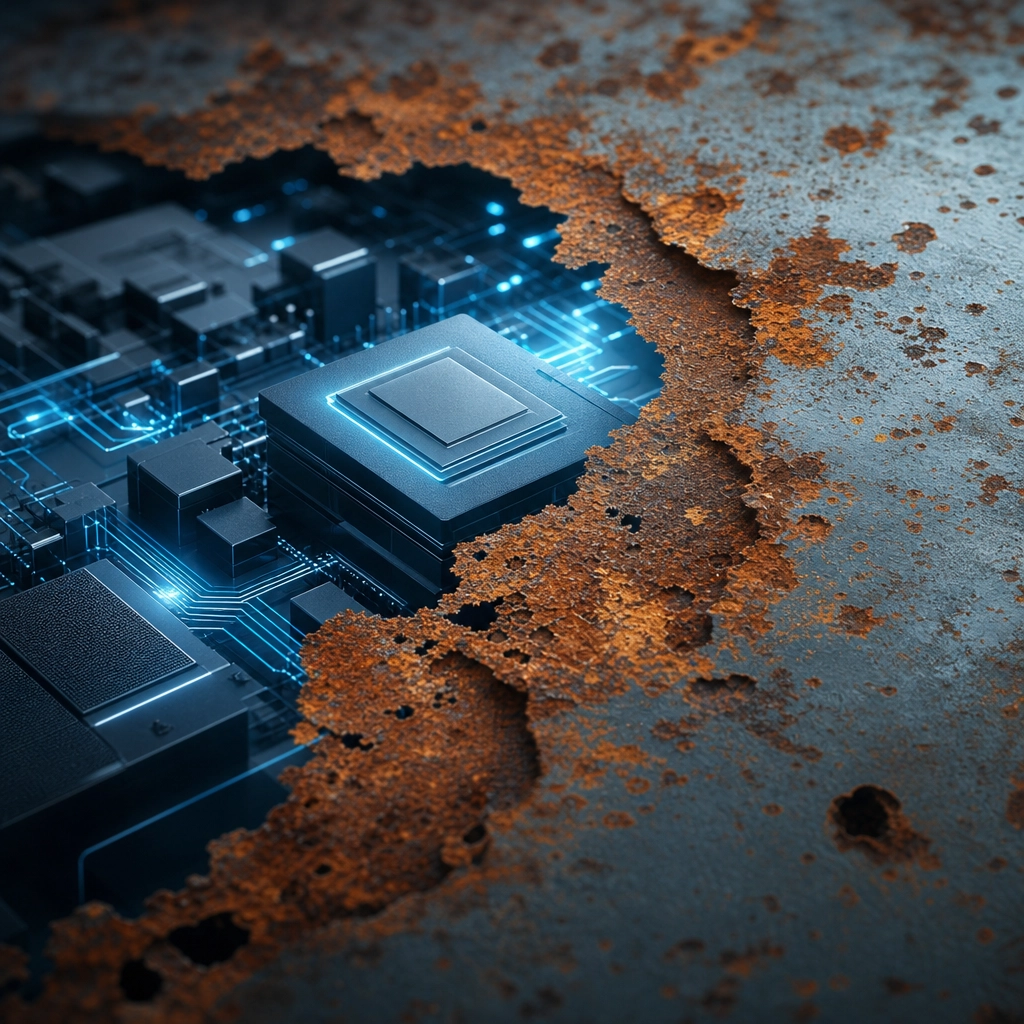
The global race to construct artificial intelligence infrastructure signifies one of the most substantial capital investment cycles in recent memory, with technology firms pouring unprecedented amounts into AI-focused data centers to meet the soaring demand for enhanced computing capacity. Each hyperscale campus represents a massive financial commitment encompassing computing hardware, electrical systems, cooling setups, and supporting utilities.
However, as attention has predominantly centered on aspects like power availability, liquid cooling, and rapid deployment, one critical factor that directly influences long-term asset reliability—corrosion—has often been neglected. Unlike many maintenance issues, corrosion can remain hidden during the initial stages of construction, only to surface later when equipment is put into operation.
Historically, corrosion has been treated as a maintenance problem, but it often begins to develop months before a facility becomes operational. The processes of manufacturing, transportation, storage, and construction can all trigger corrosion. For facilities that must operate continuously and support substantial investments in computational infrastructure, decisions made in the early phases can significantly affect reliability and the lifespan of the equipment.
Research indicates that the economic burden of corrosion amounts to roughly 3.4% of global GDP annually, with a significant portion being preventable through effective corrosion management practices. Although data centers have not typically faced severe corrosion risks, the increasing prevalence of liquid cooling technologies is shifting this landscape.
The demands of high-density AI infrastructure came with extensive liquid-cooled systems, which include cooling networks, heat exchangers, pumps, valves, and piping—all of which incorporate various metals and complex water chemistry. This intricate composition can lead to efficiency issues, commissioning delays, reduced equipment lifespan, and compromised reliability of crucial computing infrastructure.
Moreover, the matter of corrosion is often seen as a governance challenge rather than just a technology one. In large construction projects, well-defined processes exist for quality assurance and risk management, yet preservation activities can be disregarded. As equipment transitions through manufacturing, storage, and installation, responsibilities tend to shift, affecting preservation efforts.
Industries such as oil and gas, petrochemicals, and power generation have long recognized the importance of preservation during their equipment lifecycle. They implement detailed preservation requirements during procurement, maintaining the condition of their assets, which is increasingly relevant as AI infrastructure becomes equally complex.
The most effective approach to addressing corrosion starts well before construction. Project designers should proactively assess material compatibility, identify potential corrosion risks, specify coolant chemistry, and outline preservation protocols for equipment that will remain in storage for long periods. Establishing these requirements in procurement documents ensures that all parties involved—contractors, suppliers, and commissioning teams—adhere to a unified standard.
Preserving equipment should encompass the entirety of its lifecycle, including manufacturing, transportation, storage, and operational phases. Equipment can spend extended periods moving between various locations, creating multiple opportunities for corrosion, whether it involves cooling systems or computing assets.
As AI data centers continue to scale and demand increases, preserving equipment should become an integral part of asset management rather than a mere maintenance issue. Organizations must consider preservation strategies early in their planning to safeguard their capital investments and enhance the longevity of their operational infrastructures. By embedding these strategies into project design and implementation, they can better position themselves against the inevitable challenges posed by corrosion.
Welcome to DediRock, your trusted partner in high-performance hosting solutions. At DediRock, we specialize in providing dedicated servers, VPS hosting, and cloud services tailored to meet the unique needs of businesses and individuals alike. Our mission is to deliver reliable, scalable, and secure hosting solutions that empower our clients to achieve their digital goals. With a commitment to exceptional customer support, cutting-edge technology, and robust infrastructure, DediRock stands out as a leader in the hosting industry. Join us and experience the difference that dedicated service and unwavering reliability can make for your online presence. Launch our website.