
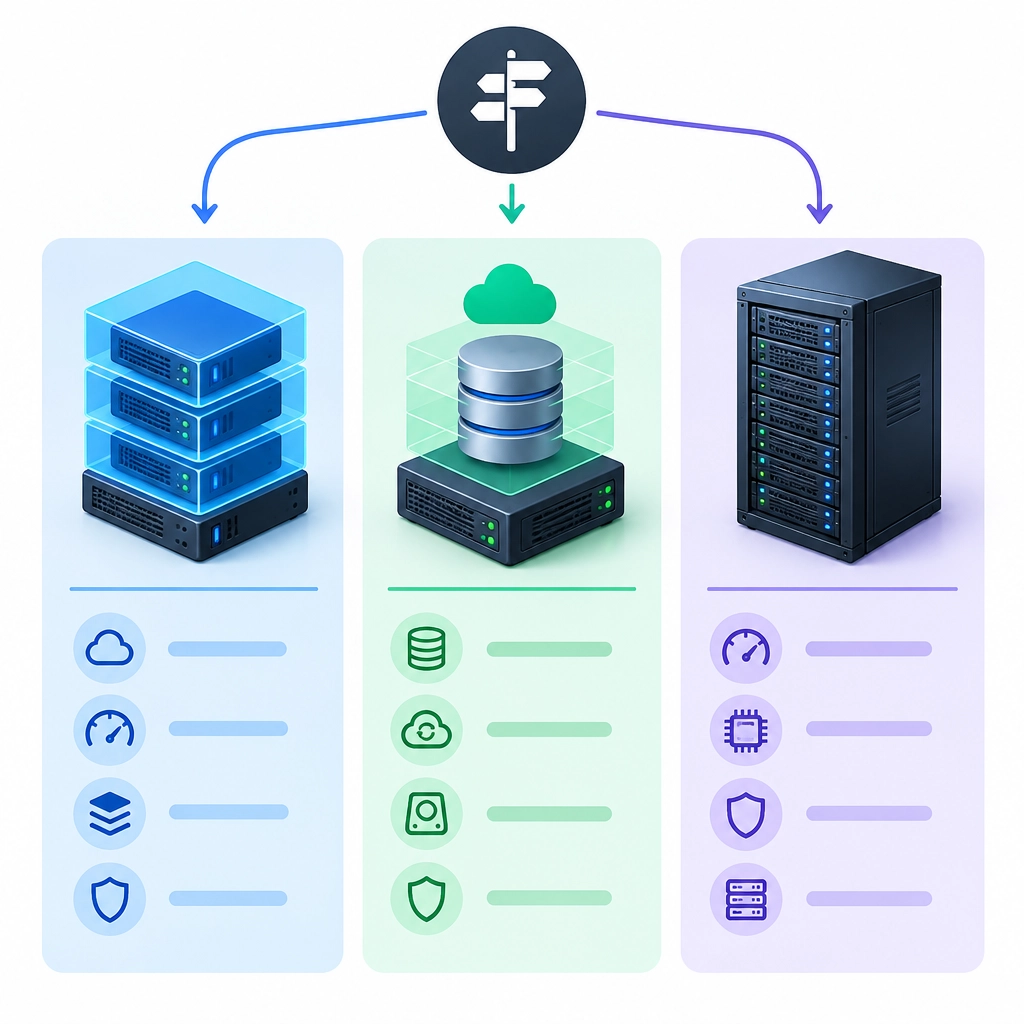
Choosing Between VPS Hosting, Storage VPS, and Dedicated Servers
Picking a server plan can feel like choosing between three nearly identical boxes—until you realize they’re built for different jobs. A standard VPS, a Storage VPS, and a dedicated server can all host applications and data, but they differ in performance, capacity, flexibility, and price.
The best choice depends less on which option sounds most powerful and more on what your workload actually needs.
VPS Hosting: A Flexible Starting Point
A Virtual Private Server (VPS) is a virtual machine running on a physical server alongside other VPS instances. You get a defined share of resources—such as CPU, RAM, and disk space—without paying for an entire machine.
That balance makes a VPS a popular choice for websites, small business applications, development environments, and early-stage projects. It usually gives you more control and predictable resources than basic shared hosting, while keeping costs relatively manageable.
A VPS can also scale more easily than a dedicated server. If your project grows, you may be able to upgrade its memory, storage, or processing capacity without migrating to entirely new hardware.
The main trade-off is that the physical machine is shared. Providers typically isolate customers’ environments, but the underlying hardware still serves multiple users. For many workloads, that’s a perfectly reasonable compromise. For demanding, consistent performance or specialized hardware needs, it may not be enough.
A VPS is a good fit if you need:
- A general-purpose server at a moderate price
- Root or administrative access
- Hosting for websites, APIs, or smaller applications
- A straightforward way to test or launch a project
Storage VPS: More Room for Data
A Storage VPS is designed to emphasize disk capacity rather than high-speed computing. It typically offers more storage for the price than a general VPS, making it useful when you need to hold a large amount of data but don’t need powerful processors or substantial memory.
Common uses include backups, file archives, media libraries, and secondary storage for applications hosted elsewhere. A Storage VPS can be especially practical for keeping copies of important files off-site, where they’re less exposed to problems affecting your main server.
But “more storage” doesn’t automatically mean “better for every storage task.” Disk speed, network throughput, backup policies, and storage type can vary between providers and plans. A large archive that’s accessed occasionally may work well on a Storage VPS, while a database that performs frequent reads and writes might benefit from faster disks and more computing power.
Before choosing one, check whether the plan’s storage is designed for frequent access, backups, or long-term retention. Also ask how the provider handles redundancy and whether backups are included—don’t assume that a large disk is automatically a protected disk.
A Storage VPS is a good fit if you need:
- A cost-effective place for backups or archives
- Room for large files, logs, or media
- A separate storage server for another application
- Less emphasis on CPU and RAM performance
Dedicated Servers: The Most Control and Capacity
With a dedicated server, you rent an entire physical machine. Its hardware is reserved for your workload, giving you greater control over resources and configuration.
That makes dedicated servers attractive for high-traffic websites, resource-intensive applications, large databases, and workloads with consistent performance demands. They can also offer access to particular hardware configurations, such as large amounts of RAM or specialized storage.
The extra capacity comes with extra responsibility and cost. Dedicated servers are typically more expensive than VPS plans, and managing one may require stronger technical skills. You’ll also need to think through upgrades, maintenance, security, and backups, depending on what your hosting provider manages.
A dedicated server isn’t automatically the fastest or smartest option, either. If your application uses only a fraction of the hardware, you may be paying for resources that sit idle. It’s most valuable when you have a clear reason to reserve an entire machine.
A dedicated server is a good fit if you need:
- Consistent access to all server resources
- High computing, memory, or storage capacity
- Greater control over the hardware environment
- A platform for demanding or predictable workloads
How to Make the Choice
Start with your workload, not the product name. Estimate how much CPU, memory, storage, and network capacity you need. Then consider how often you’ll access your data, whether performance must remain steady during busy periods, and how much server administration you can handle.
For many projects, a standard VPS is the sensible place to begin. If your main challenge is storing large amounts of data, a Storage VPS may be a better value. If your workload needs substantial, dependable resources and you can justify the cost, a dedicated server may make sense.
The right server is the one that fits the job today without making tomorrow’s growth unnecessarily difficult. Choose based on real requirements, leave some room to scale, and revisit the decision as your project changes.
Welcome to DediRock, your trusted partner in high-performance hosting solutions. At DediRock, we specialize in providing dedicated servers, VPS hosting, and cloud services tailored to meet the unique needs of businesses and individuals alike. Our mission is to deliver reliable, scalable, and secure hosting solutions that empower our clients to achieve their digital goals. With a commitment to exceptional customer support, cutting-edge technology, and robust infrastructure, DediRock stands out as a leader in the hosting industry. Join us and experience the difference that dedicated service and unwavering reliability can make for your online presence. Launch our website.