
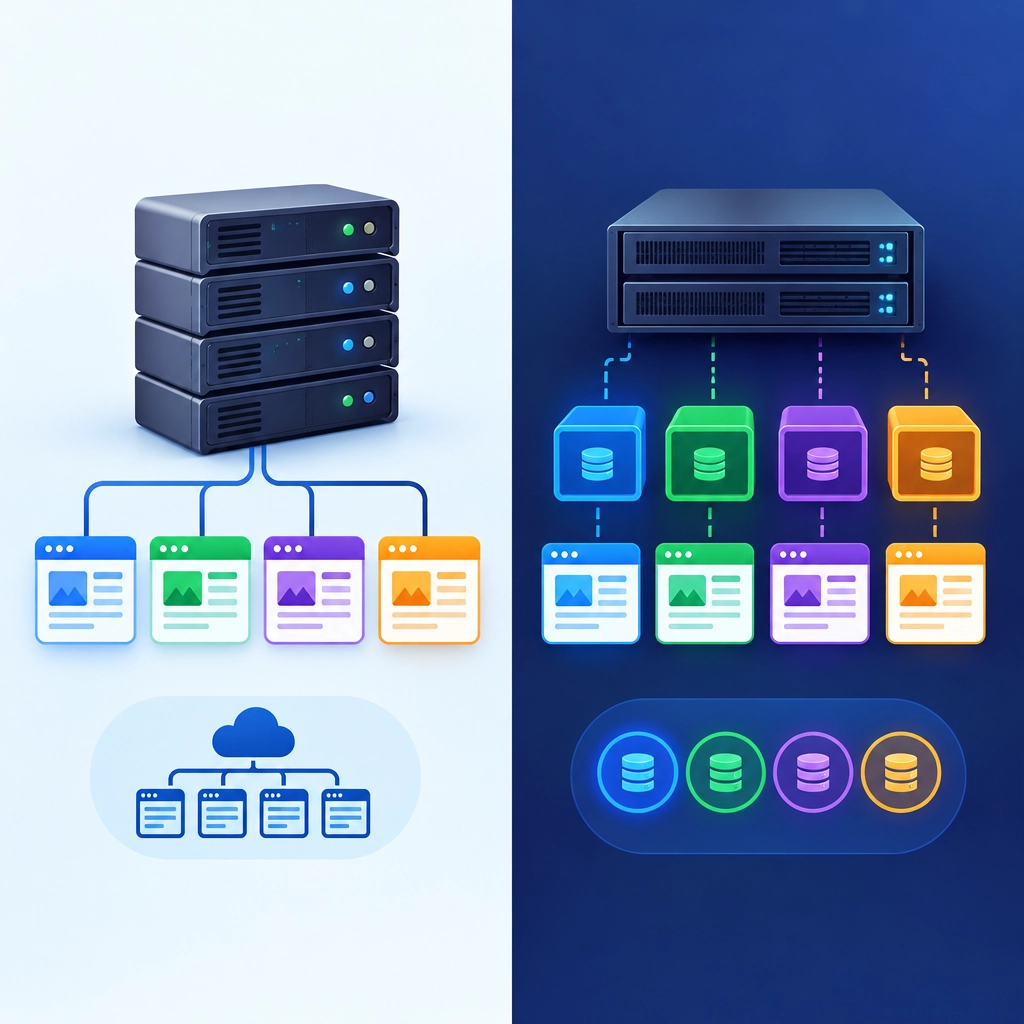
VPS Hosting vs. Shared Hosting: Which Is Right for You?
Choosing web hosting can feel like picking a place to live online. Shared hosting is like renting a room in a busy house: it’s affordable and simple, but you share resources with others. VPS hosting is more like having your own apartment in a larger building: you get more space and control, while the provider still manages the physical infrastructure.
Neither option is automatically better. The right choice depends on your site’s needs, your budget, and how much technical work you’re comfortable handling.
What Is Shared Hosting?
With shared hosting, multiple websites run on the same physical server and share its resources, such as memory and processing power. The hosting company takes care of server maintenance, security updates, and much of the setup.
That makes shared hosting a popular choice for beginners, personal websites, portfolios, and small business sites. Plans are usually inexpensive, and you can often get a website online with little technical knowledge.
The trade-off is that your site’s performance may be affected by activity elsewhere on the server. If another site uses a lot of resources, your pages could load more slowly—especially during busy periods. You’ll also have less flexibility to adjust server settings or install specialized software.
What Is VPS Hosting?
A virtual private server, or VPS, divides a physical server into separate virtual environments. Your VPS shares the hardware with other customers, but it’s allocated its own portion of resources. Depending on the plan, you may also have more control over the server’s software and configuration.
That can mean steadier performance, greater flexibility, and room to grow. VPS hosting is often a good fit for growing websites, online stores, web applications, or projects that need particular software or settings.
More control can also mean more responsibility. With an unmanaged VPS, you may need to handle tasks like server setup, updates, backups, and troubleshooting. Managed VPS plans include more support from the provider, though they generally cost more.
The Main Differences
Cost
Shared hosting is usually the budget-friendly option. It can be an easy way to launch a site without taking on a large monthly expense.
VPS hosting tends to cost more because you receive dedicated virtual resources and often greater control. The added expense may be worthwhile if slow performance or limited flexibility is holding your site back.
Performance
For a modest website, shared hosting can work perfectly well. But resource sharing may become noticeable as traffic grows or as your site becomes more complex.
A VPS offers a more consistent allocation of resources, which can help with performance and stability. It’s not a guarantee of fast loading—poorly optimized software or an unsuitable plan can still cause problems—but it gives you more room to manage your site’s demands.
Control and Technical Skills
Shared hosting keeps things straightforward. The provider handles much of the server-side work, so you can focus on your website.
A VPS gives you more say over the environment, but it may require technical confidence, particularly if it’s unmanaged. Before choosing one, check exactly what the host takes care of: “VPS hosting” doesn’t always include the same level of support.
Scalability
Shared hosting is convenient when your needs are simple, but you may eventually outgrow its limits. A VPS can make it easier to increase resources as your site expands, though upgrades and migration still depend on the provider and plan.
Which One Should You Choose?
Shared hosting is probably right for you if you’re launching your first website, running a small blog, or building a straightforward business site. It’s also a sensible choice when keeping costs low and minimizing server maintenance matter most.
Consider a VPS if your site has steady growth, attracts heavier traffic, runs an online store or application, or needs custom server settings. It can also be a better fit if performance issues are affecting visitors and you’ve already ruled out simpler fixes, such as optimizing images or reducing unnecessary plugins.
When comparing providers, look beyond the headline price. Check renewal rates, backup options, support hours, resource limits, and whether security features are included. For VPS plans, find out whether the server is managed and what that support actually covers.
The best hosting plan isn’t the most powerful one—it’s the one that comfortably meets your needs without adding cost or complexity you don’t need. Start with the simplest option that can support your site, then upgrade when your traffic, tools, or goals give you a clear reason to do so.
Welcome to DediRock, your trusted partner in high-performance hosting solutions. At DediRock, we specialize in providing dedicated servers, VPS hosting, and cloud services tailored to meet the unique needs of businesses and individuals alike. Our mission is to deliver reliable, scalable, and secure hosting solutions that empower our clients to achieve their digital goals. With a commitment to exceptional customer support, cutting-edge technology, and robust infrastructure, DediRock stands out as a leader in the hosting industry. Join us and experience the difference that dedicated service and unwavering reliability can make for your online presence. Launch our website.