
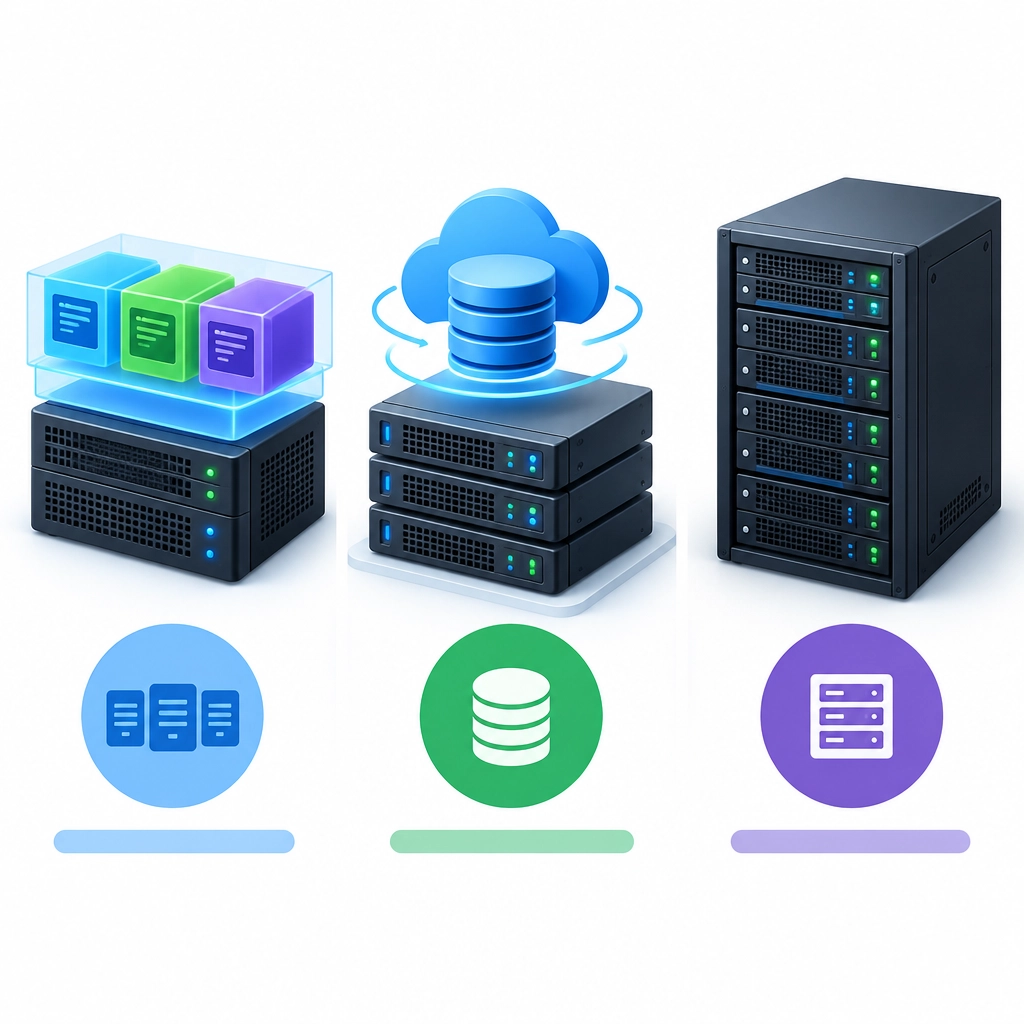
VPS, Storage VPS, or Dedicated Server: Which Should You Choose?
Choosing a server can feel like picking a car before you know where you’re going. A small website, a growing app, and a giant media archive all have different needs—and paying for more power than you’ll use is just as unhelpful as running out of room at the wrong moment.
Here’s a practical guide to the three common options: a standard VPS, a Storage VPS, and a dedicated server.
What’s a VPS?
A virtual private server (VPS) is a virtual machine running on a physical server that’s shared with other customers. You get your own operating system, assigned resources, and more control than you’d typically have with shared hosting.
A VPS is a flexible choice for websites, development environments, small applications, game servers, and business tools. It usually offers a balance of performance and price, with plans that let you scale up as your needs change.
The key trade-off is that the underlying hardware is shared. Your resources are allocated to you, but the server itself isn’t yours alone. For many everyday workloads, that’s perfectly fine.
Choose a VPS if you need general-purpose computing, want administrative control, and don’t need an entire physical machine.
What’s a Storage VPS?
A Storage VPS is designed to provide more disk space, often at a lower cost per terabyte than a compute-focused VPS. It’s suited to workloads where capacity matters more than fast processing—for example, backups, file archives, media libraries, or data synchronization.
Storage VPS plans may use larger, slower hard drives rather than high-performance SSDs. That makes them useful for keeping lots of data, but not necessarily ideal for applications that constantly read and write files. The CPU and memory may also be more modest than what you’d get in a general-purpose VPS.
It’s important to check the details. “Storage VPS” isn’t a universal technical standard, so providers can use the label differently. Look at the drive type, storage limits, bandwidth, backup policy, and any restrictions on how the server may be used.
Choose a Storage VPS if you need affordable space for data that doesn’t require consistently high-speed access.
What’s a dedicated server?
A dedicated server gives you an entire physical machine. Its processor, memory, and drives aren’t shared with other customers, giving you more direct control over performance and configuration.
That can be valuable for busy websites, resource-intensive applications, large databases, virtualization, or workloads with demanding and steady traffic. Dedicated servers may also offer more drive options and predictable performance for tasks that push a VPS beyond its limits.
The trade-off is cost and responsibility. Dedicated plans usually cost more, and you may need to manage more of the hardware and software setup yourself. Some providers offer managed support, but it’s worth checking exactly what that includes.
Choose a dedicated server if your workload needs sustained resources, specialized hardware, or stronger isolation—and your budget can support it.
How to make the right call
Start with the job, not the product name. Ask yourself what’s limiting you:
- Need to run an application or website? A standard VPS is often a sensible starting point.
- Need to keep a lot of files? A Storage VPS may deliver better value.
- Need consistent, intensive compute power? A dedicated server may be worth the higher price.
Then consider your growth plans. A modest VPS can be a good way to launch without overcommitting. If usage grows, you may be able to upgrade—or move to a dedicated server once you have evidence that shared hardware is holding you back. For storage, estimate not just today’s data needs but how quickly your archive will expand.
Performance isn’t only about CPU and drive space, either. Network capacity, backup options, data-center location, support quality, and the provider’s upgrade process can all affect the experience. And no matter which server you choose, plan your own backups: a storage-heavy server is not automatically a backup service.
In the end, the best option is the one that fits your workload without making you pay for resources you won’t use. Start with your priorities—computing power, capacity, or isolation—and choose accordingly. A well-matched server can save money, reduce headaches, and leave room to grow when your needs change.
Welcome to DediRock, your trusted partner in high-performance hosting solutions. At DediRock, we specialize in providing dedicated servers, VPS hosting, and cloud services tailored to meet the unique needs of businesses and individuals alike. Our mission is to deliver reliable, scalable, and secure hosting solutions that empower our clients to achieve their digital goals. With a commitment to exceptional customer support, cutting-edge technology, and robust infrastructure, DediRock stands out as a leader in the hosting industry. Join us and experience the difference that dedicated service and unwavering reliability can make for your online presence. Launch our website.