
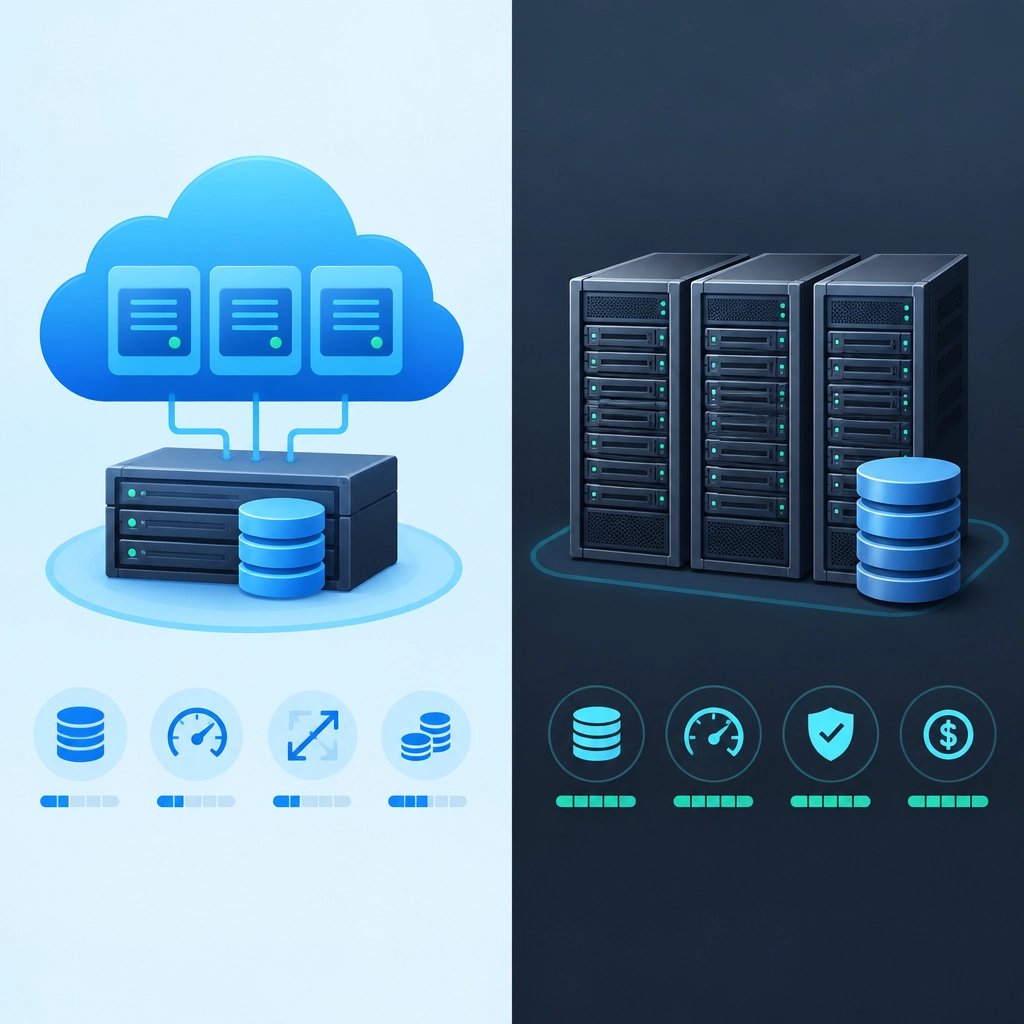
Storage VPS vs. Dedicated Storage Servers: Which One Fits Your Needs?
When you need somewhere to keep backups, media files, archives, or application data, the storage setup matters almost as much as the data itself. Two common options are a storage VPS and a dedicated storage server. Both can provide substantial disk space, but they differ in how resources are shared, how much control you get, and what you’ll pay.
The right choice depends less on which option is “better” and more on what you need it to do.
What is a storage VPS?
A storage VPS is a virtual private server configured with an emphasis on disk capacity. It runs on a physical host alongside other virtual servers, with its own operating system and allocated resources. Depending on the provider, storage may be provided through local drives, network-attached storage, or a combination of both.
You generally get root or administrator access, so you can install software, configure services, and choose how to use the available space. That might mean running a backup target, hosting a small media library, or syncing files between devices.
The key trade-off is that the underlying hardware is shared. Your VPS has assigned resources, but disk performance and network throughput can vary based on the provider’s infrastructure and other customers’ activity.
What is a dedicated storage server?
A dedicated storage server is a physical machine reserved for one customer. It typically offers one or more high-capacity drives, along with control over the operating system and storage configuration.
Because the hardware isn’t shared with other customers, dedicated servers can offer more predictable performance and greater control. You may be able to choose drive types, combine disks into a RAID array, or tailor the setup to a particular workload. Exactly what’s available depends on the provider and the server model.
A dedicated machine also comes with more responsibility. You may need to manage disk health, backups, security updates, and hardware issues—or pay for managed support. It may also cost more than a comparable VPS, particularly if your workload needs fast drives, substantial bandwidth, or additional redundancy.
The main differences
Performance: A dedicated server is often the better choice for sustained, disk-heavy workloads, especially when its drives and network connection are selected for that purpose. A storage VPS can perform very well for ordinary backups and file storage, but its performance may depend on how the host manages shared resources. Check the provider’s disk and bandwidth policies rather than relying on storage capacity alone.
Cost: Storage VPS plans are usually easier to start with and can be a budget-friendly way to get substantial space without managing physical hardware. Dedicated servers tend to involve higher monthly costs, but can make sense when predictable performance or specialized hardware is worth the premium.
Control: Both options usually allow server-level customization, but a dedicated server gives you control over the physical machine as well as its software configuration. With a VPS, the provider controls the host system and the virtualization layer.
Scaling: VPS resources are often simpler to adjust or migrate as your needs change, although upgrades depend on the provider. A dedicated server may offer a larger capacity ceiling, but expanding it could mean replacing drives, changing the machine, or arranging a migration.
Reliability and redundancy: Neither option automatically guarantees that your data is safe. A VPS may benefit from a provider’s shared infrastructure, while a dedicated server may let you configure drive redundancy—but RAID is not a backup. In either case, keep a separate copy of important data, ideally in another location.
Which should you choose?
A storage VPS is a practical fit if you want affordable, flexible storage for backups, personal projects, modest file sharing, or a secondary copy of data. It’s also a good starting point when you don’t yet know how much performance your workload will require.
A dedicated storage server may be the better match if you’re handling large volumes of data, serving files to many users, running continuous disk-intensive tasks, or need consistent access to specific hardware. It’s especially appealing when performance and control justify the extra cost and management effort.
Before deciding, look beyond the advertised number of terabytes. Ask about drive type, expected read and write speeds, network limits, backup options, uptime commitments, and what happens if a disk fails. Storage is only useful when you can access it reliably—and recover your files when something goes wrong.
For many people, starting with a storage VPS is the simplest way to build a dependable setup. As data volumes or performance demands grow, moving to a dedicated server can be a sensible next step. The best choice is the one that protects your data while matching the workload you actually have, not the one with the biggest headline capacity.
Welcome to DediRock, your trusted partner in high-performance hosting solutions. At DediRock, we specialize in providing dedicated servers, VPS hosting, and cloud services tailored to meet the unique needs of businesses and individuals alike. Our mission is to deliver reliable, scalable, and secure hosting solutions that empower our clients to achieve their digital goals. With a commitment to exceptional customer support, cutting-edge technology, and robust infrastructure, DediRock stands out as a leader in the hosting industry. Join us and experience the difference that dedicated service and unwavering reliability can make for your online presence. Launch our website.