
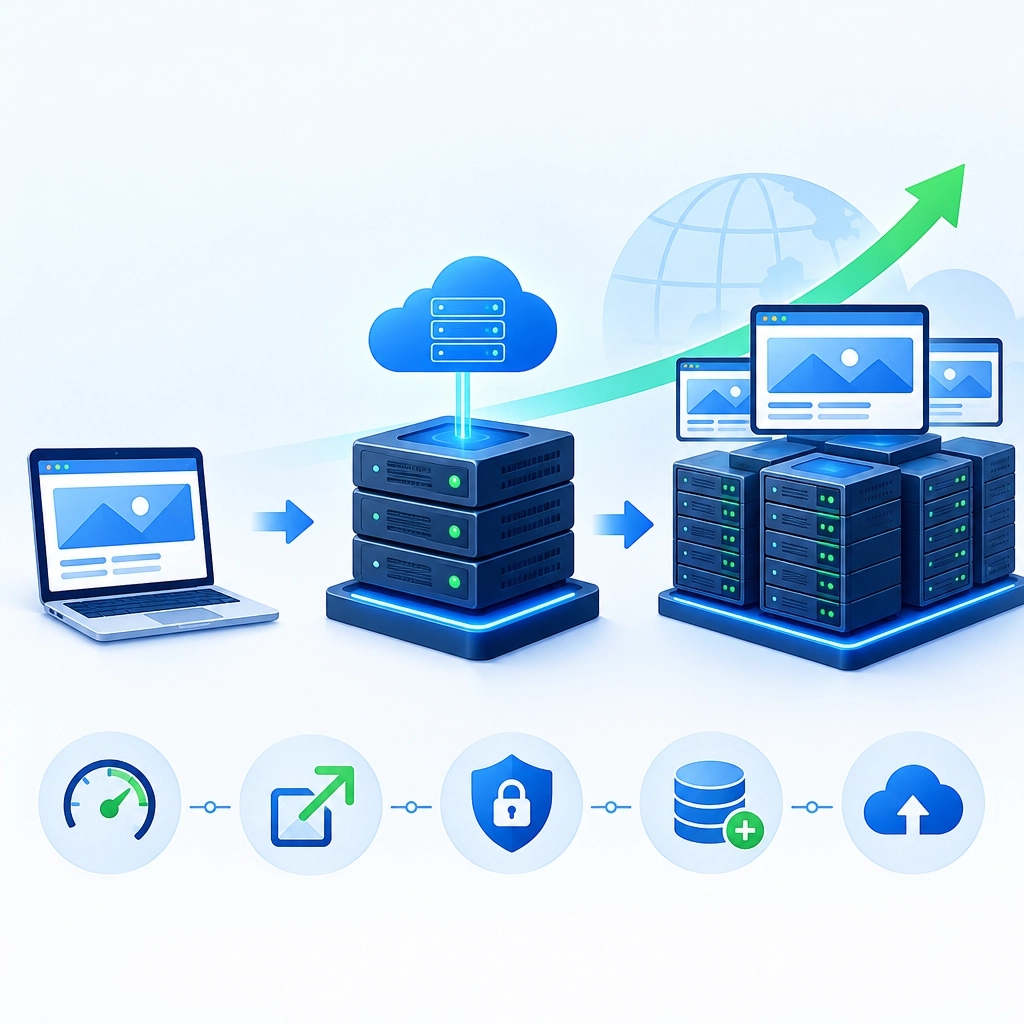
How to Scale Your Website with VPS Hosting
A website can start small and still have big plans. Maybe you’re launching an online store, publishing a popular blog, or growing a web app. As traffic increases, your original hosting setup may begin to feel cramped: pages load more slowly, resources run short, and performance becomes less predictable.
Virtual private server (VPS) hosting can help bridge the gap between basic shared hosting and a more complex dedicated or cloud infrastructure. It gives your website a reserved portion of a physical server’s resources, along with greater control over how those resources are configured. Here’s how to use VPS hosting to support steady, reliable growth.
Know When It’s Time to Upgrade
A sudden traffic spike isn’t the only sign that your website needs more capacity. Watch for patterns such as slower page loads during busy periods, frequent resource-limit warnings, or difficulty running background tasks alongside your site. For an online store, check whether product pages and checkout remain responsive during promotions. For a content-heavy site, pay attention to how quickly new visitors can browse popular articles.
Before upgrading, review your analytics and hosting reports. Look at traffic trends, CPU and memory usage, storage needs, and bandwidth. This helps you choose a VPS plan based on real requirements rather than guesswork.
Choose Resources That Match Your Growth
VPS plans commonly offer different amounts of CPU, memory, storage, and data transfer. More resources can improve performance, but buying far more than your site needs may not be the best use of your budget.
Consider what your website does. A mostly static site may have modest needs, while a busy store, membership platform, or web application may require more memory and processing power. Storage type matters, too: SSD or NVMe storage can help with database activity and file access.
Ask your hosting provider whether you can upgrade resources easily. A plan that lets you add capacity without migrating everything can make growth less disruptive. Some providers offer managed VPS hosting, where they handle tasks such as updates, security monitoring, and backups. An unmanaged VPS offers more control, but also requires more technical experience.
Tune Your Website Before Adding More Capacity
Scaling isn’t just about getting a bigger server. Efficient sites can serve more visitors with the same resources.
Start with the basics: compress images, remove unused plugins and scripts, and keep your content management system and software updated. If your website relies on a database, review whether it needs cleanup or optimization. Caching can also reduce repeated work by serving stored versions of pages or data instead of rebuilding them for every visit.
A content delivery network (CDN) can help deliver images, stylesheets, and other static files from servers closer to your visitors. This can reduce load on your VPS while improving the experience for people in different regions.
Set Up Monitoring and Backups
Scaling works best when you can spot problems early. Use monitoring tools to track uptime, response times, CPU, memory, and disk usage. Set alerts for unusual changes, such as memory staying near its limit or storage filling up. Monitoring can show whether you need more capacity—or whether an inefficient plugin or a sudden bot surge is the real issue.
Backups are equally important. Schedule regular backups of your website files and database, and store copies somewhere separate from the VPS. Test restoring a backup before you urgently need one. A backup that has never been checked may not be as reassuring as it sounds.
Prepare for Traffic Spikes
Growth doesn’t always happen gradually. A sale, product launch, viral post, or seasonal event can bring a sudden wave of visitors. Plan ahead by checking how your site performs under load, reviewing provider limits, and confirming that your team knows how to respond if the server becomes overloaded.
For sites with highly variable traffic, a VPS may eventually be part of a broader setup that includes a CDN, external database services, or auto-scaling infrastructure. You don’t need to build that system on day one. Instead, make sure your hosting and software choices leave room to evolve.
Scaling a website with VPS hosting is less about choosing the biggest plan and more about making thoughtful adjustments as your needs change. Measure performance, improve efficiency, protect your data, and increase resources when the evidence points to it. With that steady approach, your hosting can grow alongside your website—without turning every traffic bump into a crisis.
Welcome to DediRock, your trusted partner in high-performance hosting solutions. At DediRock, we specialize in providing dedicated servers, VPS hosting, and cloud services tailored to meet the unique needs of businesses and individuals alike. Our mission is to deliver reliable, scalable, and secure hosting solutions that empower our clients to achieve their digital goals. With a commitment to exceptional customer support, cutting-edge technology, and robust infrastructure, DediRock stands out as a leader in the hosting industry. Join us and experience the difference that dedicated service and unwavering reliability can make for your online presence. Launch our website.