
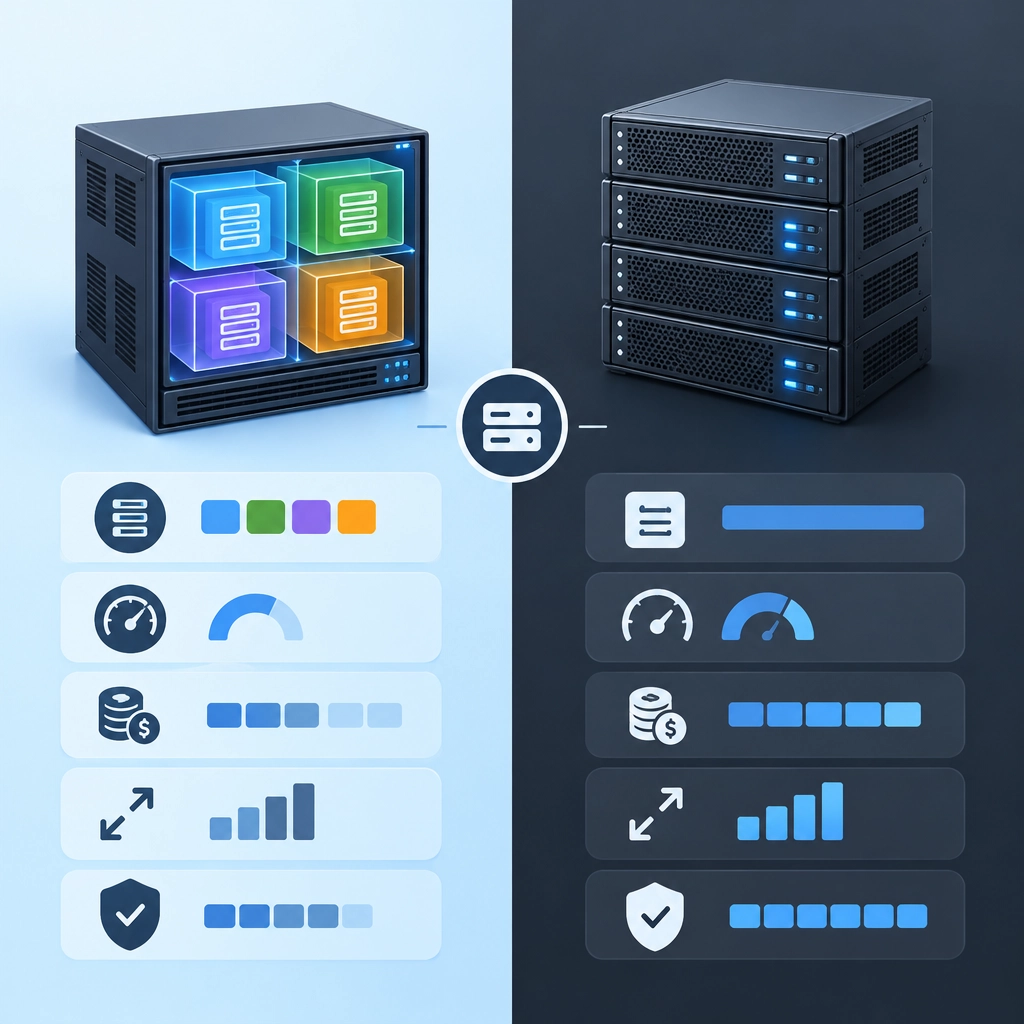
VPS Hosting vs. Dedicated Servers: A Practical Comparison
Choosing a web hosting setup can feel like deciding between a roomy apartment and a house of your own. Both can work beautifully, but they suit different needs—and the right choice depends on your traffic, budget, technical skills, and plans for growth.
Two common options are VPS hosting and dedicated servers. Here’s what each one offers, where they differ, and how to decide which is the better fit.
What Is VPS Hosting?
A virtual private server (VPS) is created by dividing one physical server into several virtual servers. Each VPS has its own allocated resources—such as memory, processing power, and storage—along with an operating system and configurable software environment.
Although multiple customers share the same physical machine, virtualization keeps their environments largely separate. That gives VPS hosting more control and consistency than typical shared hosting, without the cost of renting an entire server.
VPS plans are often offered in managed and unmanaged versions. With managed hosting, the provider handles some maintenance and support. With unmanaged hosting, you typically take responsibility for system updates, configuration, and troubleshooting.
What Is a Dedicated Server?
A dedicated server gives one customer use of an entire physical machine. Its processor, memory, storage, and other hardware aren’t split among unrelated customers.
That can provide substantial computing capacity and more freedom to customize the server. Businesses can choose software configurations, security policies, and sometimes hardware specifications to match their workload.
Dedicated hosting also comes with more responsibility. Depending on the plan, you may need to handle server administration yourself or pay extra for managed services. It’s also generally more expensive than a VPS.
The Main Differences
Performance and resources
A VPS offers a defined share of a physical server’s resources. This is often enough for business websites, online stores, development environments, and applications with moderate or steadily growing workloads.
A dedicated server gives you the full machine’s resources, which can be valuable for high-traffic sites, resource-intensive applications, large databases, or workloads that need predictable performance. Still, the hardware’s capacity is finite, and good server management matters—dedicated doesn’t automatically mean fast.
Cost
VPS hosting is usually the more affordable option. You pay for a virtual environment and a portion of the underlying hardware, making it a practical step up from shared hosting.
Dedicated servers cost more because you’re reserving an entire physical machine. Additional costs may include management, backups, licenses, and specialized support. If you don’t need the full capacity, much of that expense may go to resources sitting idle.
Control and customization
Both options can provide substantial control, especially when you choose an unmanaged plan. A VPS lets you install software and configure your environment within the limits of your allocated resources and provider’s platform.
A dedicated server generally offers greater freedom at the hardware level, such as selecting specific components or shaping the server around a demanding application. That extra flexibility is most useful when you have a clear technical reason for it.
Scaling
VPS hosting is often easier to scale in small steps. Depending on the provider, you may be able to increase memory, storage, or processing resources without moving to a new physical machine.
Scaling a dedicated server can involve upgrading hardware or migrating to a more powerful system. That may take more planning, though a dedicated setup can be a strong choice when you already know your workload requires substantial resources.
Security and isolation
A VPS separates your environment from other virtual servers, but the physical machine is still shared. A dedicated server avoids sharing its hardware with other customers, which can help with certain security, compliance, or performance requirements.
Neither option is secure by default. Updates, access controls, backups, monitoring, and a well-configured firewall matter in either case.
Which One Should You Choose?
A VPS is likely the better fit if you want more control than shared hosting, need a cost-conscious setup, and have a workload that doesn’t require an entire machine. It’s also a sensible choice if you expect to grow gradually and want room to adjust your resources.
A dedicated server may make sense if your application consistently needs more capacity, performance fluctuations are costly, or your organization requires greater hardware-level control. It can also suit teams with the experience—or budget for managed support—to maintain a physical server.
Before choosing, check the provider’s resource limits, backup policies, support coverage, upgrade options, and terms for moving to another plan. Two plans with the same headline specifications can differ considerably in the service behind them.
The most powerful option isn’t always the best one. Start with the resources your workload actually needs, leave room for growth, and choose a setup you can manage reliably. For many growing projects, a VPS is a practical middle ground; for demanding workloads with specific requirements, a dedicated server can be a worthwhile investment.
Welcome to DediRock, your trusted partner in high-performance hosting solutions. At DediRock, we specialize in providing dedicated servers, VPS hosting, and cloud services tailored to meet the unique needs of businesses and individuals alike. Our mission is to deliver reliable, scalable, and secure hosting solutions that empower our clients to achieve their digital goals. With a commitment to exceptional customer support, cutting-edge technology, and robust infrastructure, DediRock stands out as a leader in the hosting industry. Join us and experience the difference that dedicated service and unwavering reliability can make for your online presence. Launch our website.