
VPS Hosting Explained: What It Is and How It Works
If you’ve outgrown basic web hosting but aren’t ready to manage a dedicated server, a VPS may be the middle ground you’re looking for. VPS stands for Virtual Private Server. It offers more control and resources than many shared hosting plans, without the cost or complexity of renting an entire physical server.
Here’s what a VPS is, how it works, and when it might make sense for your website or project.
What is a VPS?
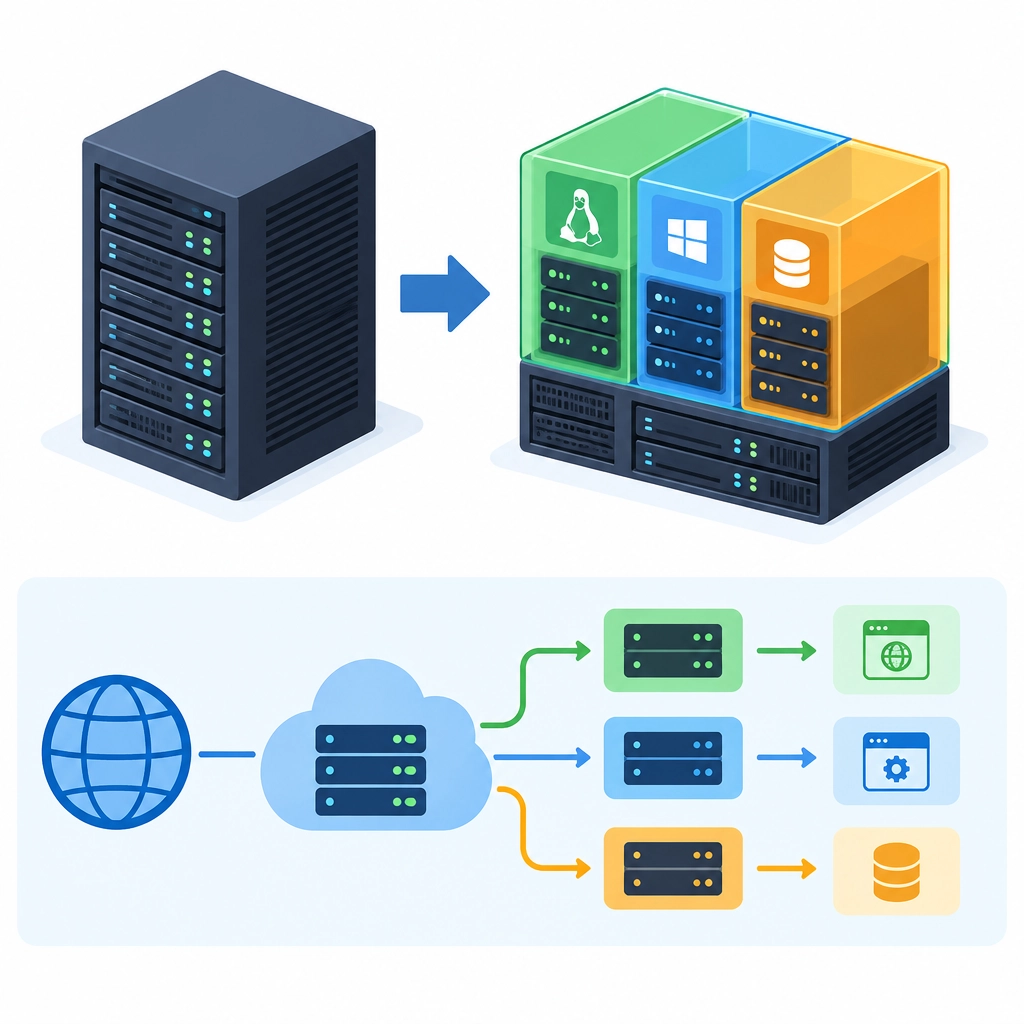
A VPS is a virtual server created on a physical machine. A hosting provider uses virtualization software to divide that machine into several separate virtual environments. Each environment acts like its own server, with an operating system and a portion of the physical machine’s resources, such as processing power, memory, and storage.
That separation is important. On a shared hosting plan, many websites use the same server environment and compete for its resources. With a VPS, your virtual server has allocated resources and a more independent setup. You may still share physical hardware with other customers, but their accounts are kept separate from yours.
Think of an apartment building: tenants share the building’s structure and utilities, but each has a separate living space. A VPS works in a similar way—shared hardware, separate virtual servers.
How does VPS hosting work?
A VPS begins with a physical server in a data center. The hosting provider installs a hypervisor, software that divides the server into virtual machines. Each virtual machine is assigned a set amount of resources and can run its own operating system.
You can then install software, configure settings, and host websites or applications inside your VPS. Depending on the plan, you might manage it through a control panel or connect using command-line tools.
VPS hosting usually comes in two forms:
- Managed VPS: The provider handles some or most server maintenance, such as updates, security tasks, and technical support. This can be helpful if you don’t have much server-administration experience.
- Unmanaged VPS: You’re responsible for configuring and maintaining the server. It offers more hands-on control, but you’ll need the skills—or time—to manage it.
The exact meaning of “managed” varies between providers, so check what services are included before choosing a plan.
Why choose a VPS?
The main appeal is a balance of control, performance, and cost. Compared with many shared hosting plans, a VPS can offer more predictable resources and more flexibility. You may be able to install custom applications, adjust server settings, or choose a particular operating system.
That makes a VPS useful for growing websites, online stores, web applications, development projects, and services that need a specific configuration. It can also be a stepping stone for a business that has outgrown shared hosting but doesn’t require a dedicated server.
VPS hosting can improve consistency, but it isn’t a guarantee of faster performance. A poorly configured website—or an undersized plan—can still run slowly. Your results depend on the provider’s hardware, the resources in your plan, and how your server is set up.
What should you consider?
A VPS gives you more responsibility along with more control. If it’s unmanaged, you may need to handle software updates, backups, security settings, and troubleshooting. Even managed plans may expect you to take care of your website’s own software and data.
Resource limits matter, too. Review the plan’s memory, processing capacity, storage type, and transfer allowance. Consider whether you can upgrade easily as your needs grow. It’s also worth checking the provider’s backup options, support availability, uptime history, and server locations.
Security deserves special attention. A VPS is isolated from other virtual servers, but that doesn’t automatically make it secure. Weak passwords, outdated software, or misconfigured services can still put your site at risk. Regular updates, strong authentication, and dependable backups are good starting points.
Is VPS hosting right for you?
A VPS could be a good fit if shared hosting no longer meets your needs, or if you want more control over how your server is configured. It may not be the best choice if you want a completely hands-off experience or need more resources than a VPS plan can provide.
The best option depends on your technical comfort, budget, and project requirements. For some site owners, managed VPS hosting offers a helpful balance. For others, shared hosting remains simpler, while a dedicated server or cloud platform may suit larger workloads.
In short, a VPS gives you a private virtual environment on shared physical hardware. Understand what the provider manages, know what you’ll be responsible for, and choose a plan with enough room to grow—that’s the key to getting the benefits without an unwelcome surprise.
Welcome to DediRock, your trusted partner in high-performance hosting solutions. At DediRock, we specialize in providing dedicated servers, VPS hosting, and cloud services tailored to meet the unique needs of businesses and individuals alike. Our mission is to deliver reliable, scalable, and secure hosting solutions that empower our clients to achieve their digital goals. With a commitment to exceptional customer support, cutting-edge technology, and robust infrastructure, DediRock stands out as a leader in the hosting industry. Join us and experience the difference that dedicated service and unwavering reliability can make for your online presence. Launch our website.