
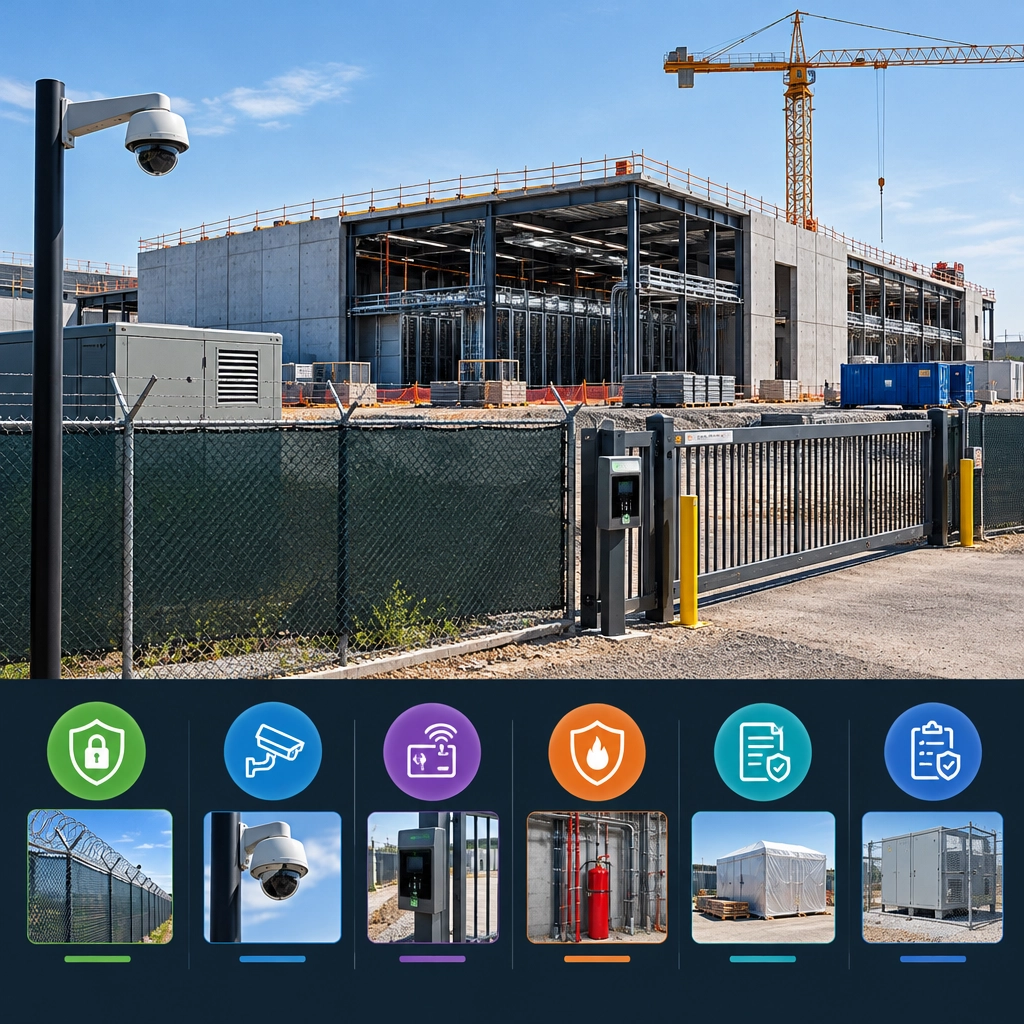
Data center security planning often focuses on facilities once they are operational, but construction can be an especially vulnerable period. Sites are open, contractor teams are large and constantly changing, and valuable materials and equipment may be exposed to theft or tampering. Security measures during this phase should be part of the facility’s overall protection strategy.
Risks During Construction
Construction sites face several types of physical and supply-chain threats:
- Theft: Copper, cabling, generators, and networking equipment can be stolen from sites with limited access controls, causing financial losses and delays.
- Vandalism and sabotage: Local opposition to data center projects can sometimes lead to property damage or disruption.
- Hidden devices: An intruder could plant unauthorized access points, network switches, or sensors that later provide a way into the facility.
- Supply-chain tampering: Shipments may be altered, components swapped, or counterfeit and compromised equipment introduced before the data center opens.
- Drone activity: Hobbyist drones may reveal site layouts and operating procedures or pose safety risks.
Layered Protection Measures
The goal is to limit unauthorized access to both the construction site and its supply chain without unnecessarily slowing work. A combination of controls can help:
-
Secure the perimeter and monitor the site. Use sturdy barriers, direct vehicle and pedestrian traffic through staffed entrances, and install temporary cameras to watch the perimeter, storage areas, and other sensitive zones. Appropriate lighting and motion or thermal sensors can provide additional visibility.
-
Verify site personnel. Screen contractors and delivery workers in line with applicable laws and company policies. Require visible identification and restrict access by zone so workers can enter only areas needed for their tasks.
-
Manage contractor access in stages. Bringing teams on-site in smaller, sequenced groups can reduce crowding and make unusual activity easier to spot. This approach may, however, limit how much work can happen at the same time.
-
Protect valuable materials. In addition to securing the overall site, store items such as copper, cables, generators, and networking equipment in fenced or caged areas.
-
Track equipment through the supply chain. Choose vendors with clear custody procedures, tamper-evident packaging, and secure transportation. On arrival, record serial numbers and network identifiers, track items with barcodes or RFID, and keep sensitive equipment in controlled storage until installation.
-
Prepare for drones. Detection tools can help identify aerial activity where appropriate. Because active drone interception may be unlawful, organizations should coordinate with legal teams and local authorities, focusing on detection, deterrence, and evidence collection.
-
Check installations before commissioning. Compare installed equipment with purchase orders and approved materials lists. Technical sweeps for unfamiliar wireless signals or unexpected network devices can help uncover unauthorized additions.
Balancing Security and Construction Speed
No set of measures can eliminate every construction-phase security risk. But layered safeguards can lower the chances of theft, tampering, and intrusion, while improving the ability to detect problems and respond before the facility begins operating.
Welcome to DediRock, your trusted partner in high-performance hosting solutions. At DediRock, we specialize in providing dedicated servers, VPS hosting, and cloud services tailored to meet the unique needs of businesses and individuals alike. Our mission is to deliver reliable, scalable, and secure hosting solutions that empower our clients to achieve their digital goals. With a commitment to exceptional customer support, cutting-edge technology, and robust infrastructure, DediRock stands out as a leader in the hosting industry. Join us and experience the difference that dedicated service and unwavering reliability can make for your online presence. Launch our website.