
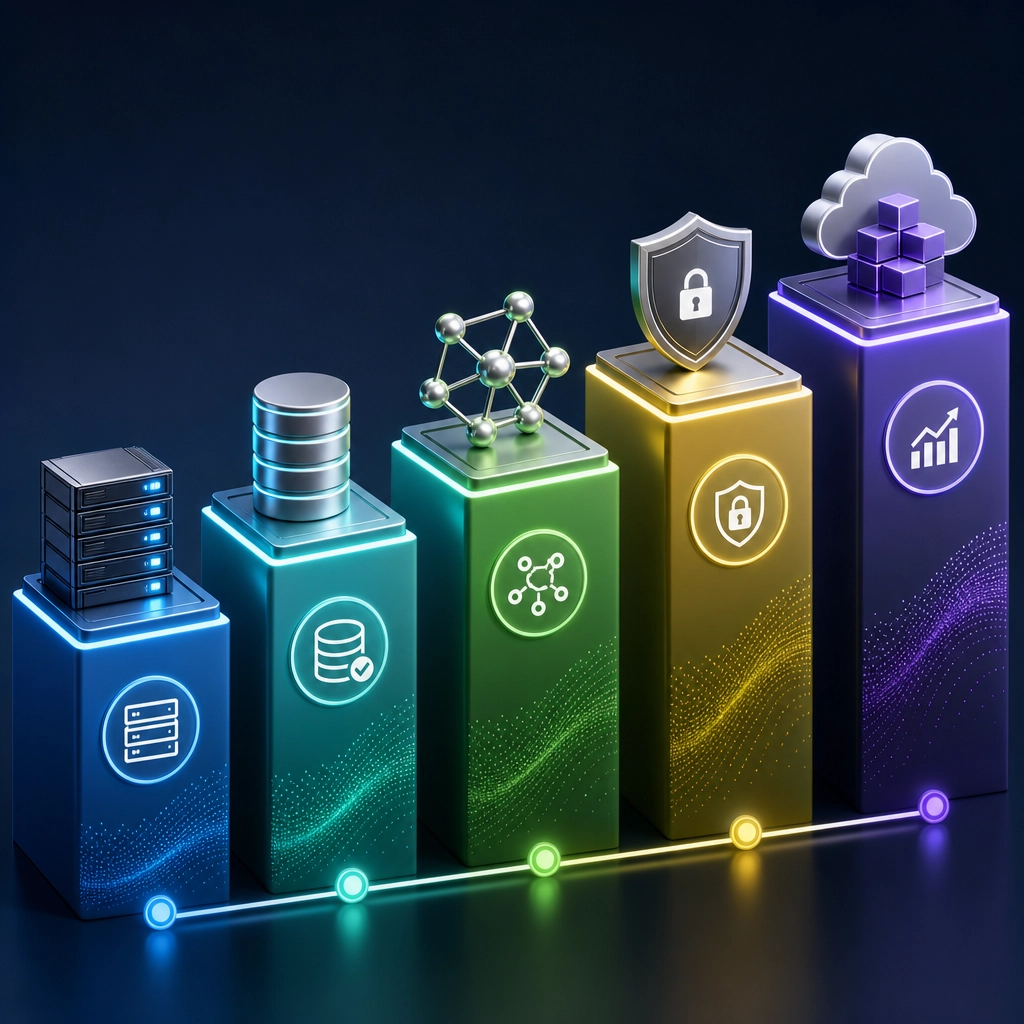
Enthusiasm alone isn’t enough to drive AI workloads; robust infrastructure is essential. As organizations increasingly adopt AI, issues such as inadequate power supply, cooling challenges, operational complexities, and new security vulnerabilities are emerging. If these infrastructure needs are neglected, AI initiatives may stall, struggle to scale, or compromise sensitive data.
To harness the potential of AI for growth and long-term competitiveness, leaders must take an honest look at their infrastructure’s current state, investment plans, and future demands. Misjudging this can lead to setbacks that undermine AI investments. Before allocating resources, it’s crucial to assess infrastructure readiness with the following five-step framework.
1. Set the Right Foundation
AI’s performance is directly tied to its supporting infrastructure. The systems—servers, storage, and networks—must be capable of handling high compute density and substantial data flow without overheating or failing. Even a well-designed AI system can underperform if the foundational elements are lacking.
For instance, consider a quality inspection system on a production line. Cameras, storage, and computing resources must keep pace with the conveyor’s speed for real-time analysis. If this pipeline falters, defective products may pass through unchecked. Similarly, in a data center, a fast GPU cluster’s performance can be limited by bottlenecks in storage throughput, network traffic, or thermal constraints. Thus, businesses must evaluate how systems integrate rather than viewing them in isolation.
2. Prioritize Power and Cooling Capacity
It’s crucial to examine if an organization’s power and cooling infrastructure can support the heavy demands of AI workloads. A rack intended for 5 kW won’t suffice for a 20 kW AI node. Insufficient power can stall an AI rollout before it begins.
Reliable power delivery is equally important, and organizations must assess both the capacity and the continuous supply capabilities of their current infrastructure, along with the cooling systems’ ability to dissipate the additional heat produced. A harmonious growth of power supply and cooling is necessary for sustained AI processing.
3. Establish Security Across the AI Environment
AI applications frequently handle sensitive and proprietary data, necessitating multiple layers of security: physical security, network defenses, and access controls. A vulnerability in any layer can expose critical data.
Organizations should also evaluate risks specific to AI, such as model manipulation and data leakage, while also being mindful of regulatory and policy obligations relevant to their sector. Security should be viewed as an inherent aspect of the infrastructure rather than an afterthought.
4. Decide Between Predictable and Flexible Costs
Organizations vary in their valuation of cost predictability. While some may favor steady expenses for budget management, others may prioritize flexibility and can tolerate variability. There is no one-size-fits-all; the approach depends on the organization’s infrastructure strategy and financial objectives, both of which influence how AI investments are approached.
Fluctuating cloud pricing can add uncertainty, making early alignment between finances and engineering crucial. Organizations that need budget certainty should avoid surprises from variable bills, whereas those that prioritize agility shouldn’t overpay for guaranteed costs they don’t require. Alignment at the outset ensures AI spending decisions support broader financial strategies.
5. Build Room to Grow
AI workloads are rarely static. Demand may rise as existing applications expand or new use cases emerge, causing the infrastructure designed for current workloads to quickly become a limiting factor. Organizations must proactively increase processing capacity, storage, and support systems for cooling and networking as their needs change.
Incorporating scalability into the initial design of the infrastructure allows organizations to adjust as AI requirements evolve.
From Readiness to Results
AI investments succeed when backed by supportive infrastructure throughout their lifecycle. IT leaders can apply this five-part framework to identify shortcomings in their current environment and prioritize necessary improvements to fuel their AI strategies. Before making further AI investments, evaluating readiness and addressing gaps is vital to prevent initiatives from faltering.
Welcome to DediRock, your trusted partner in high-performance hosting solutions. At DediRock, we specialize in providing dedicated servers, VPS hosting, and cloud services tailored to meet the unique needs of businesses and individuals alike. Our mission is to deliver reliable, scalable, and secure hosting solutions that empower our clients to achieve their digital goals. With a commitment to exceptional customer support, cutting-edge technology, and robust infrastructure, DediRock stands out as a leader in the hosting industry. Join us and experience the difference that dedicated service and unwavering reliability can make for your online presence. Launch our website.