
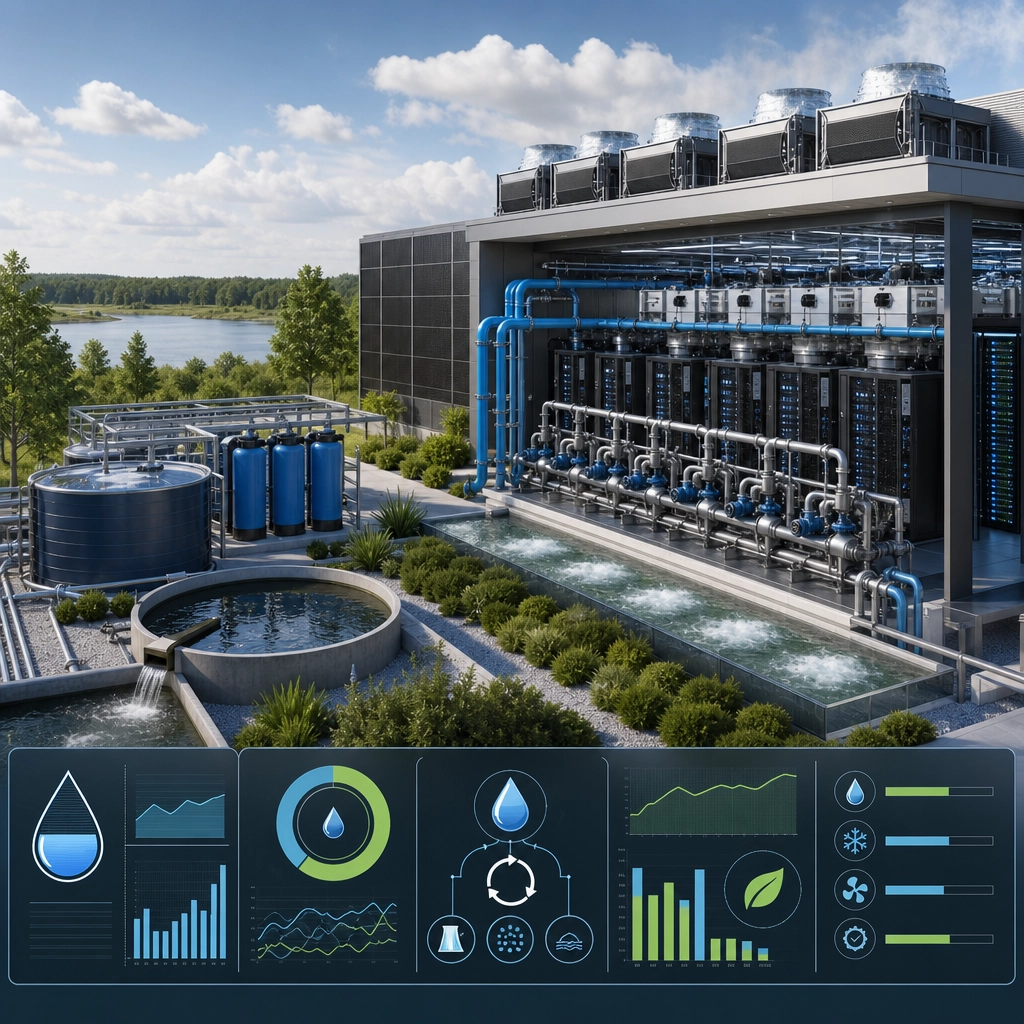
Water has transitioned from being a background utility to a critical factor for data centers, significantly influencing their design, operations, and relationships with surrounding communities. The focus is shifting from just average efficiency metrics to ensuring that facilities can adapt during peak demand without worsening local water stress or pollution. This collection of articles discusses the various aspects of data center water usage and outlines directions for the industry.
Metrics and Measurements
Water Use Effectiveness (WUE) measures the total water consumed per kilowatt-hour of IT energy. While it is vital for sustainability, cost control, and community oversight, WUE can be misleading as it does not reflect water sourcing and can vary significantly based on local conditions.
Dr. Marcello Serrano emphasizes that water resilience cannot solely be assessed by WUE or claims of "waterless" operations. Instead, it must be evaluated under peak stress conditions. Key factors for credible water stewardship include managing operations during extreme heat, understanding water rights and potential shortages, availability of reclaimed water, and discharge limitations.
Cooling Technologies
Many data centers utilize direct evaporative cooling, which leads to most intake water being lost as vapor. Thus, reused water often needs treatment before it can be repurposed, complicating operations and raising costs. While closed-loop systems can reduce the need for potable water, they also bring operational complexities that may not be viable in various climates.
Despite the prevailing use of evaporative cooling due to its low cost and scalability, its significant water use poses challenges. Alternatives, such as liquid cooling, are available but often face slow adoption due to high upfront costs and constraints related to energy availability.
Water Sources and Treatment
Approximately 95% of data centers rely on municipal water sources, which can stress local communities and lead to water shortages. Exploring alternative sources such as surface water, groundwater, seawater, and graywater is becoming essential for sustainability as power demands rise.
Seawater cooling, although technically viable, typically incurs high upfront costs and demands extensive pretreatment to mitigate risks of scaling and corrosion, making it a less common choice currently.
Siting and Infrastructure
The demand for cooling in dense GPU clusters is now a significant factor in site selection, placing water availability on par with power demands. Municipal systems may struggle to support the high peak loads typical of data centers, reinforcing the need for alternative supplies.
In some regions, groundwater is already insufficient for the needs of large data centers, indicating a critical need to rely on municipal water or alternative sources moving forward.
Environmental and Health Impacts
Data centers’ cooling methods can risk introducing pollutants into local waterways. To mitigate these risks, operators should implement low- or no-water cooling options where feasible, enforce discharge regulations, and explore safer chemical alternatives.
Policy and Governance
Data centers are among the world’s most water-intensive industries, consuming vast amounts of water annually. Unfortunately, many growing markets still lack sufficient governance and water-efficiency policies. Without proper regulations, the rapid expansion of AI and cloud technology could exacerbate existing water scarcity issues.
Community and Stakeholders
Communities, particularly in regions like Alberta, are beginning to voice concerns about the water demands of new data center developments. Authorities have rejected some proposals due specifically to water use impacts amid broader environmental considerations.
Conclusion
Establishing water resilience is becoming increasingly crucial for data centers. Factors such as operational planning, local hydrology alignment, non-potable source prioritization, tighter discharge monitoring, and transparent engagement with regulators and communities are essential for sustainable growth in a water-constrained environment. While metrics like WUE remain useful, the emphasis is clearly shifting towards site-specific, context-aware resilience.
Welcome to DediRock, your trusted partner in high-performance hosting solutions. At DediRock, we specialize in providing dedicated servers, VPS hosting, and cloud services tailored to meet the unique needs of businesses and individuals alike. Our mission is to deliver reliable, scalable, and secure hosting solutions that empower our clients to achieve their digital goals. With a commitment to exceptional customer support, cutting-edge technology, and robust infrastructure, DediRock stands out as a leader in the hosting industry. Join us and experience the difference that dedicated service and unwavering reliability can make for your online presence. Launch our website.