
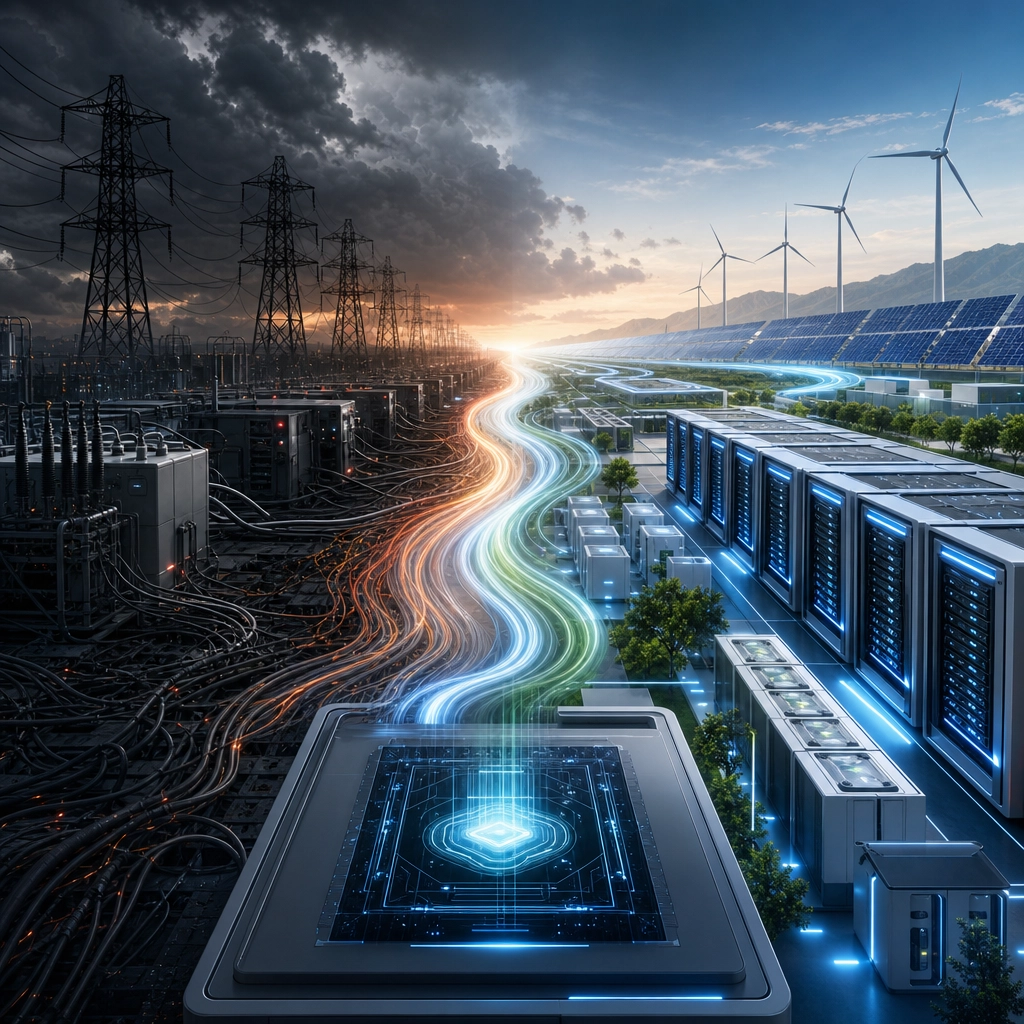
For large infrastructure projects, power capacity has traditionally been viewed solely as a quantity. Developers plan sites according to specific megawatt requirements—whether that be 100 MW, 500 MW, or even in gigawatts—while ensuring that local power systems can meet these demands.
In contrast, AI infrastructure shifts the focus from power quantity to timing. A gigawatt promised several years in the future holds little value for a campus that requires computing power and capital today. As a result, developers are now prioritizing the speed with which megawatts can be delivered over merely having them planned.
Early Power Planning
This shift necessitates that power planning occurs earlier in the development process. Recent findings from the Lawrence Berkeley National Laboratory highlighted over 40 methodologies for accelerating large-load connections, including strategies for load forecasting, interconnection, planning, market operations, and cost allocation. The various solutions reflect numerous steps that could delay usable power availability, from grid studies to construction.
Site Selection Focused on Speed
Developers are now choosing sites based on this critical speed-to-power constraint. In August 2026, reports indicated that planned AI data centers in Europe, due to come online between 2026 and 2028, are now situated an average of 175 kilometers away from major cities. This is a significant increase from the 46 kilometers noted for projects completed between 2022 to 2025. JLL attributed this geographical shift to the search for cheaper land with accessible energy sources and quicker grid connections.
Evolving Procurement Models
Procurement strategies are also undergoing changes. In PJM Interconnection, over 50 GW of generation projects currently hold grid connection agreements, yet delays continue due to permitting and equipment constraints. PJM is now fostering bilateral agreements between energy generators and large load users to expedite capacity outside traditional models. Similarly, the Federal Energy Regulatory Commission has directed regional grid operators to explore co-location and more flexible transmission services.
Such approaches can shorten the time needed for grid-supplied power, yet they also transfer more responsibility to the projects themselves. Developers pursuing onsite generation must grapple with procuring necessary turbines, fuel, permits, and additional infrastructure. On the other hand, projects requiring co-location must ensure compatibility with the generation site.
Addressing Supply Chain Constraints
Supply chain constraints can even derail development timelines. A notable example is SpaceX, which recently started in-house turbine blade production to mitigate delays from existing manufacturers. By producing their own turbine components, they aim to shorten delivery times significantly.
Phased Power Building
To expedite power availability, a flexible strategy is essential. Developers are encouraged to utilize a mix of utility services, bilateral contracts, onsite generation, storage, and other distributed resources that can come online at various stages. This modular approach enables power capacities to be built in phases, allowing initial sections of power to be operational while larger projects are still in development.
Understanding Real Demand
Faster development also hinges on credible demand forecasts. Recent reports revealed that large-load requests, primarily from data centers, have surged beyond current demands in major markets. Utilities are now imposing stricter criteria to discern between genuinely financed projects and speculative inquiries, ensuring that future power generation is effectively planned.
The Competitive Edge
The most successful AI infrastructure projects balance speed with certainty. Developers equipped with control over land, financing, and permits can clearly understand their load ramp and create realistic plans for staged power delivery. By managing their supply chain effectively, they can anticipate delays and secure options for varied power sources.
Conclusion
In this evolving landscape, power planning must take precedence in the early stages of site development. The crucial question is not merely how much power can be eventually delivered, but rather when each viable power source will be available, the necessary physical infrastructure, and which constraints may impede that timeline. For those involved in AI infrastructure, the race is on to convert planned megawatts into operational power efficiently, ensuring they stay ahead in this competitive field.
Welcome to DediRock, your trusted partner in high-performance hosting solutions. At DediRock, we specialize in providing dedicated servers, VPS hosting, and cloud services tailored to meet the unique needs of businesses and individuals alike. Our mission is to deliver reliable, scalable, and secure hosting solutions that empower our clients to achieve their digital goals. With a commitment to exceptional customer support, cutting-edge technology, and robust infrastructure, DediRock stands out as a leader in the hosting industry. Join us and experience the difference that dedicated service and unwavering reliability can make for your online presence. Launch our website.