
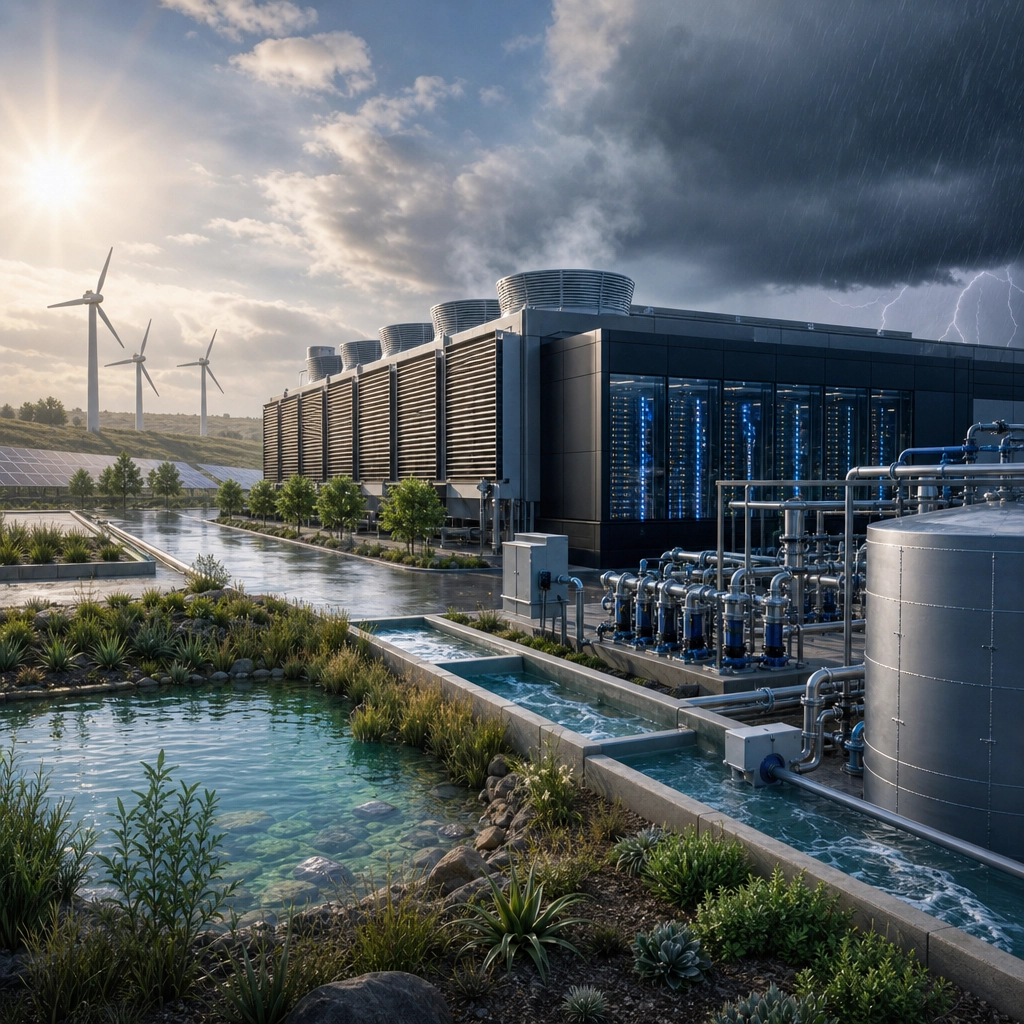
As data center capacity continues to expand globally, the need for water resilience has risen in tandem with energy efficiency considerations. However, this aspect is often less thoroughly evaluated. Companies may boast impressive Water Use Effectiveness (WUE) scores or promote “waterless” cooling methods, yet these claims frequently fail to guarantee performance during peak demand scenarios.
A recent legal dispute involving the proposed 330 MW AI data center by Imperial Valley Computer Manufacturing in California underscores the difficulties in assessing water resilience. Although the project was initially set to utilize reclaimed wastewater, it later sought access to the Colorado River due to the unavailability of alternatives. This request was denied by the Imperial Irrigation District, resulting in ongoing litigation.
This situation highlights a pressing concern for the data center industry: during extreme heatwaves, when cooling demands significantly increase and local water resources become strained, it is critical to evaluate not just average water consumption but the continuous operational reliability of these facilities without worsening local water shortages.
To effectively address these issues, a shift from solely relying on efficiency metrics to a comprehensive understanding of water resilience is necessary. Here are some essential factors to consider:
Performance Under Peak Conditions
It is vital to assess cooling performance during peak stress events rather than relying on average annual conditions. Intense heat waves not only heighten cooling demands but also stress electricity infrastructure. Events, such as the July 2026 heatwaves in the U.S., have prompted grid operators to warn that large electricity consumers— including data centers—may need to resort to on-site power generation to maintain grid reliability.
Local Water Scarcity and Allocation
Water availability should be evaluated within the context of the specific watershed where the facility operates. Scarcity is influenced by local water rights, competing demands, and regulatory entitlements. For instance, in regions like Imperial Valley, agricultural users often have priority access to much of the Colorado River water, raising crucial questions about access during shortages.
Reclaimed Water Accessibility and Quality
The potential for utilizing reclaimed or recycled water depends on its availability and suitability. While a source may be accessible in the region, it may not be deliverable at the required quantity or quality for specific sites. Vital characteristics such as total dissolved solids, hardness, and biological activity define the treatment necessary before this water can be applied in cooling systems.
Discharge Capacity Constraints
Water resilience also hinges on discharge capabilities. Cooling systems produce wastewater streams that must comply with local sewer capacity, permitting conditions, and treatment capabilities. A facility may have adequate water supply yet face operational limitations on wastewater discharge.
The Water-Energy Nexus
The choice of cooling technologies should reflect trade-offs between water use and energy consumption. Strategies that reduce water use may increase electricity demand, while those that are more water-intensive could lower energy use and emissions. The most resilient solution is often the one tailored to local environmental conditions rather than simply the one with minimal water consumption.
Application in Site Selection and Operations
Using this assessment framework can yield practical benefits in decision-making. By incorporating these considerations during site selection, organizations can identify risks like contested water rights or uncertain reclaimed water sources before making significant investments. Furthermore, they can assist in selecting cooling strategies that align with regional water and energy conditions, rather than defaulting to untested technologies.
Ultimately, true water resilience is not a one-size-fits-all metric but a specific quality shaped by local circumstances and resource availability. The credibility of the data center industry regarding water stewardship will increasingly depend on its ability to display resilience through informed, context-based assessments rather than mere aggregate reporting.
Welcome to DediRock, your trusted partner in high-performance hosting solutions. At DediRock, we specialize in providing dedicated servers, VPS hosting, and cloud services tailored to meet the unique needs of businesses and individuals alike. Our mission is to deliver reliable, scalable, and secure hosting solutions that empower our clients to achieve their digital goals. With a commitment to exceptional customer support, cutting-edge technology, and robust infrastructure, DediRock stands out as a leader in the hosting industry. Join us and experience the difference that dedicated service and unwavering reliability can make for your online presence. Launch our website.