
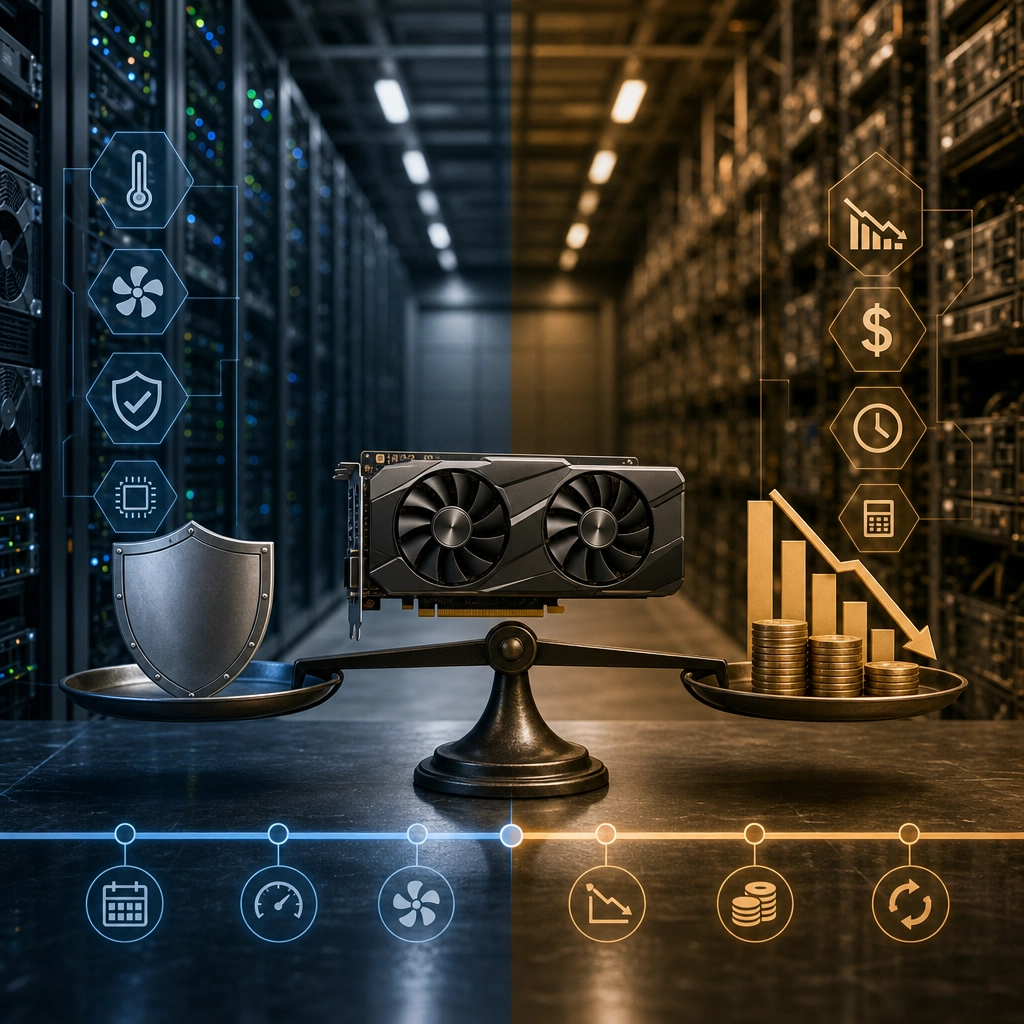
Much of the current discussion surrounding data centers and GPUs revolves around the speed at which organizations can acquire GPUs for AI workloads and how quickly they can establish facilities to host these systems. However, an equally crucial aspect will soon take center stage: the longevity of the GPUs being deployed today and the best strategies for managing them as they reach the end of their useful life.
These considerations are essential for effective long-term capacity planning, especially in the face of the e-waste challenges associated with AI infrastructure. Evaluating "lifespan" becomes complex because it can differ based on whether one is examining hardware’s physical operability or the economic viability of running it.
Physical Lifespan of GPUs
Typically, most GPUs can function for five years or more if measured strictly in terms of physical performance. Unlike mechanical systems, GPUs do not "wear out" in the traditional sense; they are generally passively cooled, meaning they lack moving parts that naturally degrade over time.
Common reasons for GPU failures include:
- Thermal stress and inadequate cooling: Extended high temperatures can damage high bandwidth memory and degrade solder joints.
- Power quality issues: Fluctuations or surges in power can harm GPUs, caused by either facility-wide power irregularities or failures at the server level.
- Environmental influences: Factors such as dust, humidity, and other contaminants can also pose risks if proper filtration and monitoring are not in place.
With appropriate cooling, clean power, and effective monitoring, many operators report service lifespans that extend several years, although actual experiences can vary depending on workloads, duty cycles, and environmental conditions. Warranties often dictate practical replacement timelines, usually covering three years, with additional extensions available from manufacturers.
Economic Lifespan: When to Replace?
From an economic perspective, the lifespan of GPUs tends to be shorter. Organizations looking to maximize return on investment must weigh the cost of maintaining existing devices against the potential benefits of new GPUs.
When evaluating replacements, several factors play a role:
- The initial investment in current GPUs.
- Prices of the next generation of hardware.
- Potential resale value from retired devices.
- Performance differences between current models and new options.
- Requirements of GPU-intensive workloads.
- Current utilization rates of the GPU fleet.
Generally, it makes economical sense to replace GPUs when the utilization is high, workload demands are growing, and the performance improvements justify the investment. Recent product trends suggest the economic lifespan typically ranges from two to four years. For instance, Nvidia’s product cycle shows significant improvements between generations, prompting organizations using older models to upgrade, assuming supply issues can be navigated.
Managing End-of-Life GPUs
When GPUs become economically unfeasible to operate, simply discarding them can result in lost value and contribute to unwanted e-waste. Most GPUs remain physically functional, so a more effective strategy is to resell them. The demand for used GPUs in secondary markets can provide a recovery of about 10-20% of the original cost, making it a preferable option over subsidizing disposal fees.
Considerations for Renting: GPU-as-a-Service
For organizations that have concerns about the short economic lifespans of their GPUs, adopting GPU-as-a-Service (GPUaaS) may be a strategic alternative. This model allows businesses to rent GPU capacity instead of owning the hardware, avoiding immediate replacement decisions. For many companies outside the hyperscale sector, this can be a smart approach to meeting changing performance needs without tying up capital in quickly aging equipment.
Welcome to DediRock, your trusted partner in high-performance hosting solutions. At DediRock, we specialize in providing dedicated servers, VPS hosting, and cloud services tailored to meet the unique needs of businesses and individuals alike. Our mission is to deliver reliable, scalable, and secure hosting solutions that empower our clients to achieve their digital goals. With a commitment to exceptional customer support, cutting-edge technology, and robust infrastructure, DediRock stands out as a leader in the hosting industry. Join us and experience the difference that dedicated service and unwavering reliability can make for your online presence. Launch our website.