
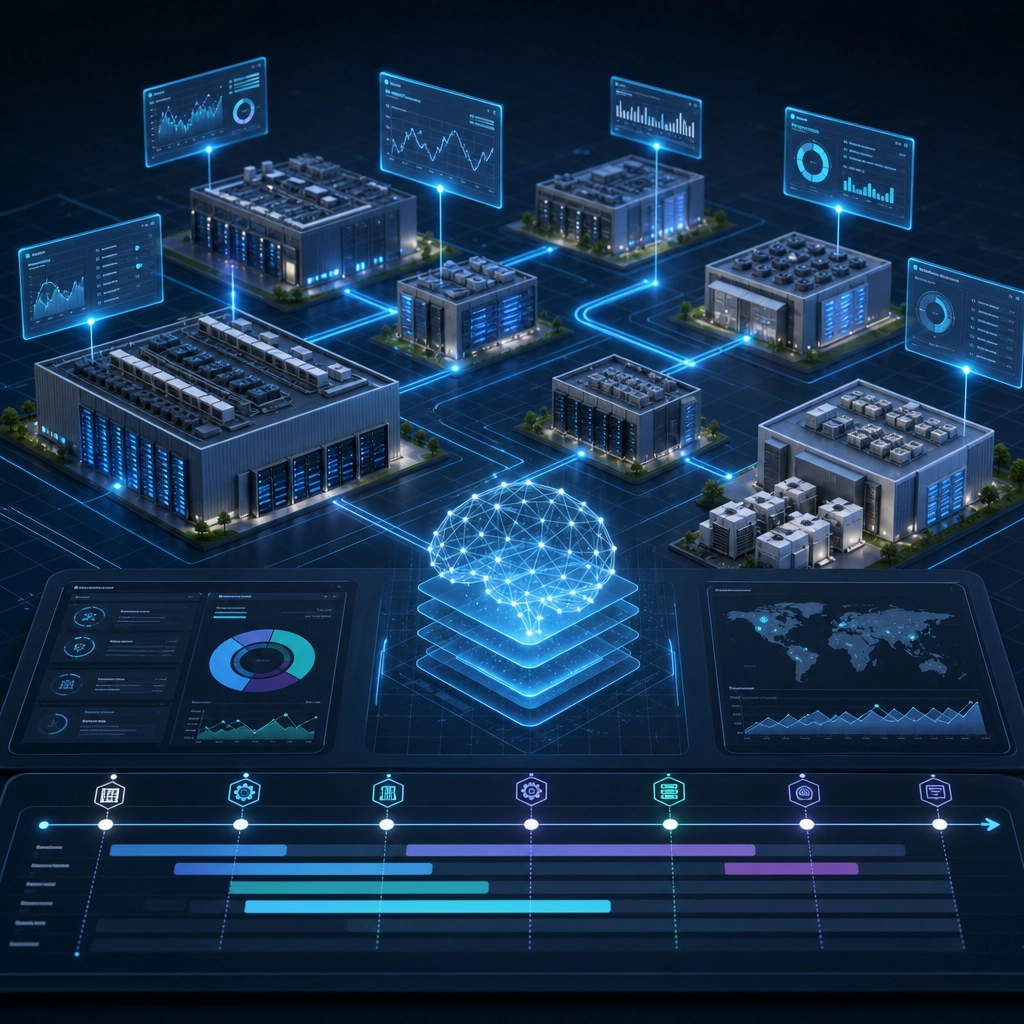
As artificial intelligence (AI) infrastructure becomes more intricate, companies are reevaluating their strategies for acquiring, owning, and financing assets that operate on significantly different economic timelines. The overall scale of AI infrastructure spending is projected to grow, with Gartner forecasting a global expenditure of $653 billion for data centers in 2026—a striking 31.7% increase compared to the previous year. However, while there’s a spotlight on finances, the evolving economics of infrastructure ownership often fly under the radar.
Traditionally, data centers such as buildings, power systems, and cooling infrastructure had long useful lives of several decades, whereas compute assets like GPUs and servers may have notably shorter refresh cycles. This prompts a realization: organizations can’t treat all their assets as having the same economic value and lifecycle.
The changing landscape requires organizations to pivot from merely acquiring infrastructure to rethinking ownership and financing approaches. In the past five years, many firms automatically assumed ownership of hardware for long-term use. In contrast, today’s organizations are becoming more discerning regarding their ownership—selecting which assets to own and which to finance with a focus on strategic flexibility.
An analogy can be drawn to homeownership—most homeowners don’t finance a kitchen remodel using the same timeline as their mortgage due to the differing useful lifespans of those projects. Yet, many data center operators still approach investments uniformly—as if buildings and GPUs depreciate at the same rate. While this simplifies procurement, it often leads to operational inefficiencies.
There is a growing divergence in the market approaches between hyperscalers, who typically place orders well in advance to secure pricing and supply, and newer AI cloud providers, who may prioritize rapid capacity acquisition to meet immediate needs. This differentiation can lead to contrasting operational environments, with some companies scaling deliberately while others react urgently to maintain competitive advantages.
Power constraints pose another challenge. Although discussions about data center expansion previously centered on utility limitations and grid availability, innovative solutions are now emerging. Data center operators are adopting independent generation technologies, geothermal sources, advanced turbine systems, and carbon capture strategies, indicating a more proactive and adaptive industry response.
Additionally, traditional assumptions about asset lifecycles are being reexamined. Previously considered rapidly obsolete, many GPUs are proving to have longer productive lifespans than anticipated, with some companies extending their depreciation timelines significantly to align better with actual performance and utilization.
As AI infrastructure continues to diversify, it is clear that a single, cohesive economic timeline for all assets is no longer practical. Each component—buildings, power systems, cooling solutions, and computing resources—comes with its own lifecycle and ownership status. Organizations that acknowledge these distinctions can better navigate capital allocation and enhance their agility in adapting to future advances in AI technology.
Welcome to DediRock, your trusted partner in high-performance hosting solutions. At DediRock, we specialize in providing dedicated servers, VPS hosting, and cloud services tailored to meet the unique needs of businesses and individuals alike. Our mission is to deliver reliable, scalable, and secure hosting solutions that empower our clients to achieve their digital goals. With a commitment to exceptional customer support, cutting-edge technology, and robust infrastructure, DediRock stands out as a leader in the hosting industry. Join us and experience the difference that dedicated service and unwavering reliability can make for your online presence. Launch our website.