
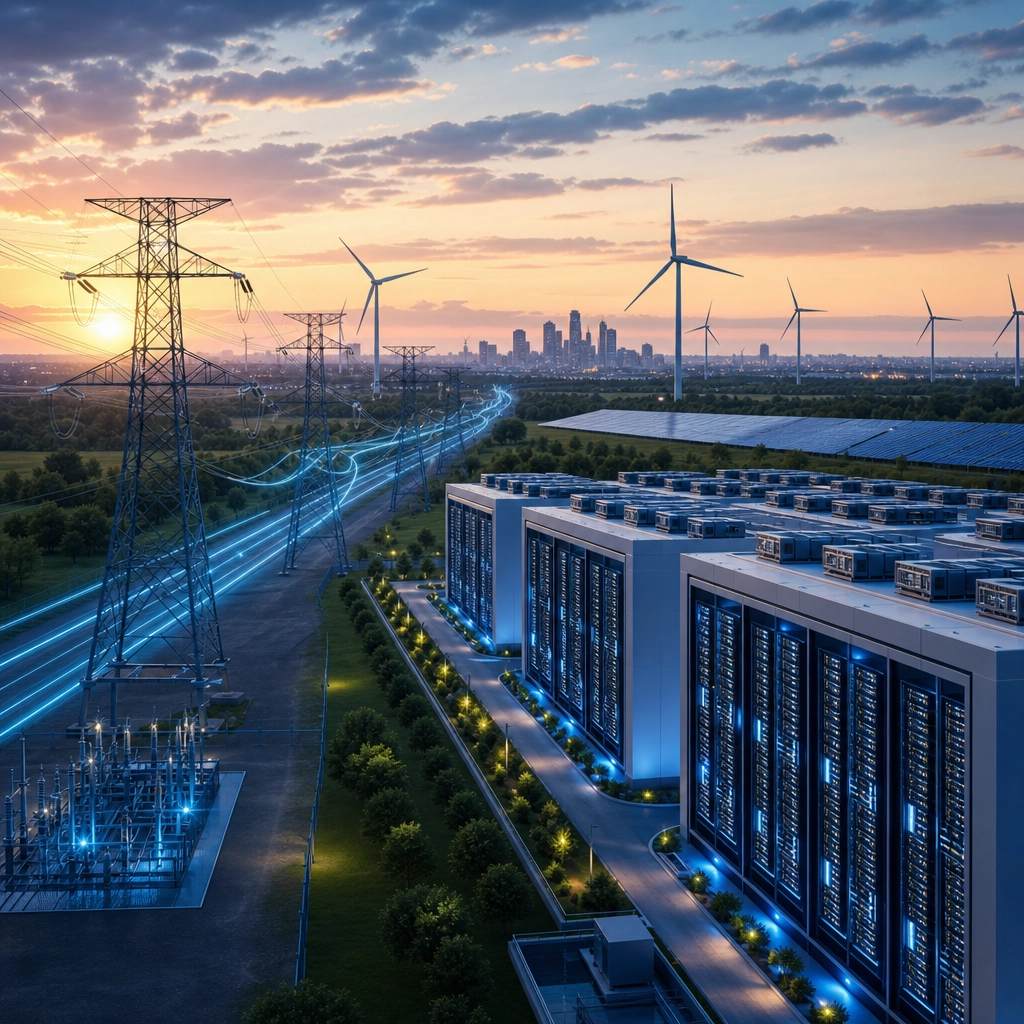
The Department of Energy’s draft report for the 2026 National Transmission Needs Study indicates that AI data centers are becoming the leading factor driving electricity demand growth, necessitating a reevaluation of grid planning strategies. Traditionally, electricity transmission projects focused on reliability issues and aging infrastructure. However, the emergence of AI data centers as significant electricity consumers represents a shift towards addressing the increasing load requirements from these facilities.
The report highlights that developers planning AI campuses, which often require hundreds of megawatts, now face unique challenges in the transmission planning process. Experts note that as these developments grow in size, they have become pivotal events in transmission planning. It reflects a new paradigm where the campus itself integrates into the broader electricity transmission planning efforts.
The study details transmission needs across various regions and consolidates insights from over 120 industry documents. By doing so, it aims to inform future designations for National Interest Electric Transmission Corridors, vital for accommodating the surge in AI-driven electricity demands.
The DOE’s report devotes considerable attention to the demand generated by AI applications. It cites projections—illustrating potential data center electricity usage climbing to over 400 terawatt-hours by 2030, constituting more than 10% of total U.S. electricity consumption. The Lawrence Berkeley National Laboratory estimates suggest a compounded growth in data center electricity demand between 13% and 27% annually through 2028, indicating a critical shift in energy consumption patterns.
This influx of demand is prompting utilities to adapt their grid planning methodologies. As energy consumption predictions escalate, planners are proactively approving extensive transmission portfolios. Recent investments include multi-billion dollar commitments from independent organizations like MISO, SPP, and Texas to upgrade and expand transmission capabilities.
Despite these significant enhancements, challenges remain. The rapid growth of AI campuses means that generation capacity alone does not suffice; effective transmission capabilities must be in place to deliver power to the necessary locations. It underscores the importance of assessing both the availability and approval status of planned transmission projects, which are crucial for supporting large-scale deployments.
As the landscape evolves, companies looking to establish future data center campuses now need to navigate a complex map of transmission requirements rather than availability. Developers must consider anticipated timelines and grid capacities to meet their operational needs. This shift signals the growing importance of strategically located energy resources and infrastructure as the demand for electricity rapidly changes in response to AI advancements.
Welcome to DediRock, your trusted partner in high-performance hosting solutions. At DediRock, we specialize in providing dedicated servers, VPS hosting, and cloud services tailored to meet the unique needs of businesses and individuals alike. Our mission is to deliver reliable, scalable, and secure hosting solutions that empower our clients to achieve their digital goals. With a commitment to exceptional customer support, cutting-edge technology, and robust infrastructure, DediRock stands out as a leader in the hosting industry. Join us and experience the difference that dedicated service and unwavering reliability can make for your online presence. Launch our website.