
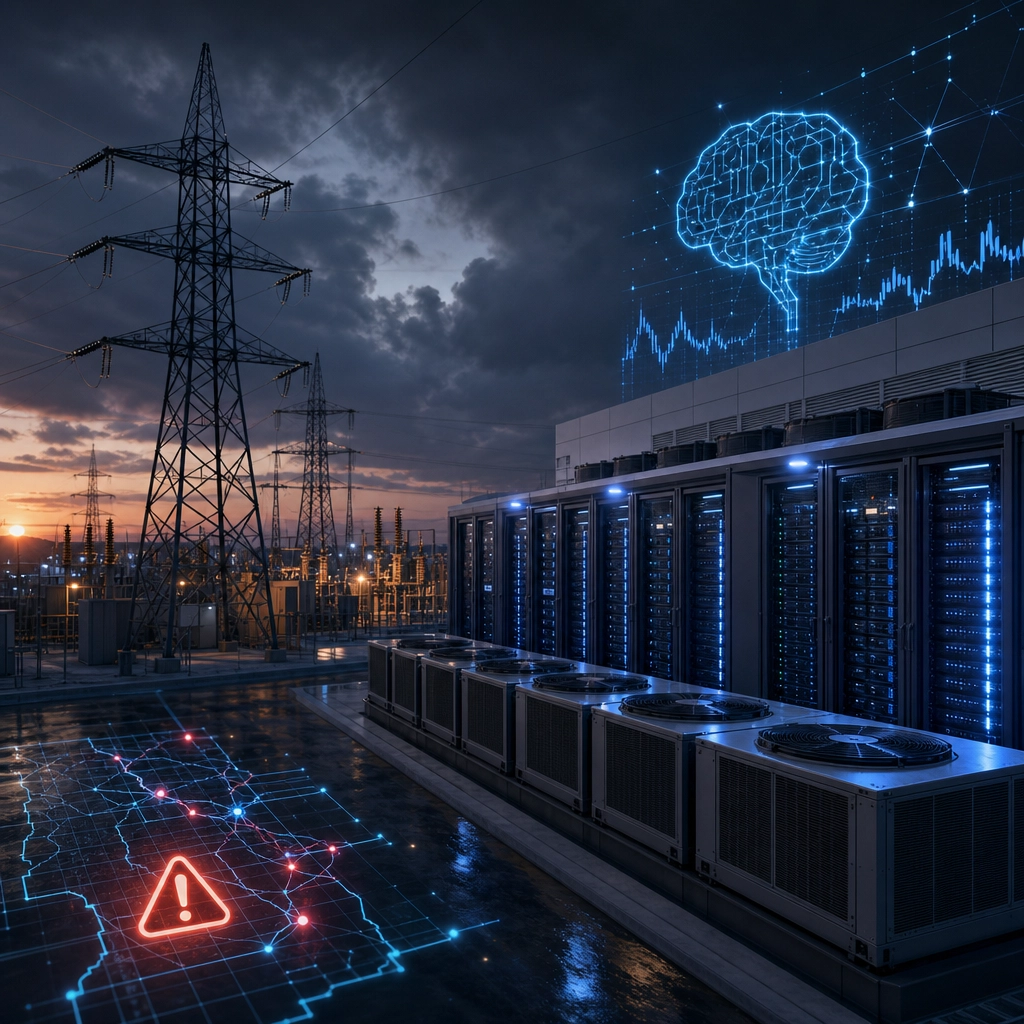
NERC’s 2026 report highlights the reliability challenges emerging from gigawatt-scale data center loads. It notably points out that these massive facilities are often disconnected rapidly during grid disturbances, leading to potential stability issues for North American power grids.
The report details several 2025 incidents where data centers shed significant power quickly—over 1 GW—during transmission faults. While the overall bulk power system remained stable, the incidents emphasize that as AI-focused data centers grow and cluster in key regions, reliability planning must evolve. New modeling standards, coordination protocols, and regulatory frameworks are now necessary to account for the behavior of these large computational loads.
For example, a notable event in February 2025 saw approximately 1,800 MW of data center load drop following a transmission fault, alongside other events with reductions between 200 MW and 500 MW. A wider assortment of entities, including cryptocurrency mining operations, have similarly faced load-loss events exceeding 100 MW.
The Electric Power Research Institute (EPRI) underscores that traditional methods of estimating demand do not suffice for large computational loads, which detach quickly during power disturbances. Although work on developing better models is underway, there remain gaps in data as utilities lack the operational insights needed to accurately portray these large facilities.
The complexities that hyperscale cloud providers now face have positioned the availability of electricity and effective grid coordination as strategic considerations for expanding AI infrastructure. To tackle the new challenges, collaborative efforts through EPRI’s DCFlex initiative have begun, aiming to enhance operational coordination among utilities and data center developers.
In response to these findings, NERC has taken proactive measures, issuing alerts, developing modeling guidelines for computational loads, and establishing new procedures for data center behavior during outages. The transformation within the sector necessitates a shift in how utilities view hyperscale data centers; they are no longer merely consumers of power but integral players in grid operations.
Additionally, the report reveals that conventional generation resources are under increased pressure, as indicated by a rise in forced outages and the inability of some coal and gas plants to sustain operations. NERC suggests reevaluating reserve margins for utilities to adapt to this diminished availability.
The overarching conclusions indicate a need for utilities to adapt their planning approaches. Rather than focusing solely on the demand side, they must analyze how these massive computational loads behave during disturbances and the necessary coordination that must occur prior to connecting these facilities to the grid. The future will depend on how rapidly gaps in modeling, data-sharing, and operational practices are bridged, ultimately determining whether AI data centers present more reliability challenges or opportunities to enhance grid flexibility.
Welcome to DediRock, your trusted partner in high-performance hosting solutions. At DediRock, we specialize in providing dedicated servers, VPS hosting, and cloud services tailored to meet the unique needs of businesses and individuals alike. Our mission is to deliver reliable, scalable, and secure hosting solutions that empower our clients to achieve their digital goals. With a commitment to exceptional customer support, cutting-edge technology, and robust infrastructure, DediRock stands out as a leader in the hosting industry. Join us and experience the difference that dedicated service and unwavering reliability can make for your online presence. Launch our website.