
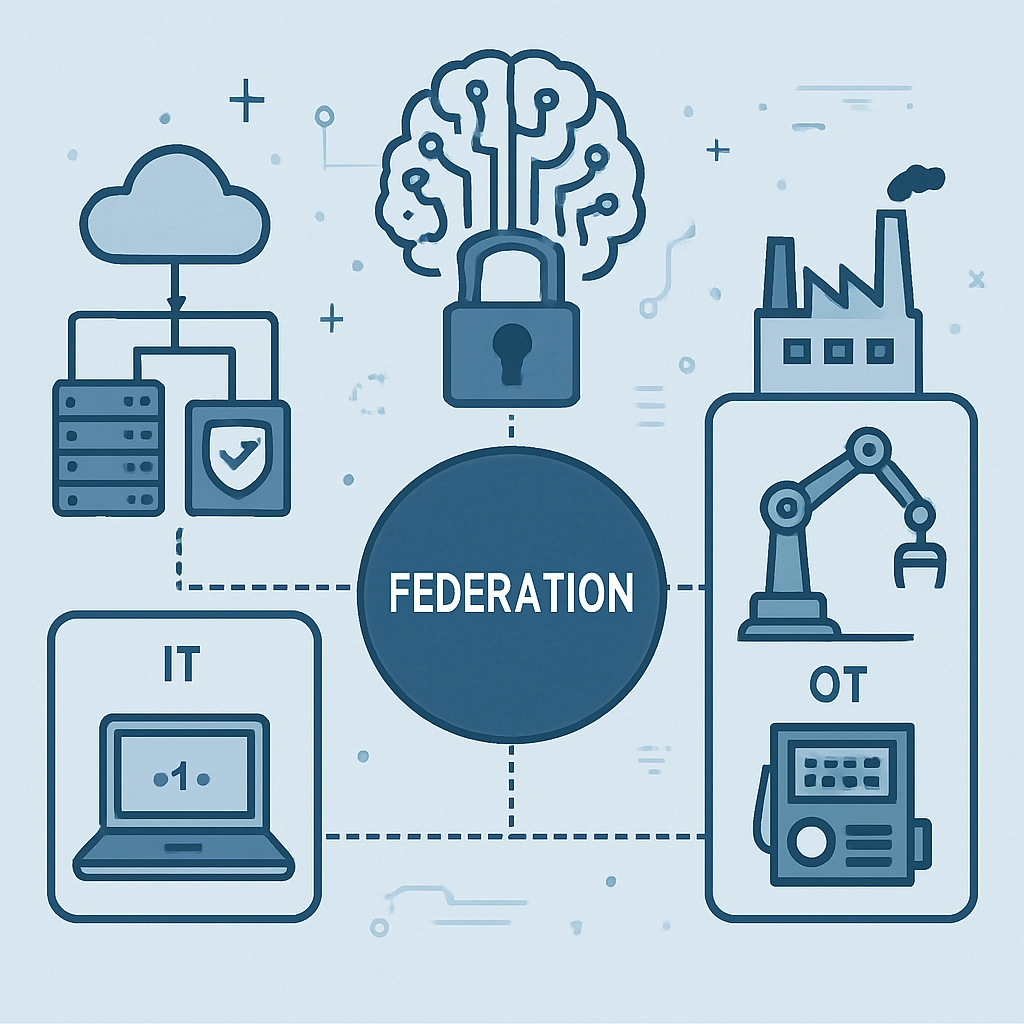
Siloed operations increasingly hinder modern workload efficiency, and the integration of information technology (IT) with operational technology (OT), known as IT-OT convergence, is touted as the solution. However, the pursuit of fully converged architectures presents a risk profile that many operators find difficult to accept. As AI adoption accelerates, this risk escalates, especially when automation spans the IT-OT divide.
AI-driven workloads create pressure for convergence, emphasizing the need for shared infrastructure and data, along with centralized insights. Yet, AI introduces a cross-disciplinary risk that can only be assessed comprehensively when considering IT security, OT safety, and evolving AI risk perspectives.
The challenge lies in achieving convergence while preserving the safety and control foundations of OT environments.
The Value of IT-OT Convergence
IT-OT convergence is often viewed as a definitive goal; however, it should be seen as a means to an end, providing unified intelligence across infrastructures. A primary benefit is the reduction of operational blind spots. When power, cooling, and IT data are aggregated into a single view, operators can quickly identify challenges that may be influencing multiple domains, like correlating cooling faults with CPU throttle issues.
Convergence also enables coordinated optimization, especially as higher-density workloads complicate the management of power and cooling. While integrations promise enhanced operational response and efficiency, they bring ongoing challenges and debates regarding their feasibility within OT environments.
The Debate Landscape
The notion of full convergence is contentious. While establishing a unified visibility system is advantageous, the debate revolves around the extent to which enterprise IT should encroach upon OT-controlled systems. A key obstacle stems from the fundamental differences between IT’s focus on agility and frequent updates versus OT’s prioritization of stability and longevity.
The implications of these structural disparities manifest in asymmetrical risks: IT outages can often be rectified while OT failures may result in irreversible damage to physical assets. This drives many organizations to oscillate between expanding remote access for efficiency or entrenching their current architectures to minimize risk.
Despite both sides of the debate holding valid points, AI adds a new layer of complexity that elevates the discussion.
The AI Factor
AI modifies the traditional threat landscape by operating inside trusted IT environments and producing scalable recommendations faster than human oversight can manage. These alterations challenge the assumption that AI will remain contained within data centers without influencing automated processes in operational domains.
AI drives essential functions like predictive maintenance and analytics, which are core to the rationale for convergence. However, AI’s risk factors are not completely predictable. It can drive decisions that influence operational actions while maintaining a degree of transparency that may not always be sufficient for safety.
This introduces a redefined security paradigm: the boundary for security now extends beyond networks to encompass the AI system, including its inputs and the governance of decisions it generates.
The Federation Architecture Pattern
Federation architecture (FA) offers a structured approach to achieving IT-OT convergence without excessively broadening the control footing in a way that operators may find challenging to quantify. Instead of rejecting convergence, FA reinterprets it, embedding a commitment to certain architectural principles while treating deeper integrations as decisions that require justification.
Key Principles of FA:
- Edge Autonomy: Each facility can operate safely and predictably, even if disconnected from broader enterprise systems.
- Unidirectional Data Flow: Data from operational environments flows upward for analysis, while pathways into OT systems for operational commands are intentionally restricted.
- Human-Gated Commands: Central systems—AI included—can propose changes, but qualified personnel must authorize implementation.
FA keeps the architecture minimal, providing foundational defaults that allow for further development. Organizations can proceed with implementing convergence more safely, allowing for iterative approaches that do not jeopardize fundamental control measures.
Benefits and Trade-offs of FA
Continuing with FA:
- Maintained visibility and centralized analytics across the infrastructure
- Enhanced anomaly detection and predictive maintenance capabilities
- Decision-making supported by simulations and digital twins
- Strategic foresight in modernization without impairing core safety principles
From FA’s outlook, facilities operating in isolation may inherently address the first two principles, making the addition of data flow upward a cost-effective means to achieve analytics value.
What is Sacrificed:
- Reduced speed of remote actions and ongoing fleet optimization
- Convenience of continuous bidirectional connectivity
- The benefits of fully automated multi-site responses
Organizations accustomed to operational efficiencies through centralization may see these shifts as dilutive, whereas those with strong local authority structures may find minimal disruption.
Conclusion: A Disciplined Approach to Convergence
FA offers a balanced framework for leveraging the benefits of IT-OT convergence and AI while prioritizing local control and explicit risk awareness. By focusing on principles like edge autonomy, one-directional data flow, and stringent command protocols, FA establishes a foundation for security-conscious modernization.
As organizations navigate the advancing landscape shaped by AI, adopting an approach like Federation architecture will enable them to modernize confidently without sacrificing safety or control in their infrastructures.
Welcome to DediRock, your trusted partner in high-performance hosting solutions. At DediRock, we specialize in providing dedicated servers, VPS hosting, and cloud services tailored to meet the unique needs of businesses and individuals alike. Our mission is to deliver reliable, scalable, and secure hosting solutions that empower our clients to achieve their digital goals. With a commitment to exceptional customer support, cutting-edge technology, and robust infrastructure, DediRock stands out as a leader in the hosting industry. Join us and experience the difference that dedicated service and unwavering reliability can make for your online presence. Launch our website.