
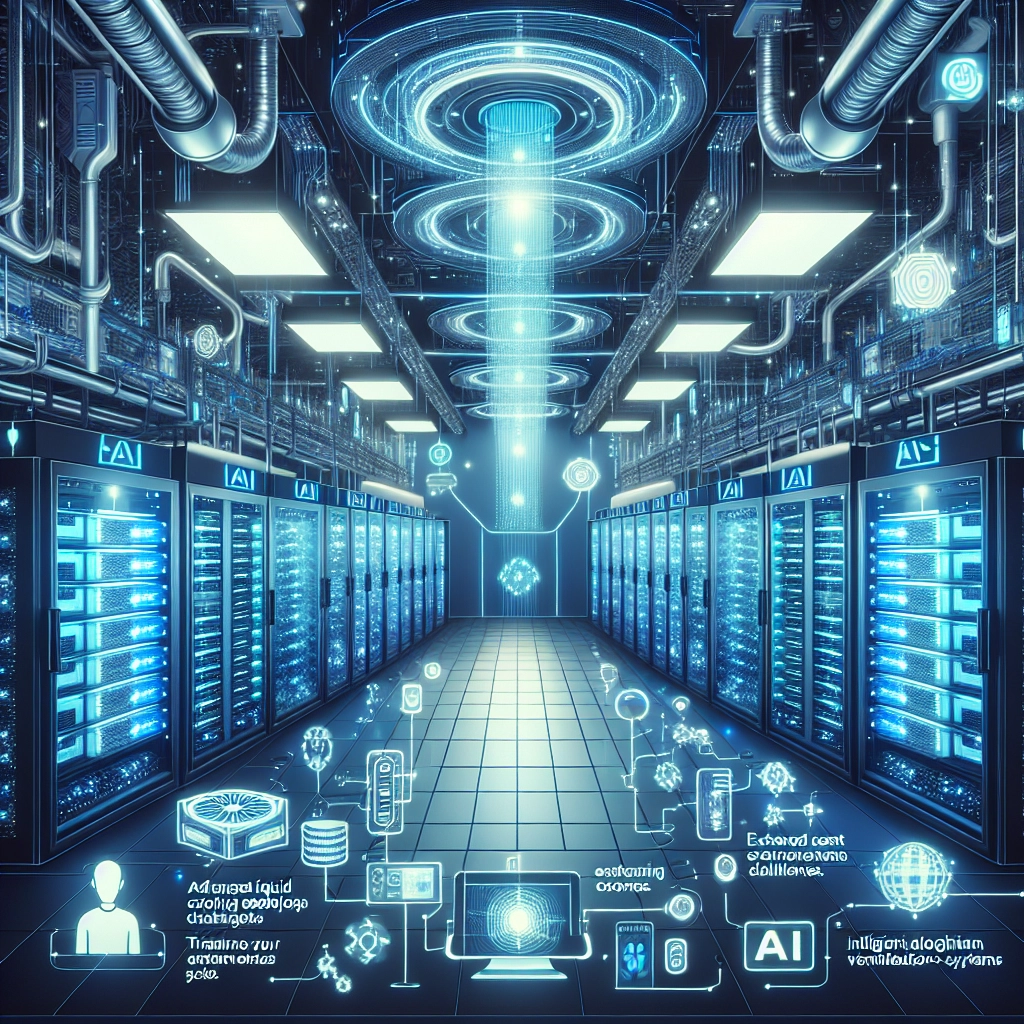
As artificial intelligence (AI) workloads begin to push rack densities toward unprecedented levels, cooling systems are transitioning from a supportive role to a central focus in data center design. This shift was highlighted during a recent session at Data Center World in Washington, DC, featuring industry experts Phill Lawson-Shanks of Aligned Data Centers and Mauro Atalla of Trane Technologies.
Historically, cooling has been viewed as a side issue—an operational necessity primarily focused on removing heat from data centers. Now, the discussion has evolved to encompass a broader design problem that intertwines various elements such as silicon, fluid dynamics, control systems, and workload management.
From Heat Management to System Integration
Lawson-Shanks emphasized that while mitigating heat has long constrained data center operations, the rise of AI is altering both the quantity and nature of that heat. “We’re moving from tens of kilowatts per rack to hundreds, even toward megawatt-scale racks,” he stated. This evolution necessitates a rethinking of facility design and operation, integrating IT and facility systems more closely than ever before.
Operators must embrace a holistic approach, utilizing advanced building management systems and data center infrastructure management (DCIM) platforms, ultimately leading to enhanced visibility into workload scheduling.
Navigating Demand and Technological Change
Atalla pointed out the tension between rapid demand growth and the pace of technological evolution. Operators are not only ramping up capacity with multi-gigawatt campuses but are also transitioning from traditional air cooling to liquid and hybrid cooling systems. “You have massive demand, pressure on delivery timelines, and evolving technology interacting simultaneously,” he remarked, noting the complexity of implementing these changes while systems are operational.
Cooling accounts for approximately 20% of data center energy consumption, making it a crucial factor for operators aiming to expand compute capabilities while minimizing energy usage.
Embracing Hybrid Cooling Solutions
Both Lawson-Shanks and Atalla endorsed hybrid air-liquid cooling systems as the practical choice for today’s data centers. While single-phase liquid cooling suffices for the current generation of chips, two-phase cooling systems are still constrained by complications related to refrigerants and system design.
“As demands rise, flexibility in design becomes essential,” Lawson-Shanks noted, pointing to the deployment of modular architectures that allow for scalable installations ranging from two to three megawatts.
Time Sensitivity and Reliability
The inclusion of liquid cooling introduces a new operational challenge: time sensitivity. Liquid-cooled systems necessitate rapid responses to thermal changes, with an operational buffer of mere seconds compared to minutes for air-cooled systems. This urgency demands new strategies for thermal management, increasing integration with power systems and necessitating advanced thermal buffering solutions.
There is an ongoing dialogue regarding the delineation of responsibilities between operators and customers, as ownership and control of these tightly integrated systems become more complex.
Performance Meets Sustainability
Amid these challenges, both experts asserted that sustainability and operational performance are becoming increasingly complementary. “Utilizing less energy has a cascading effect; there’s no conflicting trade-off between performance and sustainability,” Atalla observed. This is leading to growing interest in heat reuse systems, with implementations varying significantly by geography.
In summation, data centers are evolving into "heat generation factories" that could integrate seamlessly into broader energy frameworks. While solutions are still developing, ongoing experimentation shows that the industry is committed to finding adaptable paths forward in response to the rapidly changing technological landscape.
Welcome to DediRock, your trusted partner in high-performance hosting solutions. At DediRock, we specialize in providing dedicated servers, VPS hosting, and cloud services tailored to meet the unique needs of businesses and individuals alike. Our mission is to deliver reliable, scalable, and secure hosting solutions that empower our clients to achieve their digital goals. With a commitment to exceptional customer support, cutting-edge technology, and robust infrastructure, DediRock stands out as a leader in the hosting industry. Join us and experience the difference that dedicated service and unwavering reliability can make for your online presence. Launch our website.