
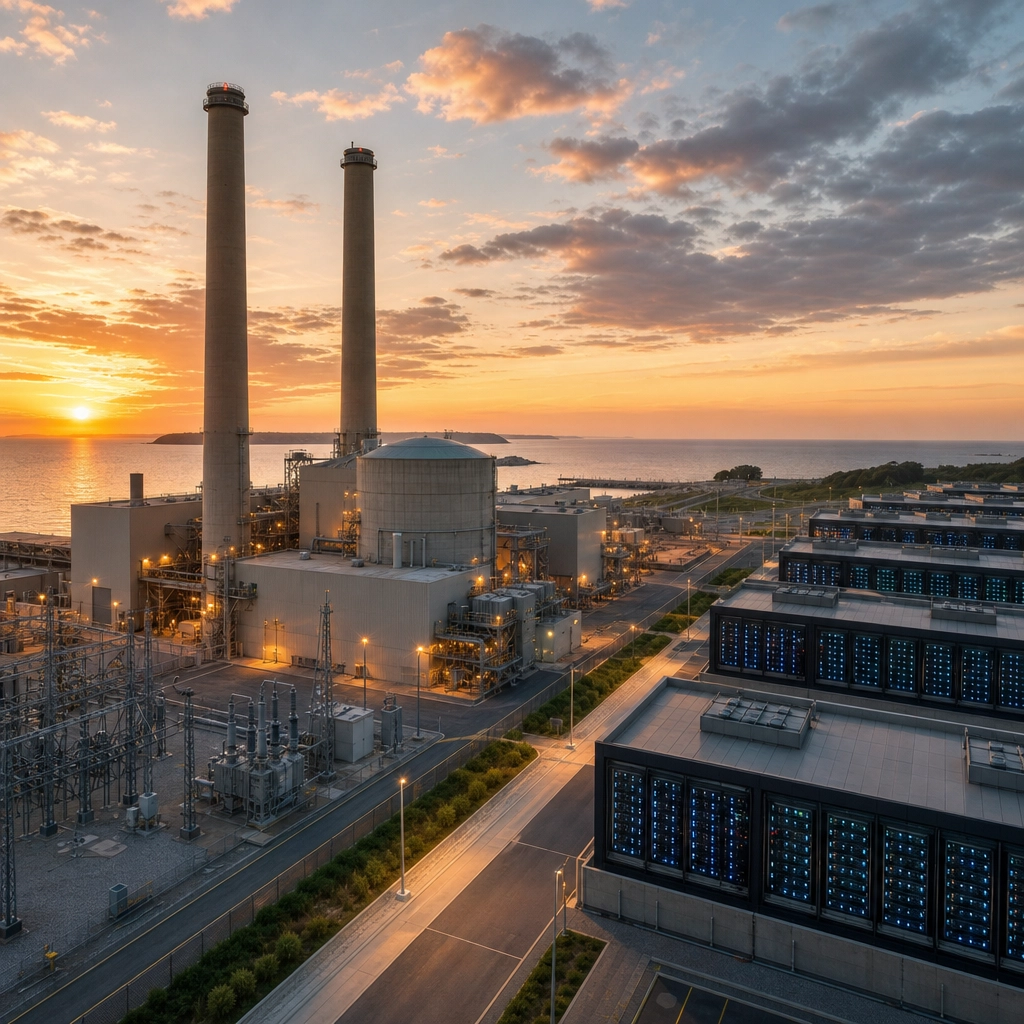
The Eddystone coal plant in Pennsylvania has been directed by the Department of Energy (DOE) to remain operational until November 20, 2026, due to rising electricity demands and the retirement of power generators within PJM Interconnection. The DOE’s decision acts as an emergency measure while the grid grapples with increasing load demands, particularly from data centers.
The directive highlights a significant challenge faced by PJM: projected growth of around 25 GW in load, which includes 15 GW specifically from data centers, while about 17 GW of fossil-fuel generation is expected to retire. The order emphasizes the urgency of the situation, mandating that Eddystone’s two units, each with a capacity of 380 MW, be available when needed, although they aren’t classified as a capacity resource.
The reliability analysis conducted by the DOE reflects concerns over potential power shortages, estimating up to 1,052 hours of lost load under the most challenging conditions. This scenario underscores a critical timing mismatch between demand growth and the pace at which new energy sources can become operational, particularly as the data center sector rapidly expands.
Officials have noted that the recent influx of data centers has changed foundational assumptions used by PJM for decades regarding reserve margins and system reliability. The situation is further complicated by the fact that significant projects can contribute considerable demand in localized areas, making planning difficult.
The August 21 order marks the sixth instance in which the DOE has intervened regarding Eddystone’s operational status since its planned retirement in 2025. The repeated recourse to emergency measures indicates that traditional planning mechanisms may no longer suffice to manage the unprecedented demand in the power sector.
The order also raises important questions about who will bear the costs associated with maintaining such plants, as pressures increase on the grid. Merely requiring PJM to ensure economic efficiency does not resolve the more complex problem of who ultimately finances the operational extensions of these aging facilities.
As forecasts of data center demand continue to evolve, their reliability remains uncertain. Large projects can often appear in multiple utility forecasts, leading to potential double-counting of projected loads. This uncertainty complicates effective planning for both current and future energy needs.
The DOE’s analysis does not attribute the demand solely to data centers, but rather considers it a symptom of a larger problem involving generator retirements and the entry of new resources. As legislative solutions are sought to address these challenges, the pressure on energy infrastructure is expected to heighten, particularly as lawmakers return from recess and turn their attention to the emerging needs of the AI infrastructure sector.
In the meantime, Eddystone will continue to serve as a crucial support while the energy landscape grapples with how to effectively adapt to growing demand and shifting supply dynamics.
Welcome to DediRock, your trusted partner in high-performance hosting solutions. At DediRock, we specialize in providing dedicated servers, VPS hosting, and cloud services tailored to meet the unique needs of businesses and individuals alike. Our mission is to deliver reliable, scalable, and secure hosting solutions that empower our clients to achieve their digital goals. With a commitment to exceptional customer support, cutting-edge technology, and robust infrastructure, DediRock stands out as a leader in the hosting industry. Join us and experience the difference that dedicated service and unwavering reliability can make for your online presence. Launch our website.