
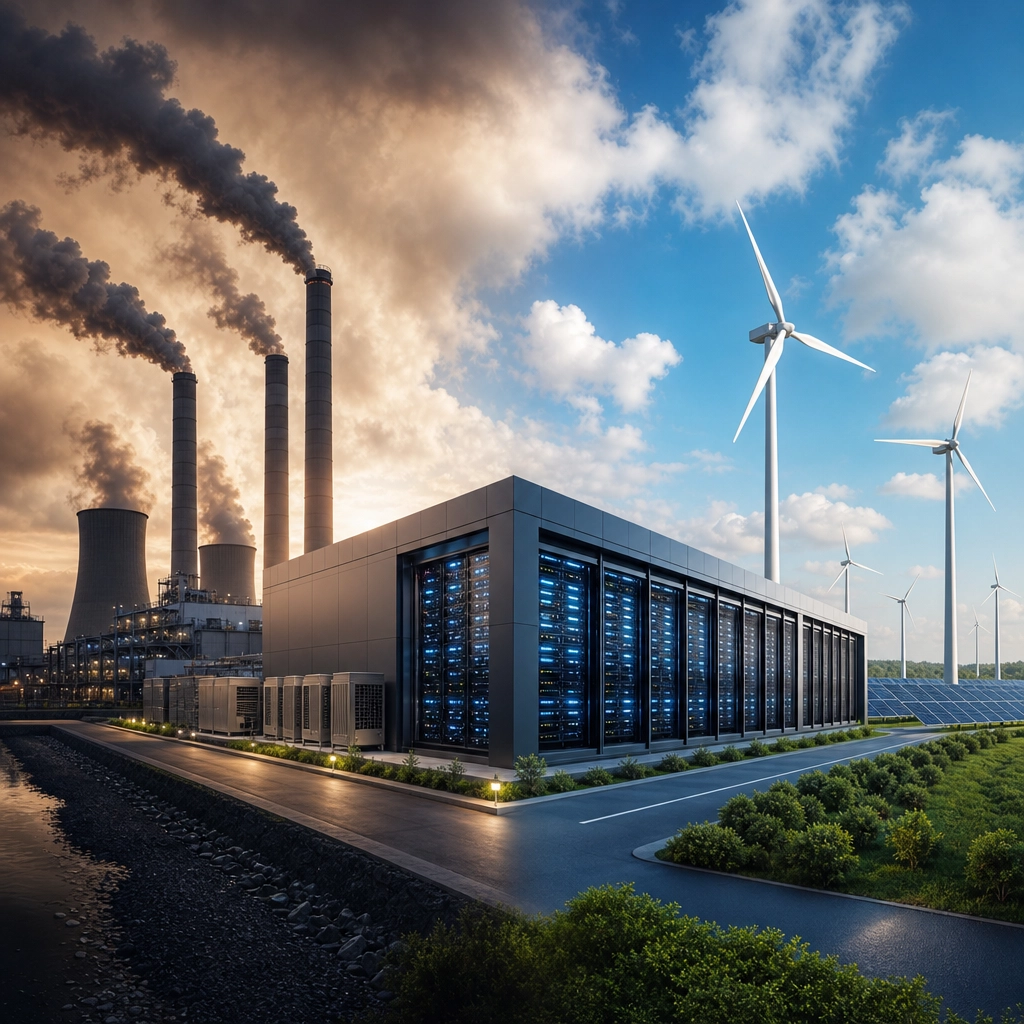
A data center’s impact on air quality largely depends on its power source, grid mix, and the use of on-site generation. Under typical operation, most data centers produce minimal local air pollution since they do not combust fuel or emit flue gases. The main emission is water vapor from evaporative cooling systems. Modern data centers usually do not require furnaces or boilers, as IT equipment generates sufficient heat, allowing them to be relatively clean when compared to conventional buildings that burn fossil fuels for heating or cooking.
While the facilities generate little vehicle traffic after they are operational, as staffing levels are typically low and material deliveries diminish post-commissioning, construction phases can lead to significant emissions.
The complexity arises primarily from power consumption. Data centers consume vast amounts of electricity, and their air quality repercussions become relevant depending on the sources of that power. Facilities powered by fossil fuels can cause emissions of pollutants such as nitrogen oxides (NOx) and particulate matter (PM2.5), especially during peak power generation times when reliance on fossil-fueled production increases.
Key factors affecting emissions from data centers include:
- Power sourcing: Facilities utilizing a higher percentage of renewable energy sources contribute to lower emissions, as these sources do not emit pollutants during operation.
- Electricity source: Most data centers rely on the grid, which generally consists of larger plants that often have lower emissions due to efficiency and emission control measures. Conversely, facilities using on-site generators frequently face higher emissions due to lower efficiency and lack of emissions control.
- Usage of on-site generators: Facilities that depend on on-site generators for continuous or regular power will likely experience higher emissions than those that only use these units for backup or testing purposes. The type of fuel utilized—natural gas versus diesel—also plays a significant role in determining emissions characteristics.
Research indicates that areas surrounding data centers often record elevated pollution levels, suggesting that these facilities may impact local air quality. However, correlation does not imply causation; these studies do not always take into account other emissions sources prevalent in urban environments where data centers are commonly located.
In summary, while data centers generally maintain a low direct impact on local air quality, their substantial energy consumption—especially when fueled by fossil sources—contributes indirectly to higher emissions. Operators can mitigate this impact by prioritizing clean energy, minimizing the use of fossil fuels for backup, and improving energy efficiency. Monitoring the shifts in power sourcing based on the time of day and optimizing operations can further align data center consumption with cleaner energy availability, ultimately enhancing sustainability efforts within the industry.
Welcome to DediRock, your trusted partner in high-performance hosting solutions. At DediRock, we specialize in providing dedicated servers, VPS hosting, and cloud services tailored to meet the unique needs of businesses and individuals alike. Our mission is to deliver reliable, scalable, and secure hosting solutions that empower our clients to achieve their digital goals. With a commitment to exceptional customer support, cutting-edge technology, and robust infrastructure, DediRock stands out as a leader in the hosting industry. Join us and experience the difference that dedicated service and unwavering reliability can make for your online presence. Launch our website.