
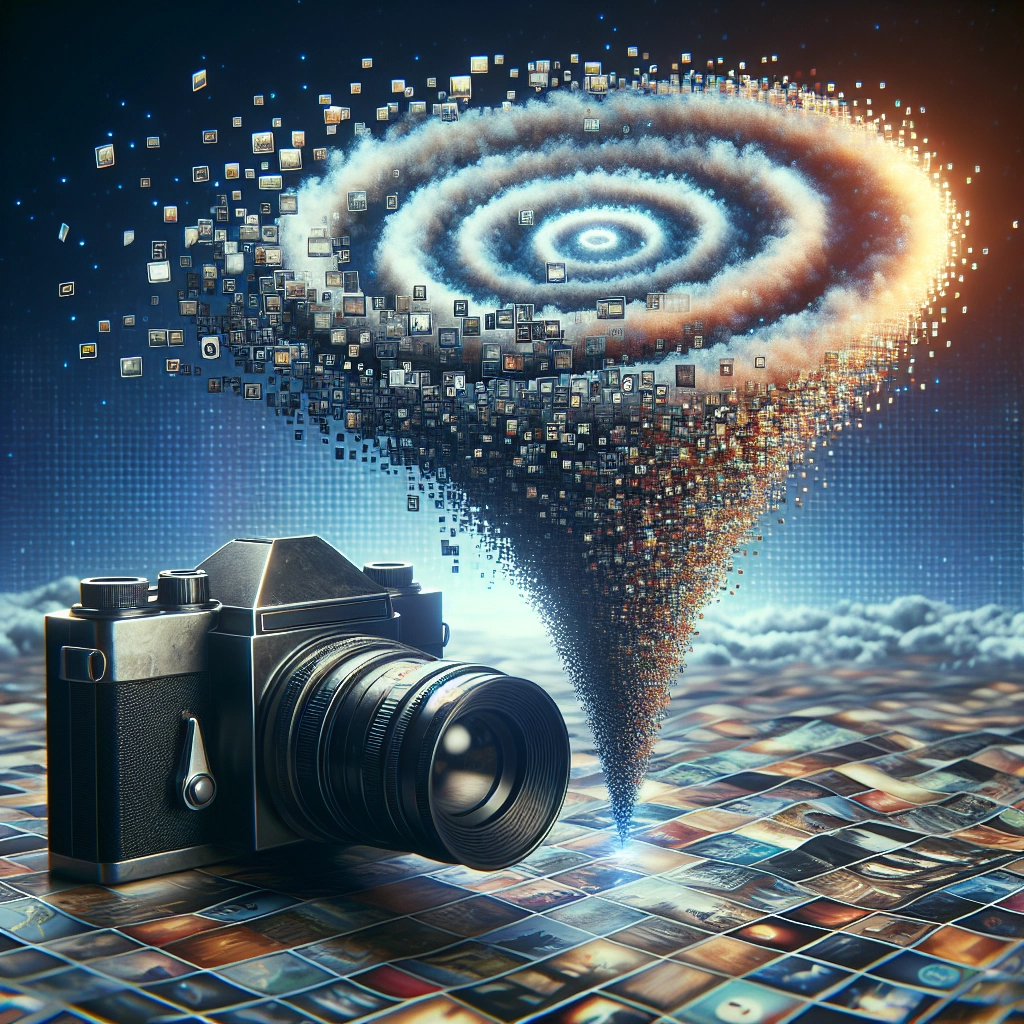
Once, photographers aspired to achieve the dream of passive income through stock photography. The idea was simple: submit a few appealing images, like a well-lit handshake or a woman enjoying a solo salad, and then watch the income flow in endlessly. However, that dream has swiftly become a thing of the past—AI has effectively ended it, without so much as a goodbye.
The Stock Photo Gold Rush
Stock photography was meant to be the safety net for creatives—from designers to marketers—who needed a steady supply of generic images. By mastering keywords and producing clichéd content, anyone could theoretically earn a living. For a time, platforms like Shutterstock and Getty thrived on this economy of sameness.
Still, let’s face it—most stock photos were subpar. They often felt contrived, fake, and lacked emotional depth, serving primarily as blank canvases for messages. Yet they sold.
Then came AI, asking the question: Why spend five dollars for an image of a woman laughing at a salad when I can instantly generate 500 alternatives with varying styles and scenarios?
Enter the Infinite Salad Lady
Initially, AI-generated images were bizarre and off-putting, featuring oddities like hands with an extra finger, extremely tense office workers, or cartoonish babies. Photographers mocked these results, while designers chortled at the absurdity.
Fast forward to 2025, and AI technologies like MidJourney, Stable Diffusion, and DALL·E evolved into systems that could generate vast, tailored stock libraries within seconds. Need an image of "a diverse team in a stylish coworking space"? Done. How about "an aerial view of Vancouver during cherry blossom season"? Instantly produced. You can even speak your requirements to the AI, refining your vision as you go.
The stock photography industry wasn’t just disrupted; it was obliterated.
The Death Spiral of Stock Agencies
In response, stock photography companies began rebranding as "AI content marketplaces." Shutterstock joined forces with OpenAI, while Adobe incorporated its AI tool Firefly into Creative Cloud. Getty attempted legal action, later shifting to AI licensing deals.
Nevertheless, the damage was already done. Clients quickly realized they could generate custom images for pennies instead of purchasing licenses, causing demand for traditional stock photos to plummet.
For many photographers whose careers relied on a vast collection of generic images, this was devastating. The once-lauded passive income disappeared almost overnight.
Contributors to Shutterstock witnessed their earnings drastically drop from hundreds to mere single digits. Some now claim AI has "stolen their livelihoods," but the hard truth remains: the market no longer craved photography; it demanded imagery, which AI could provide more quickly and cheaply.
The Ethics Nobody Wants to Talk About
A critical issue lurks beneath the surface: AI systems were trained on stock image databases without permission, using those same bland images that once defined stock photography as the foundation for replacement. AI didn’t merely compete with photographers; it cannibalized them.
Yet, brands, clients, and designers alike seem unconcerned. The desire for cheap, quick, and sufficient imagery reigns supreme. If ethics were genuinely influential in the marketplace, industries dependent on sweatshops and fast fashion wouldn’t exist.
What Designers Secretly Love
Interestingly, many designers are thrilled about the shift. Let’s be honest—no one relished poring over countless pages of stock images for the perfect "woman with a laptop looking stressed."
Now, we can simply prompt an AI for the exact aesthetic we want. Want a hyper-realistic image? It’s done. Prefer a Memphis design with soft pastel colors? Already created. Need to customize appearance and inclusivity features? Easy.
AI lets us dictate mood, setting, and style with the precision of a director—without having to wait for stock photographers to align with current trends.
AI has transformed stock photography from a tedious task to an engaging experience.
The New Gatekeepers
Ironically, the decline of stock photography hasn’t eliminated gatekeeping; it has merely redefined it. New gatekeepers now include prompt engineers and AI platform owners. Instead of optimizing keywords on stock photo websites, creatives are learning to craft "prompt recipes" that yield brand-ready images with minimal adjustments.
The monopoly has shifted too. Instead of paying ten dollars for a photo, consumers now spend a subscription fee to access AI image-generating models.
So, Is Photography Dead?
Not entirely. AI may have dismantled the stock segment, but the art still holds value. Authenticity remains essential in fields like photojournalism, weddings, and high-end editorial work. People are unlikely to trust AI to capture personal moments, like a family birthday, just yet.
However, photography has transformed into a luxury option for the commonplace images once used in blogs and marketing materials. In 2025, opting for standard stock photos is akin to choosing a film camera—it’s more about making a statement than practicality.
The Controversial Take
The harsh truth is that stock photography was always destined for failure. Its reliance on formula and sameness made it a target for automation. The industry didn’t collapse unjustly due to AI; it crumbled under the weight of its own stagnation.
Creatives who adapt to this evolution will thrive, using AI as a valuable tool rather than resisting it as a competitor. Welcome to the era of the infinite salad lady—she’s here to stay, whether we like it or not.
Welcome to DediRock, your trusted partner in high-performance hosting solutions. At DediRock, we specialize in providing dedicated servers, VPS hosting, and cloud services tailored to meet the unique needs of businesses and individuals alike. Our mission is to deliver reliable, scalable, and secure hosting solutions that empower our clients to achieve their digital goals. With a commitment to exceptional customer support, cutting-edge technology, and robust infrastructure, DediRock stands out as a leader in the hosting industry. Join us and experience the difference that dedicated service and unwavering reliability can make for your online presence. Launch our website.